Monday, April 29, 2024

Iris Publishers-Open access Journal of Civil & Structural Engineering | Project Monitoring and Early Warning of Time-Cost Overruns in Earned Value Management


Authored by Mohammad Azim Eirgash*,

Abstract

Project monitoring and control processes are crucial aspects of project management. To perform an appropriate project tracking, Earned Value Analysis (EVA) has to be implemented to help the project managers to measure project performances. A tool to monitor and control the cost, time and work done of a construction project. Furthermore, it also provides an “Early Warning” signal for immediate corrective action. Thereby, in this study, some work items related to a completed real life construction project were evaluated according to the method of Earned Value and the result implies that the analysis can be very useful in project forecasting and decision making relevant to early warnings.

Keywords: Project management; Earned value analysis; Performance indices; Scheduling; Variances

Introduction

The main objective of project management is to meet all project requirements within budget forecasts and the planned time-line. To achieve this goal, it is necessary to put substantial managerial efforts for which project stakeholders are responsible. Creating the effective performance monitoring system plays vital rule in this managerial process. Irrespective of the having project careful planning, without timely and proper performance control, to evaluate the project progress and execution efficiency of the construction project is a nightmare. Monitoring and control system also helps in providing feedbacks to management on the different schedules prepared earlier, in order to ensure that the project is progressing as per schedule. It compares the planned amount of work with what has actually been completed, to determine if cost, schedule, and work, accomplished are progressing as planned. It also provides data for preparing reports for management information system. In today‘s high computational world a construction project works in a dynamic environment and situations, constraints, etc., keep on changing. Hence, it is absolutely necessary to monitor the project at regular intervals and adopt suitable controlling measures in order to keep the project on track. For this purpose, construction organizations have project monitoring and control systems in place.

Efficiency of EVA application to meet project criterion elaborated by several researches e.g. De Marco [1], Souza [2], Chou [3] and Joby [4]. In addition to this earned values analysis has used triangular fuzzy time by utilizing triangular fuzzy number as well as bottom-up hierarch guess procedure considering the design control mechanism to tackle multi-product planning problems. Furthermore, there is no precise control system for measuring the quality of work-done on individual tasks in addition to variation in cumulative earned value appears to be a weakness point of this method. Long Chena [5] proposed a fundamental methodology to enhance the performance prediction of planned value by advanced modelling PV obtaining a trustworthy forecasted results about earned value. In a literature search, identified Earned Value Analysis as a good method for better project management. With this method, cost, timeline and scope are combined and progress performance and it is stated that it can be used to estimate project completion dates. Agata [6] explained that if Earned Value Analysis is applied, this method should be used appropriately; He stated that it makes it easier to monitor progress on the project, determine the status of the project (on time and budget), to roughly estimate their overall impact on the outcome of the project. In another study by Shaik et al. [7], focused on the timely completion of a construction project, the monitoring and control role offered by Earned Value Analysis was examined throughout the project. Eirgash et al. [8] has presented performance scale of an example problem suing the theoretical and practical dimension the earned value analysis, and therefore helped in practical application of the current construction project. Lipke [9] has demonstrated a defined system by which total project cost as well as time duration of a project is likely to be determined to assist the project managers to make intelligent decisions. Figure 1 clearly describes the earned value analysis chart (Figure 1).
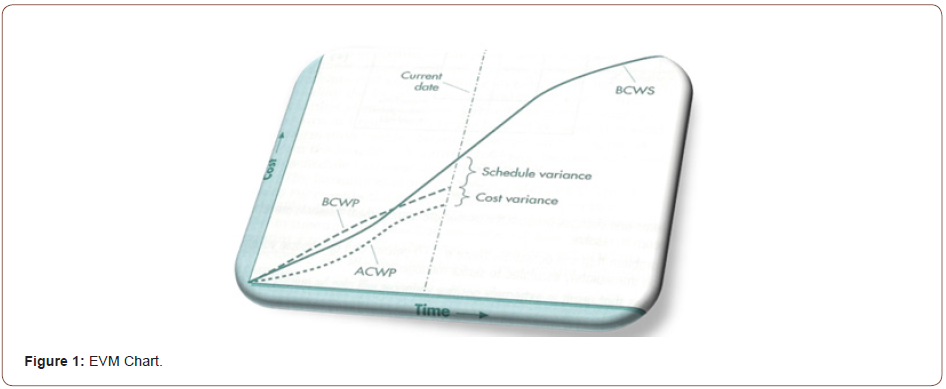
irispublishers-openaccess-civil-structural-engineering

Following is the paper arrangement: Firstly basic concept, straightaway the importance of the construction project relevant to the Earned value analysis is given in well-figured explanations. A small scale example problem is considered to exhibit the effectiveness of earned value analysis in construction projects. Ultimately, discussion and conclusion are presented in order [10- 12].

Basic Concepts of Earned Value Method

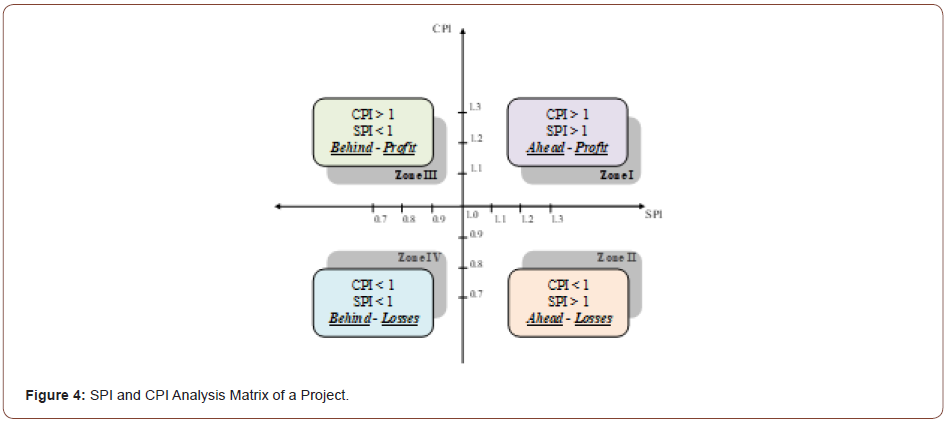
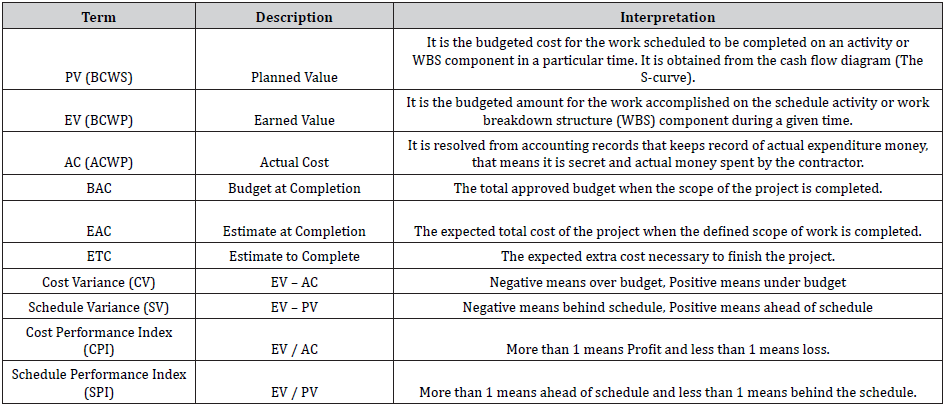
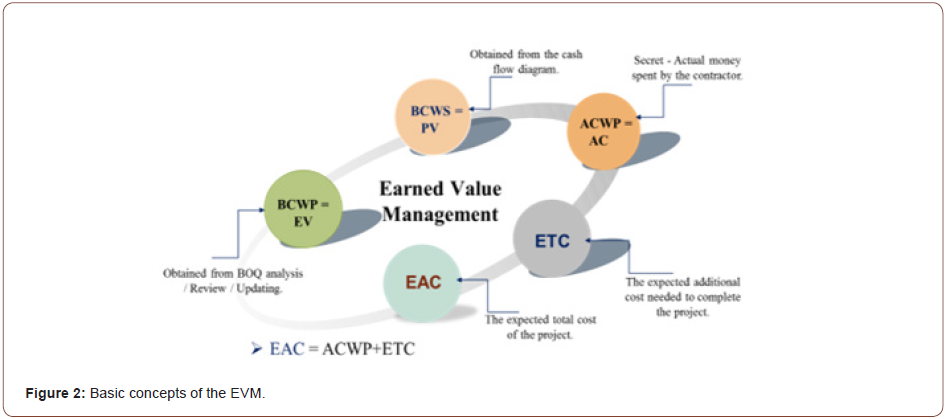
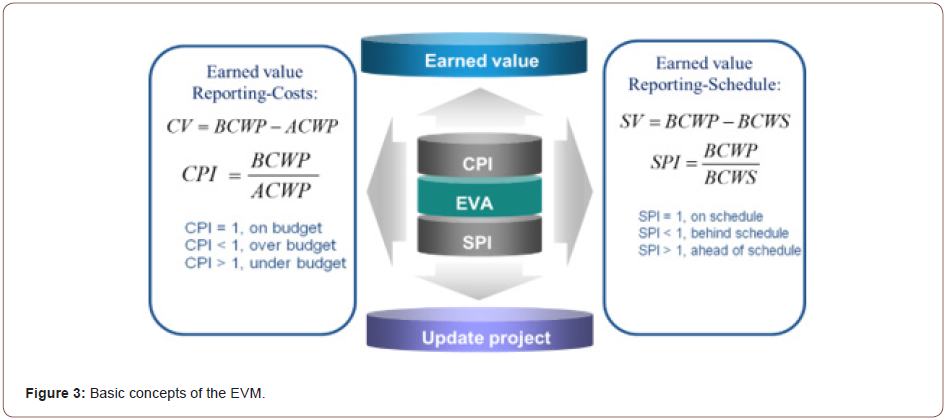
In this section, explanation about the earned value analysis terms is illustrated in Table 1. Basic concepts of the EVM are given in Figures 2-4 (Table 1) (Figures 2-4).
irispublishers-openaccess-civil-structural-engineering

irispublishers-openaccess-civil-structural-engineering

irispublishers-openaccess-civil-structural-engineering

Table 1: Earned value terms.

irispublishers-openaccess-civil-structural-engineering

where ρ is the mass density, v is the velocity, T is the symmetric Cauchy stress tensor, b is the body force. The balance of energy is written in the form

Application

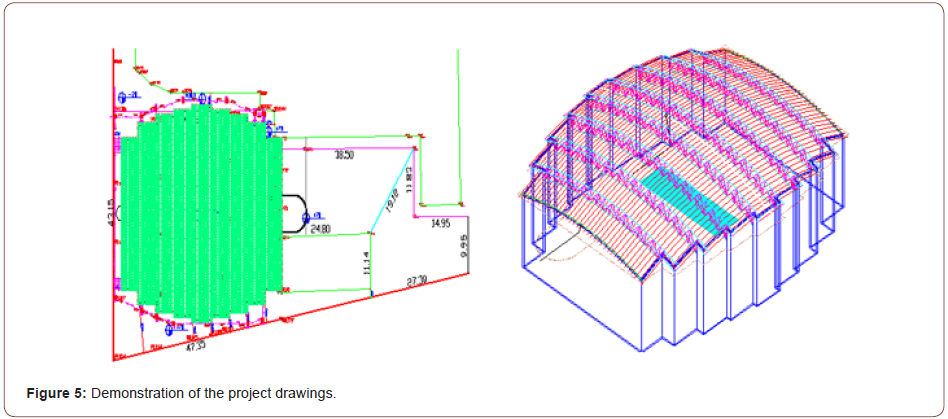
During the summer of 2009 in the building of the closed sports hall faced a big problem in the construction phase, and specifically the problem was in the rebar. This problem was discovered later on, after the completion of the process of pouring the foundations and Ground beams. The project area 1744 m2, according to the contract for Project 340 day, every day of delay will be paid 600$. In the initial planning phase was the work of a timetable for the project using Primavera 6.0 were created for the project (330 days), but the maximum duration of the contract 340 days within any period allowed by. The cost of the project 2,828,241$. (Table 2) (Figure 5)

Table 2: Represents the status report of the project.

irispublishers-openaccess-civil-structural-engineering

irispublishers-openaccess-civil-structural-engineering

Results and Discussion

Update process of project with earned value analysis

Table 3: Obtained values of status report of the project.

irispublishers-openaccess-civil-structural-engineering

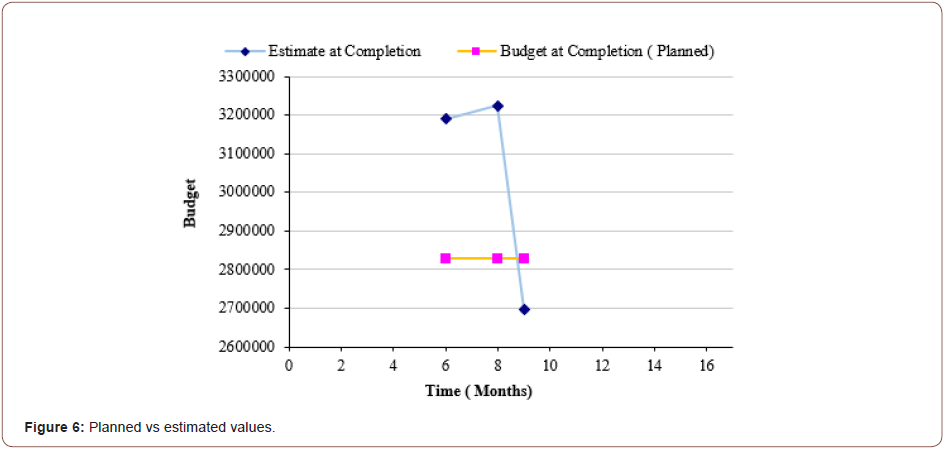
After the work schedule and start the implementation, we need to update the project data into compare the project actually and the planned project and the impact on the schedule. Will now be an update of the project data and follow-up activities during the 3 months from 1 \ 3 \ 2009 to 1 \ 6 \ 2009 using the theory of earned value. As we can by using this value follow-up project in terms of time and cost, sometimes called financial values gained with time and which we can make the right decisions to return the original project if there is a deviation from the previously planned. Estimate to complete as well as estimate at completion are considering the data in Table 1, indices and relevant comments are stated using the plotted graphics (Table 3) (Figure 6).
irispublishers-openaccess-civil-structural-engineering

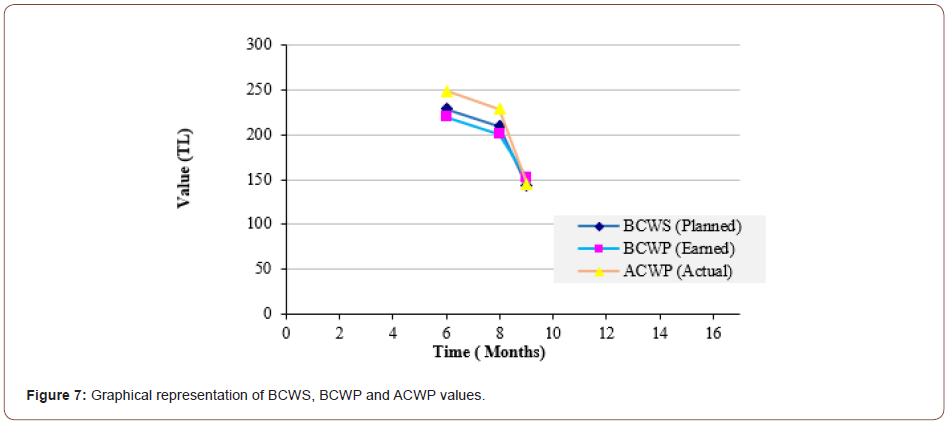
Based on the analysis of the status report and graphical representation in Figure 6, the estimated cost of the project at completion for the 7th month of the updating (after 40% of the project execution) is estimated to have a considerable cost overrun and schedule lagging behind (Figure 7).
irispublishers-openaccess-civil-structural-engineering

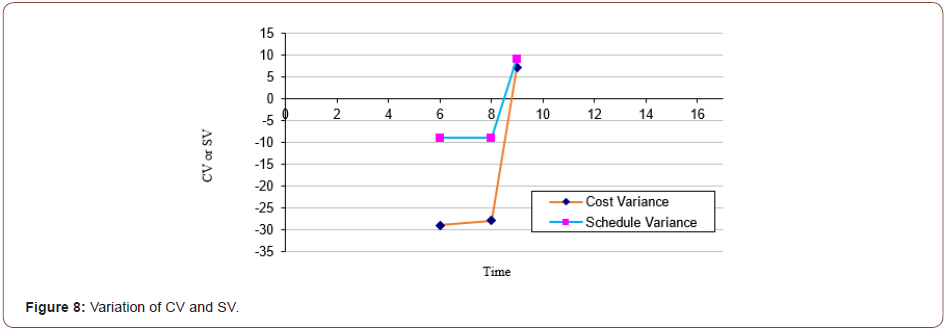
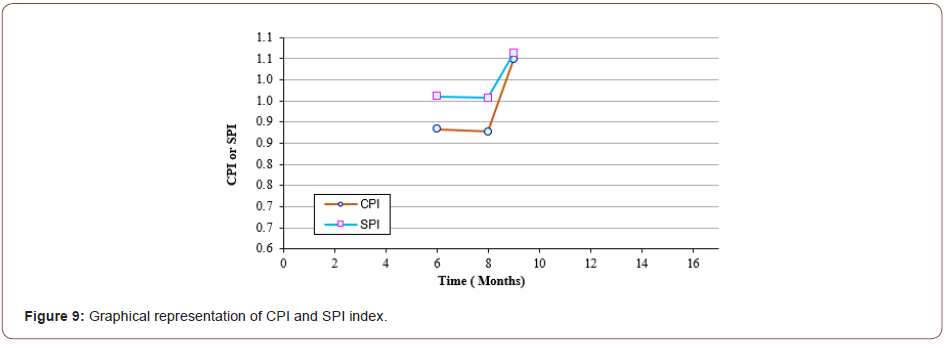
Based on the Figure 7 and 8 which are interconnected to each other, the earned value of the project for the 7th month of the updating explains that both the CV and SV are smaller than zero which express that the project is behind schedule and having cost overrun. In case of 9th month updating both the CV and SV are greater than zero which implies that the project is ahead of the schedule and making profit. By analyzing the graphical representation of CPI and SPI indices in Figure 9, the following comments can be stated.
irispublishers-openaccess-civil-structural-engineering

irispublishers-openaccess-civil-structural-engineering

Review of the project on the 7th month

Based on the Figure 9 representation, CPI and SPI both are less than 1.0, CPI<1 indicates a weak cost performance. That earned value is short of what the real costs for this reporting period. Cost performance index (CPI) between 0.95-0.96 indicate cost overrun and behind schedule (Figures 8,9).

9th month review project

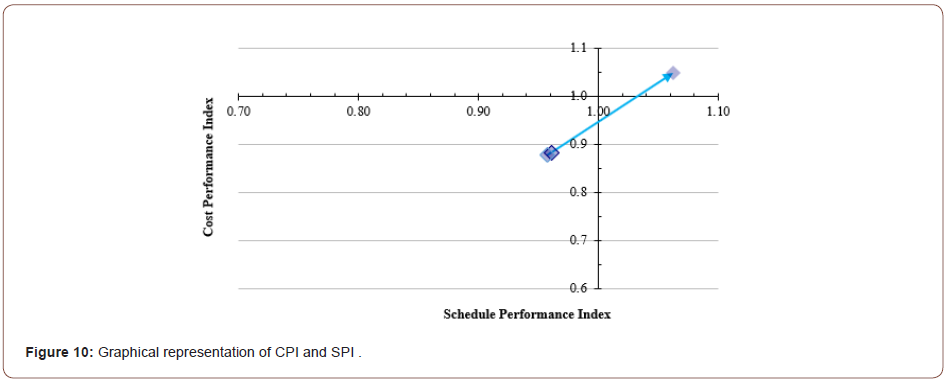
It is clear that values of CPI and SPI are greater than 1.0 reveal a good project performance. Also, the project is ahead of schedule, which is a bit better than the previous status report and CPI >1 the project is making loss. According to the graphical indication of CPI and SPI in Figure10. The following remarks can be stated (Figure10).
irispublishers-openaccess-civil-structural-engineering

Summary and Conclusion

As it is clear that to provide information on performance of the construction projects, earned value is found to be effective technique. Project stakeholders are likely to get to know timely regarding the scope, schedule, and cost status information of the relevant project. Accomplishment of the projects with a success is associated with the significant factors e.g. .application of earned value analysis with its means at the right time and right manager. The main reason behind the utilizing this method is to stay far away from schedule delay and over budgeting. Therefore, analyzing the indices it can be concluded that each day one of the actual duration was obtained only 0.96 of the value of planned, in other words that the productivity of the project is only 0.96 of the planned. And this also means that each and every one $ of the actual cost was obtained only 0.88 of the value of planned.

To read more about this article...Open access Journal of Civil & Structural Engineering

Please follow the URL to access more information about this article
https://irispublishers.com/ctcse/fulltext/project-monitoring-and-early-warning-of-time-cost-overruns-in-earned-value-management.ID.000673.php

To know more about our Journals...Iris Publishers

To know about Open Access Publishers

Thursday, April 25, 2024

Iris Publishers-Open access Journal of Biology & Life Sciences | Climate Change and its Impact on the Agricultural Sector


Authored by Zakaria Fouad Fawzy*,

Abstract

The agricultural sector is one of the sectors that will be negatively affected by this phenomenon. Climate changes are expected to affect the productivity of agricultural land, starting with affecting the natural, chemical, and biological properties of the land, passing through the spread of pests, insects, diseases and other problems, and ending with affecting the produced crop.

Keywords: Climate change; Agriculture sector; Food security; Health; Fisheries; soil; Water resources

Introduction

Problem statement climate change can lead to serious impacts including but not limited to: agricultural production, soil, water resources, livestock, food security, health, fisheries, tourism, social and broad economic impact. The vision of this agreement is to assess and identify the determinants of users for knowledge, attitudes, and practices related to climate change.

Importance of the study climate change is one of the most serious problems that confront the world. There is plenty evidence that climate change might negatively affect many aspects of life for all people around the world, such as impact on agricultural production, soil, water resources, droughts, livestock, food security, industry, diseases and pests, economic consequences, flooding, human health, fisheries, ecosystems, and biodiversity.

Climate change, and increasing climate variability, as well as other global environmental issues such as land degradation, loss of biological diversity and stratospheric ozone depletion, threatens our ability to meet the basic human needs of adequate food, water and energy, safe shelter, and a healthy environment.

The vulnerability of agriculture to natural climate variability and climate change can be somewhat decreased through more informed policy choices, practices, and technologies. Negative impacts of climate change on agriculture can be further reduced by increasing climate knowledge and improving prediction capabilities, which will lead to the development of relevant information and prediction products for applications in agriculture. However, while farmers are heavily dependent on the climate, farmers can exploit weather and climate services to minimize the impact of these hazards, either by planning to avoid the risk in the first place or by taking precautionary measures when there is warning that a hazard may arise.

Among the most important suggested regionalization strategies in this regard are the following:
• Developing new varieties that can withstand high temperatures, salinity, and drought, which are the conditions that will prevail under the conditions of climatic changes.
• Developing new varieties with a short growing season to reduce the water requirements needed for them. • Changing the planting dates to suit the new weather conditions, as well as planting the appropriate varieties in the appropriate climatic zones to increase the crop yield from the unit of water for each crop.
• Reducing the area of crops that are wasteful in their water consumption, or at least not increasing the area designated for them (such as rice and sugar cane).
• Cultivation of alternative crops that give the same purpose and have less water consumption and growing season, such as planting sugar beets instead of sugar cane (and in this strategy we must consider that this crop is a major crop in developing countries in addition to factories, secondary industries and employment based on this crop).
• Irrigation at the appropriate times and with the appropriate amount of water in each irrigation to preserve every drop of water, which we will be in dire need of under the conditions of climatic changes.

The national program for climate change research and reducing its effects on agriculture

Basic goals: Preparing a future for the impact of current and expected climatic changes and problems on the agricultural system to formulate a vision for ways to confront these pressures and limit their effects.
• assessing and minimizing the negative impact of agricultural activities on the climate system.
• Increasing the agricultural sector’s ability to adapt to face climate changes, with a focus on the most vulnerable agricultural areas.

Climate Changes and Agriculture Sector

Vision and mission

Adaptation to climate change in agriculture:

a) Objectives: Develop and disseminate affordable climate change adaptation technologies and practices in the agricultural sector, by conducting comprehensive public awareness and outreach campaigns combined with capacity building programs tailored to the needs of farming operations.

Components:

• Develop, test, demonstrate, and disseminate innovative climate change-related adaptive agricultural practices to minimize the adverse impacts of global warming on the prevailing highvalue crops in the targeted regions.
• Public awareness and civil society capacity building to raise awareness of the forthcoming challenges of climate change and the necessity for joint community-level responses and action

b) Vision: Building up a climate change center as an excellence focusing to scientific role in the studies of vulnerability, mitigation, and adaptation in agriculture sector in the developing countries.

c) Mission:

• To survey, collect and evaluate the demands of technology of developing countries to address the climate change and taking the technology demand information for sharing.
• Studying methods of mitigation and/ or adaptation to the ongoing climate changes issues in the developing countries about agriculture sector.
• To recommend and send technical and management personnel from developing countries to attend technical training, international workshop, technical exhibition, and other activities.
• Full and fruitful cooperation with various sectors and ministries in the field of climate change issue in the specialty of Agriculture and Irrigation sectors.
• Activating the role of projects related to the issues of climate change at the local and international level
• Expansion in the field of organic farming and climate smart agriculture which reduces the use of fertilizers, and therefore reduces the use of energy sources used in the production of fertilizers.

Climate Change and its Impact on Agriculture

Driven mainly by population and economic growth, total global food consumption is expected to increase by more than 50% by 2030 and may double by 2050. Most of the increase in food production in the coming decades is expected to occur through further intensification of existing cropping systems rather than opening new land in agricultural production. Intensification of cropping systems has been a very successful strategy for increasing food production. The best example of this is the well-known success of the Green Revolution, where the adoption of modern varieties, irrigation, fertilizers, and agrochemicals led to significant increases in food production. However, this strategy has also led to unexpected environmental consequences, among them greenhouse gas emissions into the atmosphere. Therefore, future strategies that promote further intensification of agriculture should aim at developing sustainable cropping systems that consider not only increased food production but also reduced environmental impact [1].

At present, 40% of the Earth’s surface is managed for farmland and pasture [Foley et al., 2005]. The most important crop systems globally, in terms of meeting future food demand, are those based on staple crops, rice, wheat and maize. Both rice and maize are grown on an area of more than 155 million hectares [2]. In addition, rice is the staple food for the largest number of people on Earth. The geographical distribution of rice production gives particular importance to Asia where 90% of the world’s rice is produced and consumed. Corn is mainly produced in the Americas, followed by Asia and then Africa. Maize is important as a staple crop (mainly in developing countries) but is also important as animal feed, and increasingly as a biofuel. Wheat is the most widely cultivated crop, covering more than 215 million hectares worldwide, and Asia covers nearly 50% of the world’s wheat [2].

It is important to promote agricultural practices that mitigate climate change by reducing greenhouse gas emissions, but these same practices must also improve farmers’ production and incomes and protect the production system from the effects of changes in climate. The overall impact predicted by climate change models varies, but we are now caught up in global warming and inevitable changes in climate patterns that are likely to exacerbate current precipitation variability and increase the frequency of extreme weather events. In the event of heavy rains, intense rainfall events will increase resulting in flooding and soil erosion. In regions of low precipitation, and regions prone to drought, there is general acceptance in the scientific community of recurrent moisture stress due to failure of precipitation patterns and increased evaporation caused by higher temperatures [3]. In Africa specifically, the projected combined effects of climate change and population growth point to an alarming increase in water scarcity in many countries, with 22 out of 28 countries believed to be likely to face water scarcity or water stress by 2025. This, in turn, will limit of the capacity of irrigated agriculture to respond to the growing food needs of tomorrow’s Africa [4].

Agriculture as a Solution to Climate Change

The agricultural sector has great potential to mitigate the effects of climate change by reducing greenhouse gas emissions and enhancing agricultural sequestration. In addition, it also has an important role in adaptation to climate change. Adaptation alone is not sufficient to offset the effects of climate change, and thus remains to be complemented by concerted mitigation efforts. Vuuren et al., [5]. Various land use departments (soil and water conservation measures, manure, and fertilizer management) in the agricultural field will help us sequester a large amount of carbon in the field and reduce the emissions of methane and nitrous oxide which are the main means of greenhouse gas emissions.

Change in Cropping Style

Apply changes in how crops are rotated during the season. Farmers in drought-prone semi-arid regions of Brazil have realized that several varieties of a single crop species can occupy a common land area, which includes many varieties of beans, maize, and sorghum, among others, to increase harvest potential due to Kemba’s dry climate and arid climatic pressures. Muzangwa L, et al. [6] similarly, farmers in Ethiopia are trying to adapt CC by growing diversified crops (home maize and other farm management practices).

A change in current farm management practices such as the practice of organic farming to maintain diversified farming systems (i.e., growing different types of crops) also helps diversify potential sources of income for farmers, making the farm family more resilient to the negative effects of climate on agricultural production. According to Rhodes et al., [7] also considers the practice of crop residue management to be one of the best climate-smart measures.

Conclusion

From this extensive review, it is concluded that globally, climate change has relationship with agriculture in one or another way. This relationship becomes strong in developing countries because their livelihood depends on agricultural activities and these activities mostly depend on climatic condition.

To read more about this article...Open access Journal of Biology & Life Sciences

Please follow the URL to access more information about this article

https://irispublishers.com/sjbls/fulltext/climate-change-and-its-impact-on-the-agricultural-sector.ID.000537.php

To know more about our Journals...Iris Publishers

To know about Open Access Publishers

Iris Publishers-Open access Journal of Complementary & Alternative Medicine | Fearing the Future: A Call to Teach Hope


Authored by Karin Richards*,

Abstract

Evaluation of the level of hope in interprofessional students, before the COVID-19 pandemic hit, included: temporality and future; positive readiness and expectancy; and interconnectedness with self and others as well as an overall score of hope. With a total possible score of 48, indicating the maximum level of hope, scores ranged from 30-41. This study identified that while 85% of the participants indicated that had both short and long-term goals, 39% of the participants still felt all alone. Schools cannot neglect the vital component of hope. All higher education healthcare professionals can deviate to developing interventions and curriculum to address hope, specifically the fear of the future and lack of inner strength among our students.

Keywords:Hope, future, fear, alone

Introduction

In spring 2019, the American College of Health Association suggested 67% of college students surveyed (n= 67,972) indicated feeling very lonely and 56% of college students experiencing a lack of hope at least once during the last 12 months [1]. This finding is not unique in previous research [2-4]. Theorizes that the colder months such as after winter break may be particularly disheartening to students due to the leaving of the comforts of home and returning to the assumption of already formed social ties among peers at their respective academic institution [5]. Loneliness and hopelessness may also contribute to concerning mental health challenges such as depression, anxiety and suicide [6-9].

Hopelessness can be defined as having low motivation and disbelief in the ability of oneself to meet desired goals [10]. Having hope, therefore, can be further described as “creating positive feelings and applying inspired action” on a daily basis and especially through challenging, uncertain times [15]. Hope can be a valuable skill to teach especially among future healthcare professionals both for the clinician and the patients with whom the practitioner interacts [9,11]. Hope offers an alternative from feeling a lack of control and from the unknown which may also further improve lifestyle choices and overall well-being [11-13]. Limited research exists on the hope of Gen Z future healthcare students. Now is the time they may need it most.

Materials and Methods

A convenience sample was used consisting of all students (n=18) enrolled in the spring 2020 semester of PE 102-02. No student who chose to participate was eliminated from the study. All questionnaires were completed in their entirety.

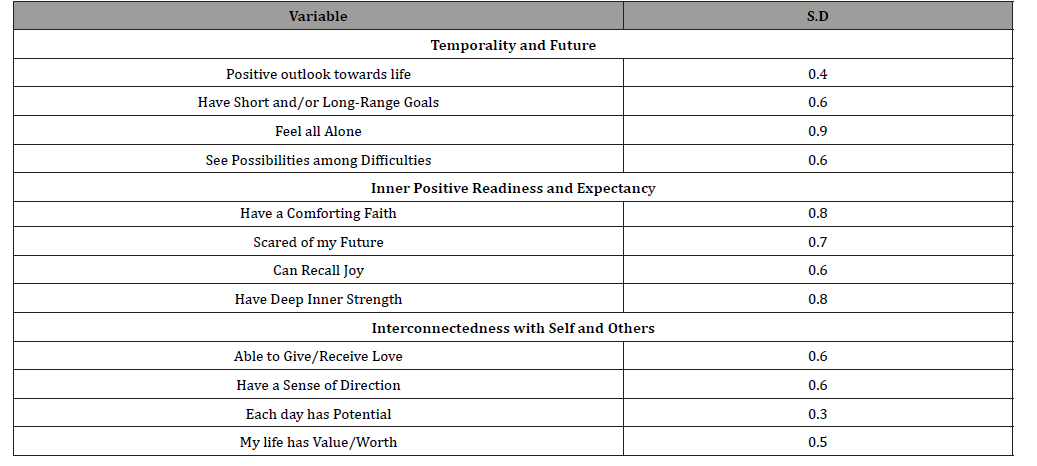
The level of hope was rated through the 12-item, previously validated, 1999 Hope Herth Index Likert scale quantitative assessment tool [14]. Each item on the Herth Index tool is rated between 1-4, (Strongly Disagree, Disagree, Agree, Strongly Disagree), with possible overall scores ranging from 12-48 [14]. Items number three and six on the tool, however, are reversed scored due to the type of negative affirmation utilized in the assessment [14]. Summing all variables results in a degree of hope with higher scores suggesting elevated levels [14]. The individual variables of hope are also grouped into three categories: temporality and future; positive readiness and expectancy; and interconnectedness with self and others [14].

Descriptive statistics were used to report central tendencies and sample standard deviation of variables. All statistical analyses were conducted using the Statistical Package for Social Sciences (SPSS Version 26).

Results and Discussion

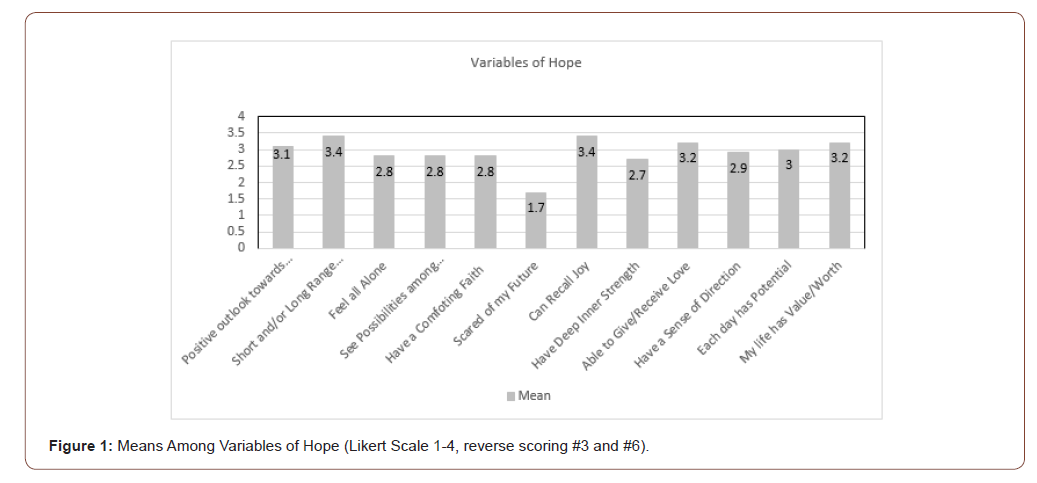
The majority of participants (94%) rated themselves as having a positive outlook on life, having a high sense of life’s worth and the ability to see potential in each day. Yet 89% were scared of their future and 39% of students reported feeling all alone.

Among the three categories of hope, interconnectedness with self and others was suggested to be the strongest (85%) followed by positive readiness and expectancy (79%); and temporality and future (68%). The average standard deviation among variables was .69, thus indicating little variability.

Research has consistently indicated that hope is a key component of lifelong wellness [8,9,13]. Yet university curriculums lack a focus upon teaching the concepts of hope to its students. Berg et al., (2011) suggest that engagement in healthy behaviors correlate favorably with levels of hope [13]. Ample research exists on the lifestyle choices of college students most notably which is assessed on a seasonal semester basis [1-4]. Teaching and encouraging grit, however, has been suggested to be a more acceptable measure among the academic community [15-17]. Grit has been suggested as resolution and drive towards goals, which is suggested to improve academic achievement, well-being, and personal accomplishment [15-17]. These traits, however, will not help a patient power through the latest experimental drug or cognitive speedbump when all medical effort has been exhausted. Nor will grit provide the connection needed between the healthcare provider and patient. Stitzlein (2020) theorizes that grit is more an individualistic approach to effort-focused goals whereas a hope approach is towards a communal outcome [15]. Additionally, hope has been suggested to be a bonding factor between patient and provider and facilitator of coping mechanisms [18]. Improving patient experiences starts with the healthcare provider, thus teaching how to cultivate hope first to healthcare students could be an opportunity to instill this positive trait within the future practitioner and the ability to transmit hope to the patient. The level of hope has been regularly assessed in patients, yet limited research exists on the hope in students who will one day treat these patients [18,21-23].

irispublishers-openaccess-complementary-alternative-medicine

Table 1: Standard deviations among Herth Hope Index variables.

irispublishers-openaccess-complementary-alternative-medicine

Academic institutions could be an ideal setting to enhancing student connection and overall wellbeing [7,8,15,24,25]. Various techniques to cultivate hope have been presented in the literature: positive affirmations, breathing techniques, mindfulness, visualization, journaling, gratitude, giving back, establishing connection among peers, promoting spiritual growth, and creating, as well as developing specific, measurable, attainable, realistic and time-bound (SMART) goals and finding encouragement through action [8,19,20,22,24,25]. Hopeful Minds, for example, is an evidenced-based curriculum designed to teach hope to elementary and middle school students [8,24,25]. Their research suggests that teaching hope is possible and results in an increase in “emotional intelligence, leadership, resiliency, self-esteem, mental health, and the prevention of suicide.” [8,24-26]. This curriculum could be adapted and implemented into higher education courses as well.

Evaluation of the role of hope offers an opportunity to assess university students’ current and future perceptions. Interventions to alleviate anxiety can instill future coping skills as well as professional interactions and realistic encouragement with patients [8,21-23]. Based on the current pilot study, students are fearful of the future. Addressing this trepidation can be integrated into the university curriculum. If academia can instruct how to power through challenges, hope can be taught to find encouraged emotion and action [8,15-17]. Teaching hope may instill the skill and belief in our students, our future healthcare practitioners, that optimism over struggle may play more of a key role in patient and personal outcomes [8,24,25].

Primary limitations of the study include the potential for random error on the part of the observer; the non-coverage bias of the segment sample; and type of sampling frame and segment participants, which limit external validity. Small sample size and sample validity are also limitations of the investigation due to the geographical locations of the university and may not be generalizable to the population. A final limitation of the study is that the study is an observational study rather than an experimental design with researcher intervention [27].

Future research should include the assessment of hope on a larger scale among future healthcare professionals, identification of specific fears of the future as well as interventions to examine the changes of perceptions of hope among students.

Conclusion

Assessing hope can provide valuable insight into students’ current and future perceptions of personal and professional life. Teaching students how to develop a stronger outlook and active skills while lessening anxiety and depression may alleviate the fear of the future and feelings of loneliness while strengthening self-efficacy. While teaching the application of hope is not a typical course in a rigorous university healthcare curriculum, maybe it should be.

To read more about this article..Open access Journal of Journal of Complementary & Alternative Medicine

Please follow the URL to access more information about this article


To know more about our Journals...Iris Publishers

To know about Open Access Publishers

Monday, April 22, 2024

Iris Publishers-Open access Journal of Textile Science & Fashion Technology | The Design and Development of Photochromic Jacquard Woven Fabric


Authored by Chunhong Lu*,

Abstract

The jacquard woven fabric is often composed of dyed yarns to demonstrate brilliant colors and ever-changing patterns. Currently, the innovation of most jacquard woven fabrics focuses on pattern design, complicated weave structure and weaving process. To endow traditional jacquard woven fabric with functionality for value-added applications, it is necessary to combine artistic jacquard woven fabrics with functional yarns. To achieve this goal, the photochromic jacquard woven fabric has been developed by using photochromic yarn as weft yarn for reversible color change effect under sunlight or ultraviolet (UV) light. The design of photochromic jacquard woven fabric includes fabric pattern design and process design. Three jacquard woven fabric samples have been developed by changing two process parameters including weft density and weave structure. The effect of weft density and weft-float length on the photochromic performance of the jacquard woven fabrics has been investigated by comparing the coloration time and the color recovery time of fabricated samples with various weft densities and different weave structures under natural sunlight. The results show that as the jacquard woven fabric’s weft density increases, the coloration and color recovery time of jacquard woven fabric is prolonged. Similarly, with longer weft-float in the fabric weave structure of the same pattern, the color recovery time of jacquard woven fabric is prolonged. The design and development of the photochromic jacquard woven fabric not only indicate the fabric’s aesthetic value, but also provide practical reference for the design of smart fabrics.

Keywords:Jacquard woven fabric; Weave design; Photochromic behavior

Introduction

Jacquard woven fabrics often demonstrate exquisite and artistic pattern with ever-changing colors and texture by interweaving colored warp and weft yarns. They are the combination of art and weaving technology, which can be innovated in terms of artistic color, style, and weave structure, etc. Jacquard woven fabrics are widely used in the fields of apparel, home textile and decoration, which have a large number of consumers and a growing market.

In recent years, the design and development of jacquard woven fabrics mainly focus on diversified raw materials selection, modern style of pattern design, complicated weave structure and fabrication process. For instance, innovated pleated jacquard woven fabrics with pleat length up to 23.7 mm can be achieved by modern manufacturing equipment of air jet loom [1]. Also, embossed wool jacquard woven fabrics can be obtained by retraction method [2]. However, the integration of functionality into jacquard woven fabrics are not widely investigated to meet the diverse needs of the market. Currently, a few researchers have successfully developed functional jacquard woven fabrics. For example, antimicrobial jacquard woven fabric has been obtained by blending antimicrobial viscose fibers with cotton fibers at a 3:7 ratio [3]. A jacquard woven fabric with complex functions of UV resistance, flame retardancy and odor absorption, has been fabricated with flame retardant polyester warp yarns and blended weft yarns with UV resistant polyester and cellular photocatalytic polyester fibers [4]. Among the functional textiles, smart textiles with functions such as health monitoring, temperature control, data collection and color changing, etc., can better meet the needs of consumers in the age of information and intelligence. As one type of these smart textiles, photochromic fabrics change color when they are exposed to sunlight or UV light [5]. This is mainly because the photochromic compounds in the fibers/yarns cause structural changes and further color changes in the absorption spectrum. When the fabric is no longer exposed to sunlight or UV light, the color changes back to previous state, therefore this color change process is often reversible.

In general, the photochromic function of fabrics is mainly achieved by photochromic fibers/yarn or by fabric finishing [6,7]. The photochromic fibers/yarns can be directly woven into fabrics, which provide a facile way to achieve functional textiles. Typically, photochromic fibers/yarns are obtained by the following methods: (a) Graft photochromic monomer onto the main or side chain of polymer by graft polymerization followed by fiber spinning; (b) Incorporate photochromic compounds into spinning dopes before fiber spinning; (c) Fill the gap between fibers with microcapsules containing photochromic compounds. Finishing is also a simple way to endow the fabrics with photochromic behavior by the following methods: (a) Dye the fabric with photochromic dyes; (b) Chemically crosslink the adhesives containing photochromic dyes with fabric by impregnation. Currently, research and development regarding the use of photochromic materials in fabrics are not very mature, they are still at an exploration stage. For instance, Fan, et al. [8] treated cotton fabrics with double-shell polyurethane-chitosan photochromic microcapsules using the coating method. Lee, et al. [9] treated a polyamide fabric with a photochromic material in a dye bath and then soaked the fabric in a polymer solution to form a polymer film for durable photochromic performance, which showed a decrease of 30-50% in discoloration rate. Cheng, et al. [10] introduced epoxy into the silica matrix of silica/photochromic compound dye to improve the durability of photochromic dye in finished fabrics and the resulting fabric had a wash resistance up to 1000 times. However, these photochromic fabrics aforementioned can only change color as a whole piece, therefore demonstrating a tedious photochromic effect.

To demonstrate photochromic behavior of fabrics with exquisite patterns and ever-changing effect, it is necessary to develop photochromic jacquard woven fabrics. In this work, photochromic jacquard woven fabric is designed and developed by using the photochromic yarn as the weft yarn system. The photochromic yarn containing photochromic microcapsules on the surface or in between the fibers shows substantial effect of color-changing. The photochromic jacquard woven fabrics have been fabricated to investigate the effect of weave structure and weft density on the photochromic performance of the jacquard woven fabrics. The fabric’s interaction with the environment [11] will bring a new intelligent experience and artistic interest to the user or wearer.

Design and Development of Photochromic Jacquard Woven Fabric

The design of the functional jacquard fabric included two parts, which were pattern design and weaving design. Pattern design was completed by Corel Draw software. Computer Aided Design (CAD) (ZDJW Ltd. Co., China) software was used for plan of weave, which included the design of the weave repeat, the designation of warp and weft densities, color separation, the determination of picking order, the design of weave structure and the generation of electronic jacquard card for weaving [12]. The following sections will introduce the details of fabric design.

Pattern design of jacquard woven fabric

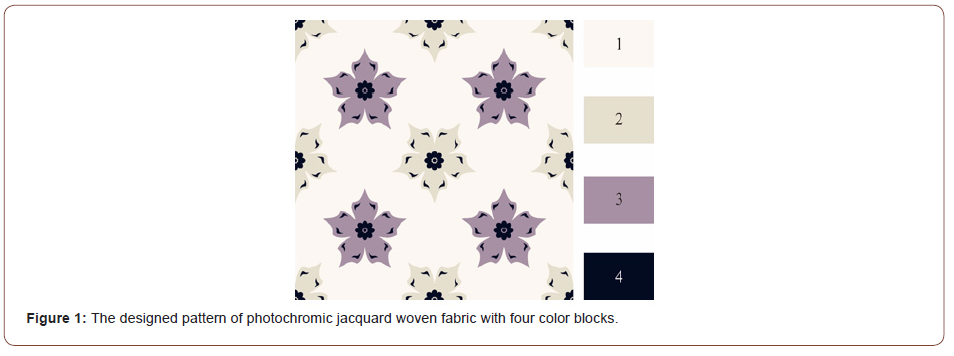
As shown in Figure 1, the designed pattern for the photochromic jacquard woven fabric in this work is simple and elegant. There are totally four colors in the designed pattern with each color block representing a designated weave structure. The pattern design adopts abstract flower graphic as the main theme, which indicates beautiful thing in life. With the large flower patterns, it is more convenient to observe the color change process when the fabric is exposed to natural sunlight. It should be noted that the flower pattern has two different color blocks corresponding to two weave structures with different weft-float lengths. Thus, it is much easier to indicate the effect of the weave structure on the photochromic performance of the fabric with same surface area.

irispublishers-openaccess-textile-science-fashion
Fabrication of photochromic jacquard woven fabric

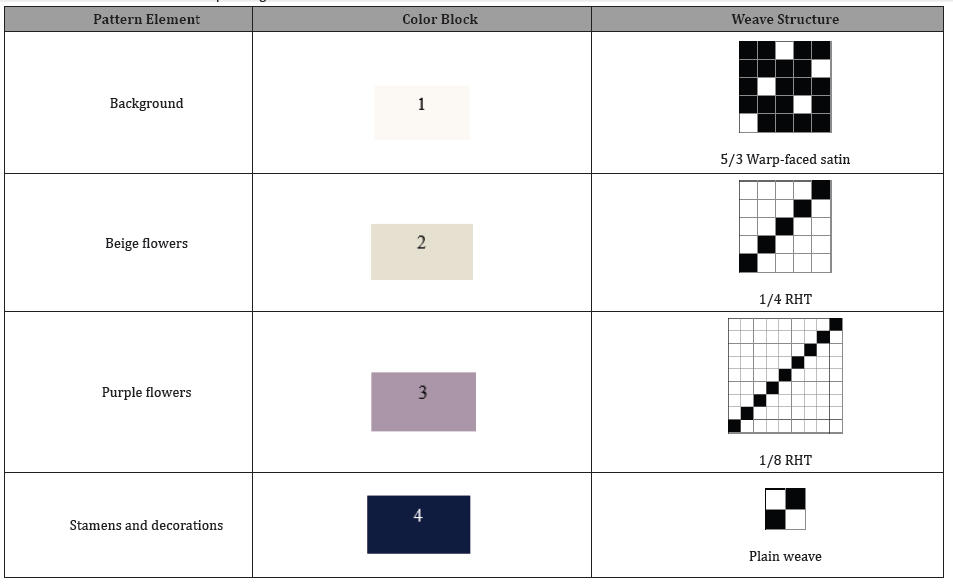
To obtain photochromic jacquard woven fabric, one type of weft yarn and one type of warp yarn are used for the formation of weave structure, demonstration of the pattern design and photoinduced coloration effect. A total of four weaves structures are used, and their relationship with corresponding pattern elements and color blocks from Figure 1 is summarized in Table 1. No.1 color block is 5/3 warp-faced satin weave structure. In this structure, warpfloats on fabric surface form the background part of the fabric pattern. No. 2 color block represents a 1/4 right hand twill (RHT) with weft-floats on the fabric surface for the demonstration of the beige flowers in the fabric pattern. No. 3 color block has a 1/8 RHT weave structure. In this part, weft-floats form the purple flowers pattern on fabric surface and the length of weft-floats are twice that of weft-floats in the weave structure of No. 2 color block. No. 4 color block consists of a tight plain weave structure that corresponds to the stamens and petal decorations in the designed fabric pattern.

Table 1:Pattern elements’ corresponding color blocks and weave structures.

irispublishers-openaccess-textile-science-fashion

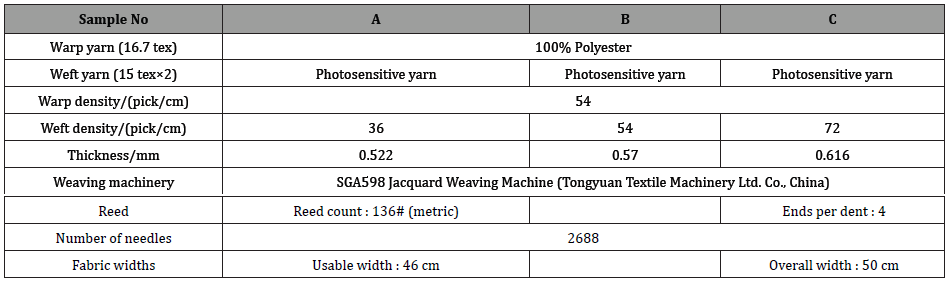
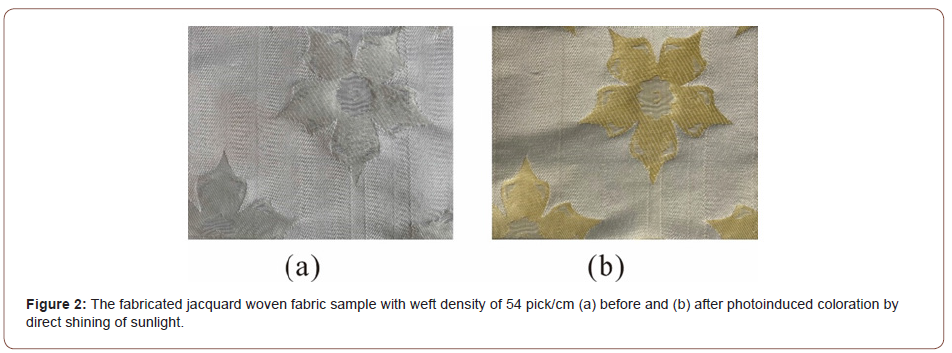
In this work, three types of photochromic jacquard woven fabric samples were woven. Their weft densities are 36, 54 and 72 pick/cm, respectively. The warp yarn is a 16.7 tex polyester yarn. The weft yarn is a 15 tex×2 photochromic yarn (purchased from Yiyuan Co., China), which changes color from white to yellow under sunlight. The photochromic yarn changes color mainly due to the photochromic microcapsules. This smart yarn has significant photoinduced coloration effect, good thermal stability and launderability. The specifications of sample fabrics are shown in Table 2, in which the fabric thickness has been measured according to the standard GB/T 3820-1997 Determination of Thickness of Textiles and Textile Products. The digital photographs of sample fabrics before and after photoinduced coloration are shown in Figure 2. It is observed that flower pattern in the sample fabric clearly shows white warp and weft yarns with no sunlight. After direct shining of sunlight, the white flower pattern with photochromic weft yarn floats on fabric surface clearly turns into yellow color.

Table 2:The specifications of all jacquard woven fabrics.

irispublishers-openaccess-textile-science-fashion

irispublishers-openaccess-textile-science-fashion

Evaluation of Photochromic Behavior of Jacquard Woven Fabrics

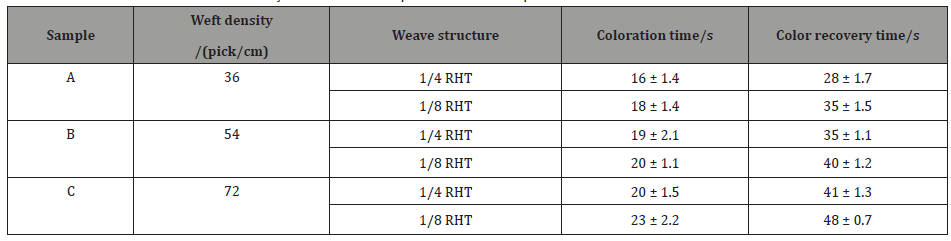
Up to date, there are few test methods to evaluate photochromic behavior of jacquard woven fabrics. In this work, the influence of weft density on the photochromic performance of jacquard woven fabrics is indicated by recording the coloration time under direct natural sunlight and color recovery time in the absence of sunlight of fabric samples with different weft densities. Moreover, the influence of weft-float length on the photochromic performance of jacquard woven fabric is studied by recording the coloration/color recovery time of flower patterns with different weave structures of the same fabric.

The test procedure is as follows: fabric sample was placed under natural sunlight (UV index 2000 μW/cm), timing was immediately started to observe the process of the fabric pattern turning from white to yellow. Timing was stopped till the fabric sample no longer changed color. This time duration was defined as coloration time. When the fabric was blocked from direct sunlight, the time was recorded again till the fabric changed to complete white color. The time duration that the fabric sample fully restored its original color was recorded as the color recovery time.

Table 3:Coloration time and color recovery time of fabric samples with different specifications.

irispublishers-openaccess-textile-science-fashion

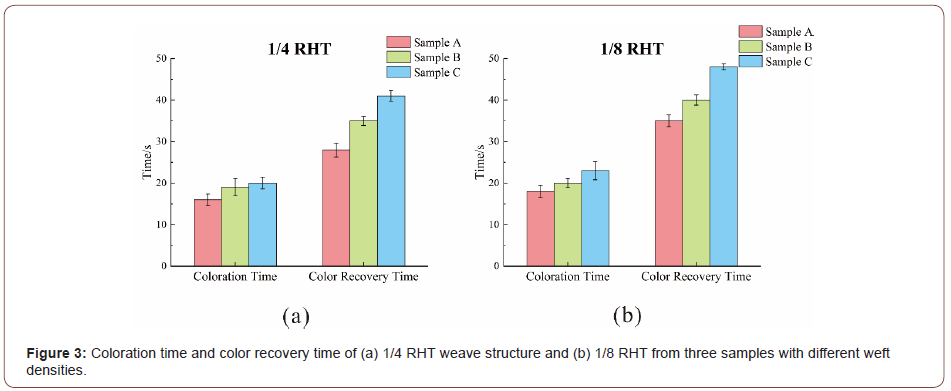
To better visualize the testing results, a comparison of the coloration time and color recovery time of 1/4 RHT weave structure and 1/8 RHT weave structure within three types of fabric samples is shown in Figure 3. In Figure 3a, the average coloration time of fabric pattern with 1/4 RHT is 16, 19 and 20 s, respectively for sample A, B and C. The average color recovery time of fabric pattern with 1/4 RHT is 28, 35 and 41s, respectively for three fabric samples. It is concluded that with increased weft density of the fabric sample, the coloration and color recovery time of fabric pattern with 1/4 RHT weave structure is prolonged. The same trend is shown in fabric pattern with 1/8 RHT weave structure as fabric weft intensity is increased (Figure 3b): the average coloration time of fabric pattern with 1/8 RHT is 18, 20 and 23s, respectively and the average color recovery time of fabric pattern with 1/8 RHT is 35, 40 and 48s, respectively for sample A, B and C. The jacquard woven fabrics with larger weft density have a larger number of photochromic weft yarns per unit area, indicating that the weft yarns are arranged more closely to each other and the fabric surface area exposed to the sunlight is smaller. Therefore, the absorption rate of UV energy for fabrics with higher weft density is slower, which corresponds to longer coloration time. Overall, with the same pattern area, fabric with higher weft density absorbs more UV energy and it takes more time to fully release the UV energy, resulting in longer color recovery time. On the contrary, fabric with smaller weft density has a looser structure with more photochromic weft yarns exposed to sunlight. Therefore, it absorbs UV energy more quickly and takes less time to fully discolor.

irispublishers-openaccess-textile-science-fashion

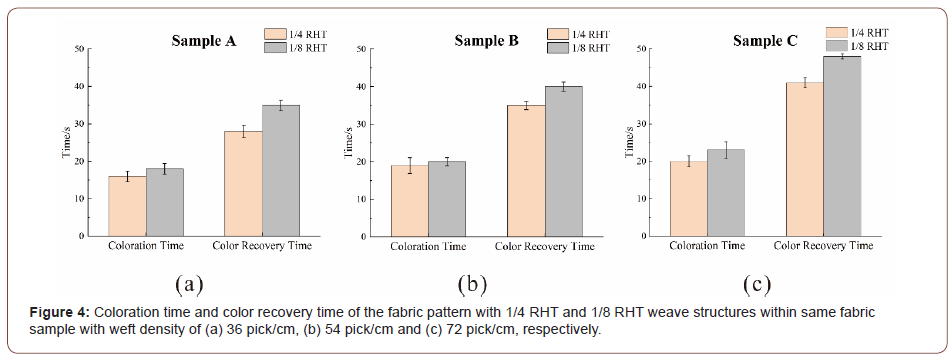
A comparison of coloration time and color recovery time for the two weave structures of each sample is shown in Figure 4. The coloration time of patterns with 1/4 RHT and 1/8 RHT structures within each type of fabric sample is not significantly different. However, the color recovery time of fabric pattern with 1/8 RHT weave structure is longer than that of pattern with 1/4 RHT weave structure in each fabric sample of A, B and C. The weft-floats of the 1/8 RHT weave structure are twice as long as the weft-floats of the 1/4 RHT weave structure. And longer weft-float in the same area of fabric pattern often suggests that more UV energy is absorbed by the photochromic weft yarns, therefore it takes more time to release UV energy and return to its original color. This is why the color recovery time of same pattern area with 1/8 RHT weave structure is longer.

irispublishers-openaccess-textile-science-fashion

Conclusion

The most distinctive features of jacquard woven fabrics are their brilliant colors and delicate patterns. This work combines jacquard woven fabrics with photochromic functionality to enable the color change of fabric pattern in varying environment and enrich the visual effect of artistic fabric. The combination of art and technology allows photochromic jacquard fabrics to be used in the fields of decoration, fashion clothing, etc. In addition, the influence of weft density and length of weft-floats on the photochromic performance of the fabrics was investigated. The results have practical implications for the innovation of highquality photochromic smart textiles with artistic value.

To read more about this article....Open access Journal of Textile Science & Fashion Technology

Please follow the URL to access more information about this article

https://irispublishers.com/jtsft/fulltext/the-design-and-development-of-photochromic-jacquard-woven-fabric.ID.000712.php

To know more about our Journals...Iris Publishers

To know about Open Access Publishers
Iris Publishers-Open access Journal of Hydrology & Meteorology | Influence of Community Resilience to Flood Risk and Coping Strategies in Bayelsa State, Southern Nigeria

  Authored by  Nwankwoala HO *, Abstract This study is aimed at assessing the influence of community resilience to flood risk and coping str...