Wednesday, November 4, 2020

Iris Publishers- Open access Journal of Addiction and Psychology | Perceptual Accuracy and Thought Complexity of a Correctional Population with the Wechsler IQ Test and the Rorschach


Authored by Alberto Miranda*

Introduction

The United States maintains the world’s largest population of prisoners [1]. According to Carson, “U.S. state and federal correctional facilities held an estimated 1,574,700 prisoners on December 31, 2013, an increase of 4,300 prisoners from yearend 2012” [2]. Recidivism rates in the United States are also among the highest. Results of a 2002 study showed that among the 275,000 prisoners released in 1994, 67.5% were rearrested within 3 years, 51.8% of whom were serving prison terms [3]. Additionally, minority groups account for a major portion of the prison population in the United States. In 2009, African Americans represented 39.4% of the prison and jail population while Hispanics represented 20.6% [4]. Taken together, these statistics encompass the continued need for research geared toward the development of assessment measures to improve rehabilitation and psychological treatment programs for the prison population in the United States.

One important component of rehabilitation may involve the cognitive functioning of prisoners. Studies have demonstrated a significant number of prisoners within secure forensic settings exhibit cognitive difficulties related to problematic thinking styles. Lindsay, Hastings, Griffiths, and Hayes, for instance, found a significant number of offenders in their study had an intellectual disability (IQ < 70) or were within the borderline range (IQ between 70 and 79) of intellectual functioning [5]. Similarly, Sinclair, Blencowe, McCaig, and Misch found prisoners tend to have significantly lower mean scores on the Full Scale Intelligence Quotient (FSIQ) and Verbal Comprehension Index (VCI) on the Wechsler Adult Intelligence Scale-Fourth Edition (WAIS-IV) than the general population [6,7]. Prisoners in that study also demonstrated greater neuropsychological deficits in behavioral inhibition, cognitive flexibility, and problem-solving [6]. Such difficulties are likely to underlie problem behaviors or cognitive distortions that result in criminal activity or other issues that affect social functioning. Understanding the relationship between cognitive deficits and criminal behavior thus has important implications for the conceptualization and rehabilitation of offenders.

have significantly lower mean scores on the Full Scale Intelligence Quotient (FSIQ) and Verbal Comprehension Index (VCI) on the Wechsler Adult Intelligence Scale-Fourth Edition (WAIS-IV) than the general population [6,7]. Prisoners in that study also demonstrated greater neuropsychological deficits in behavioral inhibition, cognitive flexibility, and problem-solving [6]. Such difficulties are likely to underlie problem behaviors or cognitive distortions that result in criminal activity or other issues that affect social functioning. Understanding the relationship between cognitive deficits and criminal behavior thus has important implications for the conceptualization and rehabilitation of offenders.

While the association between low intellectual functioning and criminal activity has long been demonstrated, standard neuropsychological measures have limitations in specifically assessing the prison population. Intellectual measures like the WAIS-IV are often insensitive to demographic variables such as ethnicity and educational attainment [11,12]. Lower scores may be representative of factors such as low socioeconomic status and poor quality of educational experience rather than true cognitive deficits. This is likely to result in the misclassification of many prisoners based on their perceived level of intellectual ability. Important aspects of cognitive functioning that pertain to treatment may also be overshadowed by the low base rates of the prison population. For this reason, additional measures and techniques, such as performance-based measures, may be necessary to supplement the assessment of prisoners to ensure greater accuracy.

Perceptual reasoning is one important aspect of cognition that plays a critical role in problem-solving. Perceptual reasoning is generally considered to be less affected by educational experience when compared to verbal comprehension tasks [13]. Measures that assess components of perceptual ability (i.e., accuracy and complexity) may therefore offer critical information about the cognitive ability of disadvantaged populations, such as offenders. The Rorschach is a behavioral problem-solving task in which respondents must use reasoning and problem-solving skills to make sense of the perceptual regularities and irregularities found in inkblots. In creating a response to the ambiguous and complex stimuli, respondents must utilize their internal cognitions and underlying schema. According to Perry, Viglione, and Braff, this makes the Rorschach a good technique for assessing thought disorder, psychological complexity when problem-solving, and interpersonal understanding of human representations [14].

The Rorschach includes several scales that incorporate cognitive functional abilities. The complexity scale from the Rorschach Performance Assessment System (R-PAS), for instance, provides information regarding a person’s cognitive capacity for problem-solving and organizing his or her environment. Responses that integrate different locations and have multiple descriptive variables result in higher complexity scores. The form quality scale represents adaptive functioning in how the individual interprets or organizes external stimuli from the environment. In a sense, this scale allows researchers to examine how an individual organizes ambiguous information into some type of order. Creating some type of order when information is random and disparate is important for successful problem-solving. According to Frank, form quality may also reflect an individual’s “capacity for better functioning in the world” [15]. Together, these scales may provide a key interpretation of the functioning of a person in his or her environment, as well as the ability to approach a situation that is unfamiliar, organize it, and respond cohesively. In this manner, performance-based measures, such as the Rorschach, tap into crucial components of cognitive style, or rather the preferred way in which an individual processes information.

Statement of the Problem

Current cognitive assessment of the prison population is hindered by a variety of factors, including test bias of intellectual measures, subcultural components of the prison environment that influence performance, and the underrepresentation of prisoner normative data on the standard measures used. The Rorschach, however, may offer a unique opportunity to enhance the assessment of intellectual and cognitive ability specific to the prison population. Contemporary intelligence tests appear to be better indicators of socioeconomic status and education, thus giving clinicians information on the limitations or relative cognitive strengths of their patients. These measures, however, do not provide a window into how a subject processes stimulus. The Rorschach demonstrates where the perceptual processing problems are located and indicates how faulty processing may lead to problematic thinking and judgment. In other words, intelligence tests indicate the result of cognitive processes whereas the Rorschach demonstrates the underlying cognitive processes that (in combination with other factors such as education and socioeconomic status) result in the IQ test scores a person ultimately obtains. Thus, the Rorschach may potentially give unique information to provide better intervention strategies and treatment that will address patients’ specific needs, because focus can be brought to specific cognitive processes that need to be modified if people are to make better intellectual analyses and decisions. However, limited empirical support, especially in relation to the prison population, exists to support this claim. While perceptual accuracy appears to play an important role in the development and maintenance of cognitive distortions, it remains unclear as to how perceptual problems specifically relate to social functioning and criminal behavior.

While the prison population and recidivism rates remain high, it is necessary to understand how problems with social and cognitive functioning may result in criminal behavior for some individuals. The present study was designed to address two specific goals. The first was to uncover how intellectual ability relates to performance within the cognitive domains of the Rorschach (i.e., perceptual accuracy, thought complexity, and thought disturbance). The second goal was to investigate how perceptual inaccuracy relates to problems with social functioning or criminal behavior. The current study was guided by a quantitative design in which the researcher examined archival data from two assessment sites. In doing so, the researcher compared the intellectual functioning, perceptual accuracy, thought complexity, and thought disturbance of adult male prisoners from a California prison for men to those of an adult male sample from an outpatient clinic. Each participant previously had been administered a neuropsychological battery that included the WAIS-IV, Rorschach (using the R-PAS scoring method), and the Personality Assessment Inventory (PAI) or the Minnesota Multiphasic Personality Inventory-2 (MMPI-2). These measures were used separately to determine overall intellectual abilities (WAIS-IV FSIQ, VCI, PRI, WMI, PSI), perceptual reasoning (WAIS-IV PRI), perceptual accuracy (R-PAS FQo%, FQu%, FQ-%, WD-%), perceptual complexity (R-PAS Complexity and F%), and thought disturbance (R-PAS WSumCog, TP-Comp, EII-3).

This study offers several important implications for clinical practice. Determining whether the Rorschach cognitive variables correlated with other neuropsychological measures was designed to support its utility to enhance the understanding of a patient’s cognitive style. As measures such as the WAIS-IV may be limited in terms of assessing certain populations, the Rorschach may help to correctly classify individuals with poor intellectual functioning specific to problems with perceptual accuracy or complexity. Furthermore, by uncovering the relationship between perceptual accuracy and problems with social functioning, clinicians in correctional settings can better address the specific needs of their patients.

The present study

While it appears that perceptual accuracy may relate to adaptive functioning, it is unclear whether severe deficits lead to more problem behaviors, including criminal activity. The present study was designed to address two specific goals. The first was to uncover how the Rorschach variables of form quality, complexity, and thought disturbance underlie the cognitive processes that influence IQ score as measured by the WAIS-IV. The second goal was to investigate how perceptual accuracy, thought complexity, and thought disturbance scores relate to problems with social functioning or criminal behavior. The current quantitative study involved an examination of archival data from two assessment sites to observe differences between the intellectual functioning, perceptual accuracy, and thought complexity of adult male prisoners compared to a normal sample. Data from adult male inmates from the men’s prison and adult male clients from the outpatient clinic were used. Each participant previously had been administered a psychodiagnostic battery that included the WAIS-IV, Rorschach (using the R-PAS scoring method), and the PAI or MMPI- 2. The study involved exploring the relationship between Rorschach cognitive variables (perceptual accuracy, thought complexity, and thought disturbance) and intellectual/perceptual ability as measured by the WAIS-IV. In addition, it involved an examination of differences between the two samples on R-PAS performance, as well as differences that existed within the incarcerated sample by designated level of care.

Null hypotheses

Five hypotheses (stated in null form) were determined based on the findings from the literature:

A. Hypothesis 1: There will be no significant difference between participants’ performance on Rorschach cognitive variables (form quality, thought complexity, and thought disturbance scores) based on intellectual ability.

B. Hypothesis 2: There will be no significant difference between participants’ performance on Rorschach cognitive variables (form quality, thought complexity, and thought disturbance scores) based on perceptual ability (PRI).

C. Hypothesis 3: There will be no significant difference in R-PAS variables (form quality, thought complexity, and thought disturbance) between offenders and outpatient subjects.

D. Hypothesis 4: There will be no significant difference in R-PAS variables (form quality, thought complexity, and thought disturbance) between varying degrees of institutional care level for offenders (GOB, CCCSM, MHCB).

E. Hypothesis 5: There will be no significant interaction effect between incarceration status and level of cognitive functioning on R-PAS variables.

Considering that the Rorschach variables of form quality, thought complexity, and thought disturbance have demonstrated some relation to intellectual ability, it was expected that participants with lower FSIQ and PRI scores would show greater impairment levels on these Rorschach variables. Furthermore, as problems with perceptual accuracy, thought complexity, and thought disturbance have been demonstrated to be related to psychopathology, learning disabilities, and poor social functioning, it was expected that offenders would demonstrate greater problems on these variables when compared to an outpatient sample.

Methods

Participants

A purposeful and convenient sample was collected using archival data from the men’s prison in California, and from the outpatient clinic in California. The archival data from the prison consisted of previously collected test batteries that were administered by psychodiagnostic practicum students with adult male offenders who were referred for psychodiagnostic assessment. Archival data from the outpatient clinic consisted of previously obtained test batteries also administered by psychodiagnostic practicum students with adult males (>18 years) who were referred for psychodiagnostic or neuroeducational assessment. All testing completed from both sites was supervised by a licensed psychologist. Only complete batteries were considered for the current study. A complete battery consisted of a WAIS-IV, PAI or MMPI-2, and a Rorschach using the R-PAS scoring system. Data from participants were excluded if the presence of a previously diagnosed brain injury, psychotic disorder, or dementia was indicated in their case file. Data collected from the outpatient clinic were also excluded for those participants with a reported history of arrest. Test validity of the remaining participants was then screened using the validity scales of either the PAI or MMPI-2. Only those participants with valid profiles were used for this study, resulting in 36 participants from the CIM and 43 from AUTAPS for a total of 79 participants.

The mean subject age of the inmate sample (n = 36) was 44.33 (SD = 14.48) years. The mean subject age of the outpatient sample (n = 43) was 28.51 (SD = 9.95) years. Education for the entire sample (N = 79) ranged from 6-22 years. The mean education level for the inmate sample was 11.64 (SD = 2.53) years, while the mean education level for the outpatient sample was 14.16 (SD = 2.71) years. Ethnic background for the sample demonstrated a diverse pool with 54.5% identifying as White, 15% as Latino, 4% as African American, 4% as Asian, 2% as Native American, 5% as multiracial, and 1% as another ethnic background.

Measures

Wechsler adult intelligence scale-IV: The Wechsler Adult Intelligence Scale-IV (WAIS-IV [7]) was used to provide a measure of general intellectual functioning and perceptual reasoning ability. The WAIS is a well-established scale with high consistency. According to the test manual, over a 2-12-week time period, test– retest reliabilities ranged from 0.70 (seven subscales) to 0.90 (two subscales). Inter-rater coefficients were high, all being above 0.90. The WAIS-IV is also correlated highly with the Stanford-Binet IV test (0.88).

Rorschach inkblot technique: The Rorschach was used to assess perceptual accuracy, complexity of thought processes, and thought disturbance using the R-PAS scoring system [16]. The R-PAS scoring system was normalized using an international reference sample of 640 individuals. About one fifth came from the United States and about two thirds from nine European countries. Validity was established by correlating the scales with other known measures. For instance, Weiner found an effect size “almost identical” to the MMPI [17]. Viglione and Taylor demonstrated a strong inter-rater reliability between 85% and 99% [18]. Exner (as cited in Groth-Marnat) reported test–retest reliabilities from 26-92 over a 1-year interval considering 41 variables [19].

Several specific R-PAS variables were used in this study to investigate perception and thinking domains. Form quality (FQ) is designed to measure the accuracy of the forms involved in a response; in other words, how well a response fits the blot contours at the location on the card. As such, form quality percentages (FQ-%, WD-%, FQo%, and FQu%) generally measure the conventionality of perception and reality testing. FQ-% is a measure of distortion or misinterpretation, often leading to poor judgments or unconventional behavior. WD-% more specifically indicates whether distortion or misinterpretation occurs even in perceptual situations that are more commonly selected. FQo% is a measure of conventional judgment, while FQu% measures unconventional and individualistic ways of interpreting the world. Additional cognitive variables were used that are generally associated with thought complexity and thought disturbance. Complexity is a variable that measures differentiation, integration, and productivity at the response level. It is derived from the sophistication of location, space, and object qualities within one’s response. The Form % variable relates to the proportion of pure form responses in a record and is generally considered to be the opposite of the Complexity variable (i.e., simplicity). The Ego Impairment Index-3 (EII-3) is a broad measure of thinking disturbance with the components of reality testing, thought disturbance, crude and disturbing thought content, and measures of interpersonal misunderstanding and disturbance. The Thought & Perception Composite (TP-Comp) assesses reality testing and thought disorganization. Finally, the Weighted Sum of the Six Cognitive Codes (WSumCog) is a measure of disturbed and disordered thought. Procedures.

Archival data collected from CIM involved the testing of offenders who had been referred for psychodiagnostic evaluation. At the time of testing, subjects were provided an informed consent that explained their rights to confidentiality along with the process of neuropsychological evaluation. Subjects were then administered a battery that minimally included the WAIS-IV, the Rorschach (using the R-PAS scoring system), and the PAI or MMPI-2. The batteries were administered by psychodiagnostic practicum students who were supervised by a licensed psychologist. Once the testing had been completed, subjects were provided with a feedback session to discuss the findings of the evaluation.

Archival data collected from the AUTAPS clinic involved the testing of adult males who had been referred for psychodiagnostic or neuroeducational evaluation. At the time of testing, subjects were also provided with an informed consent that explained their rights to confidentiality and the process of neuropsychological evaluation. Subjects were then administered a battery that also minimally included the WAIS-IV, the Rorschach (using the R-PAS scoring system), and the PAI or MMPI-2. Once the testing had been completed, subjects were provided with a feedback session to discuss the findings of the evaluation.

For the purpose of this study, the researcher reviewed all available psychological assessments completed by psychodiagnostic practicum students from both the CIM and AUTAPS locations that met the inclusion criteria. All psychological test data and reports were kept confidential in a locked file cabinet in the corresponding office of each assessment program’s supervisor. Archival data and specific test score data were put into a spreadsheet with an ID number, so all assessment data were de-identified and aggregated. All the information was stored on a password-protected computer to which only the researcher and his supervisor had access. Demographic information such as age, race, and education level were accumulated into a spreadsheet format along with the prevalence and incidence rates of all other relevant variables. Any information that could identify the subjects was excluded from the data collection, including name, inmate number, date of birth, place of origin/crime, and any unique developmental/life characteristics or experiences.

Case information from the prison was then grouped according to level of care: general prison population (GOP), clinical care case management system (CCCMS), and mental health crisis bed (MHCB). Data from the outpatient clinic participants were grouped as the outpatient sample. From the WAIS-IV, the FSIQ, VCI, PRI, WMI, and PSI were recorded to account for the individual’s intellectual and perceptual ability. Scores were then grouped into seven categories according to the classification descriptions of the WAISIV: Extremely Low, Borderline, Low Average, Average, High Average, Superior, and Very Superior. From the R-PAS, variables that account for perceptual accuracy (FQ-%, WD-%, FQo%, and FQu%), thought complexity (Complexity, F%), and thought disturbance (WSumCog, TP-Comp, and EII-3) were recorded. Adjusted R-PAS scores using the R-Optimized administration were recorded and assessed for the purpose of this study.

Results

Statistical analysis was conducted using the SPSS software package. Descriptive statistics were computed for all demographic variables. Comparisons between age, education, and the two IQ score measures (Full Scale IQ Score and Perceptual Reasoning Index) based on incarceration status were examined using independent samples t tests. The results are reported below, and the means and standard deviations are presented in Table 1. Relationships between subjects’ R-PAS performance on perceptual accuracy (FQ-%, WD- %, FQo%, and FQu%), thought complexity (Complexity, F%), and thought disturbance (WSumCog, TP-Comp, and EII-3) and variables of level of care, incarceration status, cognitive functioning, and perceptual reasoning were analyzed using multivariate analyses of variance (MANOVAs). Follow-up analyses using age and education as covariates were also conducted.

Independent samples T tests

An independent-samples T test was conducted to compare age differences between the samples of outpatient and inmate subjects. The incarcerated sample was found to be significantly older than the outpatient sample; t (60.253) = -5.549, p = .000. The means and standard deviations are reported in Table 1.

An independent-samples T test was conducted to compare differences in level of education between the samples of outpatient and inmate subjects. The outpatient sample was found to have a significantly higher level of education compared to the inmate sample; t (77) = -4.250, p = .000. The means and standard deviations are reported in Table 1.

An independent-samples T test was conducted to compare differences in FSIQ scores between the sample of outpatient and inmate subjects. The outpatient sample was found to have significantly higher FSIQ scores compared to the inmate sample; t (77) = 3.293, p = .001. The means and standard deviations are reported in Table 1.

An independent-samples T test was conducted to compare differences in PRI scores between the sample of outpatient and inmate subjects. The outpatient sample was found to have significantly higher PRI scores compared to the inmate sample; t (77) = 2.726, p = .008. The means and standard deviations are reported in Table 1.

An independent-samples T test was conducted to compare differences in VCI scores between the sample of outpatient and inmate subjects. The outpatient sample was found to have significantly higher VCI scores compared to the inmate sample; t (77) = 4.201, p < .001. The means and standard deviations are reported in Table 1.

An independent-samples T test was conducted to compare differences in WMI scores between the sample of outpatient and inmate subjects. The outpatient sample was found to have significantly higher WMI scores compared to the inmate sample; t (77) = 3.531, p = .001. The means and standard deviations are reported in Table 1.

An independent-samples t test was conducted to compare differences in PSI scores between the sample of outpatient and inmate subjects. No significant difference was observed. The means and standard deviations are reported in Table 1.

Multivariate analysis of variance of effects of FSIQ on R-PAS variables

A MANOVA was used to examine form quality (FQ-%, WD-%, FQo%, and FQu%), thought complexity (Complexity, F%), and thought disturbance (WSumCog, TP-Comp, and EII-3) as dependent variables (DVs), and FSIQ score (Extremely Low, Borderline, Low Average, Average, High Average, Superior, and Very Superior) as the independent variable (IV). The multivariate analysis showed a multivariate effect for intellectual functioning, Wilk’s Lambda = .212, F (54,330.931) = 2.179, p < .001, indicating a difference in form quality and thought complexity among the different levels of intellectual functioning. Thus, Hypothesis 1, which was that there would be no significant difference in the R-PAS variables based on intellectual ability (FSIQ), was rejected.

Because the overall MANOVA was significant, univariate ANOVAs were conducted to determine which specific dependent variables showed differences among the different levels of intellectual functioning using FSIQ. The univariate F tests showed there were significant differences among the levels of intellectual functioning on Complexity scores, F = 6.674, df = (6,72), p < .001; F% scores, F = 3.699, df = (6,72), p = .003; and WSumCog scores, F=3.698, df =(6,72), p = .003. FQ-% scores approached conventional levels of statistical significance, F = 1.484, df = (6,72), p = .196, while the remaining variables were found to be not significant. A follow-up analysis using age and education as covariates resulted in similar findings.

To read more about this article...Open access Journal of Addiction and Psychology

Please follow the URL to access more information about this article

https://irispublishers.com/oajap/fulltext/perceptual-accuracy-and-thought-complexity-of-a-correctional-population-with-the-wechsler-iq-test.ID.000557.php

To know more about our Journals....Iris Publishers

To know about Open Access Publishers

Iris Publishers- Open access Journal of Addiction and Psychology | From Stressed Self-Esteem to Emotional Climate Change


Authored by Georg Franck*

The Fight for The Victim Role

Globally networked communication connects everyone and everything. At the same time, prosperity gaps and global shifts in labour markets are causing an unprecedented rise in global migration. The complexity, confusion and speed of globalization overburdens our emotional even more than our rational competence. The extent to which anxiety and diffuse indignation can be exploited for obscure purposes is shown by the political shifts of recent years.

Crucial to understanding these shifts is the question of whether they have a common denominator. The answer is a resounding ‘yes’. In the foreground is the ubiquitous fight for the victim role. The diffuse fears and confused defensive postures come together in a shared sense of being overlooked and abandoned. They manifest themselves not only in the struggle for the material benefits of globalization, but also in the struggle for media attention. The lack of social recognition is so hurtful because it strikes at the heart of the person: the way in which a person conceives of their-self: their self esteem.

But if withdrawal symptoms from lack of social recognition are behind the rampant willingness to be incited to anger, one should reconsider those accusations of irrationality and regressiveness on the part of the agitated masses. Instead, we should take the opportunity of venturing a meaningful and understanding interpretation––one which may also open up new perspectives of resistance.

Social Recognition and The Economy of Self-Worth

Self-esteem is the affective side of self-awareness. And it has its own logic. In contrast to the cognitive side of self-awareness, affective self-awareness must not claim autonomy. It eminently depends on outer esteem. It has become perfectly obvious that the ego one can afford depends on its income of appreciative attention. Affective self-awareness’ own logic is that of the psychic economy, which converts the flow of attention received into the asset of selfworth.

Decreasing incomes put pressure on this economy, as do rising demands. In the case that the economy collapses under stress and becomes unpredictable, our original diagnosis is correct, certifying the sheer irrationality and regressiveness suffered as withdrawal symptoms. And yet, our self-esteem is resilient, and shows itself equipped to weather the storm. How, then, does the economy of self-worth withstand such stress?

The conversion of attention income into self-esteem proves itself truly an economy of sorts with its inclination to resort to tricks of ‘creative accounting’ under stress. Since the stress in the case of affective self-awareness can originate both from the income side and from one’s own claim of self-esteem, different forms of ‘cooking the books’ should be observed.

In fact, fraudulent accounting of self-worth knows two common tricks. One is called vanity, the other resentment. Vanity comes into play when the inner claim overdraws the outer means. The trick, then, is to double standards in evaluating income depending on whether it comes from flattering or critical quarters. If you adapt the appreciation opportunistically, the flatterers’ attention rises in book value. One can, therefore, butter up one’s balance by choosing one’s friends according to their preparedness to dole out adulation.

We all know the corruption wrought by flattering praise; but equally we all have made acquaintance with the terrible distress brought about when the attention we believe we cannot do without is denied. We no longer know what else to do than to resort to an act of self-help: we try to persuade ourselves and others that those who deny us the longed-for attention are themselves unworthy of respect. We make unreserved use of the trick that vanity resorts to only furtively. In taking this recourse we feel ourselves unquestionably to be victims, and give ourselves thereby the license to unrestrained bullying.

Is not the insurrection of the insulted masses something of a mobilization of such self-defence? Is it not a mass release of resentment that is behind the emotional climate change? For those who feel pressed to denigrate others in order to save his or her own self-esteem, truth is of secondary concern. Now that reasons, however flimsy, for resentment are established, the ‘victim’ now has a quite another problem––namely that of a new attention dependency. Resentment is in need of resonance. If the denunciation is to be effective, it must be absorbed by others who are seeking confirmation of their own grievances, and who will in turn pass it on further.

The mass release of resentment may therefore be said to have two main drivers. First, significant parts of the population must have become acquainted with the distress of keeping self-esteem intact in the context of their income of attention. Secondly, and equally vitally, the rapid dissemination of resentment must be possible. With the advent of social media in an increasingly politically and economically volatile world, both these conditions now apply in those societies that most violently encounter this emotional climate change. To look at it another way, it is no surprise that inherent in the most technically advanced societies, which profit most from globalization, is a huge gulf between the winners and losers.

The concerns of those worried about job losses and labour migration have a hard time getting into the leading media of public opinion. It is not only the case that the articulation of their reservations might fail to make it through the filter of political correctness––but that their ability to reach out to a wider audience has also remained systematically curbed as long as the mainstream has been controlled by the paternalism of dedicated journalism. It belonged to the professional honour of the classical journalist to serve the audience with objectivity and reflection instead of merely aiming to please the crowd. For a long time now the medium of classic journalism has been under existential pressure, having now to compete with the rapid rise of new media. New media can be defined as those media that have left the sale of information for money behind to focus on the attraction of attention to be sold as a service to the advertising industry. Under the pressure of producing attraction services in the first place, a shift of power between journalism, public relations and advertising has taken place, associated with a sustained loss of trust in journalism (as sharply analysed by Fengler, Susanne & Stephan Ruß-Mohl, Journalists and the information-attention markets: Towards an economic theory of journalism, in: Journalism, 2008 - journals.sagepub.com). Where the service of attraction becomes more important than the production of news and reflected opinion, the vox populi consequently gets new chances to assail the bastion of journalistic virtue.

A real breach of the dam occurred with the arrival of social media. The business idea of Facebook, Twitter & Co is to scale the business model of ad-financed mass media down to the vendor’s tray. They make it possible to publish anything and everything online with nothing more than a smartphone at hand, and to profiteer by exploiting the attraction performance measured by the medium. Anyone who can publish on the World Wide Web is able to participate in the global battle for attention with measured results. Anyone can become a star by uploading a video on Youtube or serving up a misleading story on Facebook to fit a particular vulgar narrative. It suffices that the number and rate of increase of the clicks is noticed; the content is secondary. The new media succeed less in providing significant content than in exploiting our tendency to pay attention to what others pay attention to. In this way success in attracting attention becomes self-perpetuating.

This tendency of self-reinforced conspicuousness is particularly conducive to that resentment which seeks validation. By itself, this search is charged with potential synergy since it is only in its resonance that resentment is in its element. Where the willingness to revolt is common, it requires just a spark of confirmation to release avalanches of aggressive insults, hatred and suspicion, which, once released, sweep through the new media and engulf the already-weakened edifice of old media. The uproar consuming social media and the widespread sharing of negative emotions have blossomed into real recipes for success in the battle for likes and followers.

So, what it falls to us to explore is not only the alignment of rampant frustration and media resonance, but how the use of resentment has come to be the dominant strategy of overweening narcissists. The facilitation of popular outrage and a promise of revenge on the arrogant elites seems to be the very best way to capture the masses of attention with which the greedy ego enriches itself. Thus, even as part of these elites and in unsurpassed arrogance, one can rise to be the leader of the storm on the bastions of these same elites––and this only for the purpose of setting the crown on one’s own vanity.

To read more about this article...Open access Journal of Addiction and Psychology

Please follow the URL to access more information about this article

https://irispublishers.com/oajap/fulltext/from-stressed-self-esteem-to-emotional-climate-change.ID.000556.php

To know more about our Journals....Iris Publishers

To know about Open Access Publishers


Tuesday, November 3, 2020

Iris Publishers- Open access Journal of Archives in Biomedical Engineering & Biotechnology | Failure Criteria of Artificial Joints: A review


Authored by Abdelbary A*

Introduction

Artificial joint replacement is one of the most essential arthroplasty for sever diseases of human joints. This surgical treatment involves the replacement of native articulating joints, such as the knee, hip, ankle, and shoulder with artificial components. Currently, it is assumed that there are well over one million artificial joints implanted yearly into patients world-wide [1,2]. By 2030, there may be 500, 000 total hip arthroplasty (THA) and 3 million total knee arthroplasty (TKA) cases per year [3,4]. Various biomaterial combinations include metals, ceramics, carbon and synthetic polymers are now used in biomedical applications.

In particular, polymeric materials have shown a greatest success in this field due to its excellent tribological properties. Low friction coefficient, high wear resistance, compatibility of wear debris with the body, compatibility of being sterilized by γ-irradiation, and the facility to operate efficiently for long time under no maintenance conditions are the factors that have made it a highly successful bearing material in these applications [5-8].

For several decades’ polyethylene has remained the most suitable material choice for the articulating surface in total joint replacements [9-11]. UHMWPE used as an acetabular cup where the femoral head was stainless steel, ceramic or alumina. UHMWPE was first introduced by Charnley J [12,13] as an alternative for the failed previous polytetrafluoroethylene (PTFE), because the superior wear resistance of the former. A new type of polyethylene material has been developed recently which shown excellent wear properties compared to UHMWPE. This material has been named as ultra-low wear polyethylene (ULWPE). In addition, ULWPE has excellent wear resistance, which is also easy to process [14].

Friction, wear and lubrication of artificial joints play important roles in its successful function. However, it is unpredictable due to complex tribological and biological behaviours and long-term wear [15]. Research efforts are currently addressing the evaluation of the determinants affecting the overall wear rate of the artificial joint articulating surfaces, with the aim of reducing wear rate. However, one of the main challenges is the translation of research data from in vitro to in vivo environments [16]. For example, the wear debris produced by the hip joint simulator has a larger average size and wider distribution range compared to those from the implanted artificial joint [17]. The average diameter of the wear debris from joint simulator is 7.54 μm. The average diameter of the wear debris from artificial joint is 1.33 μm (about 18% of the wear debris from joint simulator).

In order to study the failure criteria of artificial joints, a pioneer work was done by Atkinson [13] based on the investigation of a number of worn hip joints ranging in age from 1- 12 years. They observed that the wear and deformation processes of the acetabular cups seemed to be as follows:

1. Initially, a running-in period: the entire cup surface wears abrasively.

2. With increasing mobility, the upper half of the cup wears adhesively.

3. After several years’ wear, fine fatigue cracks formed on the wear area.

Many questions which need answering were recognized:

Are any of the observed wear feature likely to enhance early failure of the acetabular cup or are there other possible mechanisms?

Are the surface fatigue cracks going to be deletrious? Will they shorten the useable lifetime of the cup?

What is the effect of the cyclic loading on the failure resistance and surface cracks of the polymeric material specially in fluid lubricated media?

What is the effect of the generated wear particle size on the clinical infection?

Finally, it was reported that no conclusions could be drawn, and further researches are necessary. For more than four decades, to the best of our knowledge, hundreds of researches were established in order to find answers for those questions. The present paper is aimed to review and argue the failure criteria of artificial joints.

Tribology of Artificial Joints

Tribology has a significant role in the functioning of artificial joints. General fundamentals of tribology can be used to understand the friction, lubrication and wear of natural and artificial joints in the body [18]. Friction played a dominant role in the design of original Charnley low-friction arthroplasty [19]. Also, wear has an important role, not only from the integrity of the prosthetic component point of view, but also from that of wear debris which can cause adversely biological reactions [15]. Finally, both of friction and wear can be reduced effectively by lubrication.

Friction

In his low-friction arthroplasty, Charnley, J. introduced the significance of friction in the design of artificial joints [12]. At first, McKee-Farrar introduced metal-on-metal hips. Then, polytetrafluoroethylene (PTFE) was selected for its lowest frictional coefficient, although massive wear was subsequently found with the cups made of this material. Charnley preserved with polymer on metal combinations to maintain low frictional torques and introduced UHMWPE cups sliding on stainless steel femoral heads. This combination of materials has proved to be extremely successful giving low friction, low wear rates of the UHMWPE and smaller amounts of wear debris, which could be more readily tolerated by the body [10,11,20,21].

The following three laws of dry friction are often defined:

1. The force of friction (F) is directly proportional to the applied load (W).

2. The force of friction (F) is independent of the apparent area of contact.

3. The kinetic force of friction (F) is independent of the sliding speed (V).

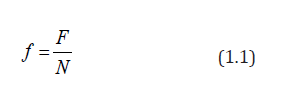
Kinetic friction is quantified through a coefficient, the coefficient of friction (COF) f, defined as the ratio between the magnitudes of the tangential/friction force F and the normal force N at the interface, therefore:

It is worth noting the peculiar behavior of a revolute/spherical joint with frictional contact, shown in Fig. 1 [22]. If we consider a pin rotating within a collar with constant angular velocity ω, under a load W through the center of the pin itself. In a smooth contact, the equilibrium of the pin is guaranteed by a normal (radial) force N = - W applied at the contact point K on the line of action of W. If friction cannot be neglected, the total contact force at the interface R, still with the same magnitude of W, is the sum of two components N and F, respectively normal and tangent to the surface at the contact point. Thus, in this case, K is shifted backwards in an angle φ= arctan(f), so that R restrains the motion and a torque Mf must be introduced to maintain the pin rotation (Figure 1).


Wear mechanisms

Wear is recognized as the main reason of implant failure, causing inflammatory reactions and osteolysis, which can lead to implant loosening. The fundamental wear mechanisms in artificial joint are adhesion, abrasion, creep and fatigue. However, pitting, scratching, burnishing and delamination on retrieved total condylar knee joint replacements are also detected [23]. Wear depends on many factors so it can be rather hard to predict which mechanism will affect the sliding bodies. This is done usually a posteriori and in many cases several types of wear are detected. The basic wear mechanisms used to describe the wear process in artificial joint replacements are [24]:

Abrasive wear: Abrasive wear is due to the action of hard particles or asperities that plough the softer counterpart. The debris size is of a similar magnitude to the surface roughness of the harder component. Adhesive wear, in which when local welding between asperities occurs, subsequently broken in the movement.

Surface fatigue: Surface fatigue is due to repeated stress cycles in the subsurface material, which can be the onset of microcracks and debris detachment. Fatigue wear can also occur on a macroscopic scale in the form of delamination. This occurs under cyclic loading when the stress applied to the material exceeds the material’s fatigue strength [25]. Adhesion and fatigue wear work together, with the surface asperities of the two surfaces momentarily sticking together causing shear stresses that, over time, lead to the eventual fatigue of the asperity; wear particles are generally larger than those that occur in abrasive wear [18].

Pitting: Pitting has long been associated with fatigue damage and commonly has been observed in retrieved implants sterilized with gamma radiation in air, especially tibial plateaus [26]. Pitting was observed in many of the retrieved implants in the present study, suggesting that fatigue wear mechanisms may have been active in these devices. Additionally, some specimens revealed evolution of the machining marks that was suggestive of fatigue crack growth striations, as shown in (Figure 2).

Cooper [27,28] studied the wear of UHMWPE sliding on metallic and ceramic counter faces under wide range of tribological conditions in order to investigate the influence of contact stresses on the macroscopic and microscopic wear mechanisms. The studies were conducted in pin-on-disc and pin-on-plate tribometers, hip joint simulators, and retrieve artificial joints taken from patients. In the body under cyclic loading, the macroscopic polymer asperity is cyclically deformed at the frequency of the loading cycle and this can produce crack propagation and surface fatigue within 10 μm of the surface under the polymer asperity. It is likely that cyclic loading is one of the main factors affecting failure of artificial joints. Under dynamic loading conditions found in artificial joints, subsurface cracking was found in the highly strained region. Subsurface crack propagation may well have accelerated the failure and removal of material from the highly strained polymer peaks, hence greatly increasing the macroscopic polymer asperity wear processes. These processes were not only important with respect to the increased volume wear debris produced but may also produce large wear particles which can cause adverse tissue reactions in the body.

Lubrication

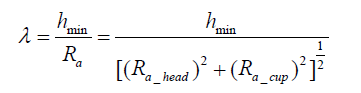
In general, lubrication refers to the existence of a lubricant between two surfaces in contact to avoid or reduce the interaction between their asperities. In healthy natural joints, synovial fluid is generally present as a lubricant. After joint replacements, a pseudo-periprosthetic synovial fluid is found to be similar to those from patients with osteoarthritis [29]. It is important to reduce the contact stresses in order to avoid failure of artificial joints, particularly for thin polymer cups. Effective lubrication, in terms of both boundary and fluid- film lubrication, is the key to reducing friction and wear in artificial joints [19]. The lubrication regime can be assessed either experimentally (ultrasound measurements) or theoretically. The theoretical assessment is based on the determination of the parameter λ defined as the ratio between the minimum film thickness hmin and the composite roughness of the two surfaces [30,31]:

where Ra is average roughness. Therefore, if a representative minimum film thickness is estimated and the surface roughness parameters are measured, the lambda ratio and the corresponding lubrication regimes can be determined accordingly:

Boundary lubrication: λ <1

Mixed lubrication: 1 < λ < 3

Fluid film lubrication: λ > 3

In joint bearing types, metal on polymer is considered to be boundary lubricated as the relatively soft polymer surface has a high roughness (~1 μm), hence surface asperity contact and wear cannot be avoided. Polyethylene does get polished or burnished in vivo which can reduce its roughness, however, the film thickness generated is insufficient to provide significant benefit. Metal on metal joints are generally considered to operate in the mixed lubrication regime. It is suggested that increasing the bearing radii, whilst keeping the radial clearance low, has been shown to increase the predicted film thickness in metal on metal hip prostheses sliding them down the slope of the Stribeck curve (Fig. 2) towards the fluid film lubrication regime [32].

Ceramic on ceramic bearings, compared to metal or polyethylene, are extremely hard and as such can be polished to a very fine surface finish (~ 0.004 μm Ra). The superior manufacturing tolerances of these bearings result in a reduced radial clearance (~ 0.04 μm) which when combined with the low surface roughness leads to a predicted fluid film lubrication regime during walking [33]. In contrast to the former findings, Abdelbary et al. [34] found dramatic increase in the wear rate of Polyamide sliding against stainless steel in water lubrication condition up to about 3 to 6 times those found in dry sliding condition, as shown in (Figure 3).

To read more about this article...Open access Journal of Archives in Biomedical Engineering & Biotechnology

Please follow the URL to access more information about this article

https://irispublishers.com/abeb/fulltext/failure-criteria-of-artificial-joints-a-review.ID.000556.php

To know more about our Journals....Iris Publishers

To know about Open Access Publishers

Iris Publishers- Open access Journal of Archives in Biomedical Engineering & Biotechnology | Characterization of Patients in Fertile Age with Vaginal Flow Syndrome


Authored by Pedro Rolando Lopez Rodriguez*


Introduction

Vaginal discharge is a common reason for gynecological consultation at any age, being highly frequent in women of childbearing age, who are concerned about their reproductive health [1]. Vaginal discharge syndrome is an infectious process of the vagina characterized by one or more of the following symptoms: leucorrhoea, vulvar pruritus, burning, irritation, dysuria, dyspareunia, vaginal fetus, determined by the invasion and multiplication of any microorganism and as a result of an environmental imbalance in the vaginal ecosystem [2]. This pathology has a wide range of causal germs and is easy to diagnose and its complications are frequently related to infantile and reproductive maternal morbidity [2,3]. They continue to be a public health problem in the world, they are more frequent in young, single adults and in urban areas, but without anyone with active sex life being exempt from suffering them. They can also cause complications or sequelae in both women and men and children, for example orchiepidimitis, acute pelvic inflammatory disease [hereinafter EIPA], sterility in both sexes, penile or cervix cancer, pregnancy complications, miscarriages, death fetal and / or maternal, premature birth, low birth weight, neonatal infections, congenital malformations and at risk of transmitting or becoming infected by the human immunodeficiency virus [hereinafter HIV] as demonstrated by several studies. [4-7]. In medical practice, vaginal infections represent a frequent health problem, representing approximately 75% of the patients who are consulted by vaginal discharge, according to the number of patients attending the medical consultation of some studies in Venezuela. Taking into account that in the same woman more than one clinical form can coexist [vaginitis and / or cervicitis] and if the gynecological examination does not allow to affirm the presence of a particular causative agent, the treatment should be focused in a syndromic way, at three infections most frequently associated with vaginal discharge syndrome: trichomoniasis, candidiasis and bacterial vaginosis; less frequently, these infections are caused by Neisseria Gonorrhoeae and Clamydia trachomatis [6,8].

Syndromic management represents an alternative to efficiently address this problem and with this type of approach the treatment of the causes most frequently associated with the syndrome in question is achieved and therefore the solution of more than 95% of cases is guaranteed [9]. The World Health Organization [WHO] estimated that 333 million new cases of curable sexually transmitted diseases annually in people aged 15 to 49, mostly in developing countries, which include member countries of the European community. On the other hand, recent calculations report that each year more than 340 million Cases of curable sexually transmitted infections [STIs] [including only those fungal and parasitic bacterial infections], which have as a manifestation the vaginal discharge syndrome, susceptible to effective treatments and that at least one million infections occur every day. For Latin America and the Caribbean alone, between 35 and 40 million cases of this group of Sexually Transmitted Infection were infected with more than 100 thousand infections per day [4,5]. Vaginal candidiasis is caused by a fungus or yeast found in the vulvo-vaginal mucosa that proliferates favored by broad-spectrum antibiotics, oral contraceptives, pregnancy, menstruation, diabetes mellitus, tight clothing, HIV infection, poor hygiene habits, etc. Women usually present with vulvar irritation and scarce exudate. The vulva may appear inflamed with excoriations and fissures. The vaginal wall may be covered by white, sticky and sticky yeast colonies. This entity began to be considered as a Sexually Transmitted Infection as of 1967 and it is currently accepted that 50% of the reported cases are the product of sexual contact. Its treatment consists in the use of clotrimazole 100 mg, intravaginal twice a day for 3 days or nystatin 100 000 U [vaginal ovum] intravaginally, once a day for 14 days [10]. In primary health care services these infections in adolescents are among the first causes of consultation, with a much higher incidence in those young people with active sexual life, although they have also been found in virgin adolescents. [eleven]. Vaginal symptoms are the most frequent reason for gynecology, being responsible for 6 to 10 million medical visits a year in the world [7]. In the United States about 30% of women of reproductive age have bacterial vaginosis [BV]. Almost 75% of all adult women have had at least one fungal infection in their lives. About 3% of women of reproductive age have trichomoniasis. Many women with vaginal infections have no symptoms, for example, only 16% of women with bacterial vaginosis report having vaginal symptoms, while out of every 100 women who have symptoms, such as pain, itching and discharge; 40 to 45 women have bacterial vaginitis; 20 to 25 women have a fungal infection; 15 to 20 women have trichomoniasis [7-12]. The World Health Organization reported that since 2006 approximately 15,700 women annually go to vaginal health problems in primary care facilities in West African countries [Ghana, Guinea, Mali and Togo], with very low cure rates associated with the costs and non-compliances of the treatment [7]. The results in European countries are also relevant with an estimated 250,000 women who, of childbearing age, go annually to vaginal discharge consultations. Being the most significant figure in women during pregnancy [7].

In Colombia, the prevalence in Colombia of bacterial vaginosis has varied between 9% in asymptomatic pregnant pregnant women and 30% in non-pregnant women from the general population [8]. Cuba does not escape this situation, reporting 831787 consultations by these entities [7-12] Havana reports in 2017; 627 251 patients assessed by obstetrics consultation, while gynecology attended 208,589 women of childbearing age, if we take into account that approximately 75% of the consultations are due to vaginal discharge, the total number of patients treated is 156 441 [13]. In the Municipality, 19407 patients treated for vaginal infections in the analyzed period are reported [14]. Regarding the Párraga Polyclinic, they behave with 4317 patients assisted in gynecology due to this identity [15].

Methods

A descriptive and cross-sectional observational study was carried out. 195 patients of childbearing age [between 15 and 49 years of age] of the medical office 10 were studied in the period from January to December 2018 who attended the medical consultation referring to presenting vaginal discharge and / or associated symptoms performing anamnesis, physical examination, and microbiological study.

Inclusion and exclusion criteria

Inclusion criteria

Female patients of childbearing age with vaginal discharge who agreed to physical examination with speculum and attended vaginal and endocervical exudate.

Exclusion criteria Patients who do not belong to the health area.

Pregnant patients. Patients who have refused to participate in the investigation

Technical and procedures

Sources of obtaining the information

Application of a data collection form [Annex 1] to the patients from which the related variables were studied.

Data register

A database was created in the Microsoft Office Excel 2010 program where the variables contained in the Form being investigated were included.

Processing and analysis of information

The variables included in the Return were entered into a database in Excel and the statistical processing was carried out in the statistical package Stadistical Package for Social Science for Personal Computer [SPSS-PC] in its version 19.1 for Windows, from which it They will prepare tables that summarize quantitative variables in absolute values and percentages. In addition, statistical tests of independence χ2 [Chi-Square] will be performed on qualitative variables.

Ethical aspects

The research was endorsed by the Commission of Medical Ethics in Research of the Faculty of Medical Sciences “Julio Trigo López”. No new or experimental medications or techniques were used, which were not yet certified or endorsed for use. No experimental surgical procedures were performed

Result

(Table 1) The results in relation to the age groups reflect that the majority were found in the group between 25 and 29 years old with 64 cases [32.8%] and that less than 5.0% of the patients studied were between 45 and 49 years old (Table 2).

More than 95% of the patients studied with vaginitis had risk factors. In the absence of these, more than half had cervicitis. There was a relationship between the variables risk factors and classification with a significance level of 5% and a degree of freedom.

Discussion

The development of preventive medicine, with the participation of the doctor and the family nurse, together with the substantial technical and organizational changes to improve the quality of medical care, have forced us to look for more dynamic ways that favor the performance of the medical team. health, among which is the early detection of vaginal infections [16-18]. Vaginal infections affect women of all ages, both those who are sexually active, and those who are not. Most of the visits of adult women to gynecologists and primary care doctors have been more frequent [19,20]. The results obtained regarding Vaginal discharge syndrome and age groups were comparatively similar to studies carried out in the province and even in the municipality [9,49, 53], with a predominance of women between 20 and 30 years of age. In the study by Vidal Borras et al. Carried out in Caracas, Venezuela [16] as in the present, patients between 25 and 29 years predominated and an inversely proportional relationship between the number of patients affected and the age as defined above. On the other hand, in the study of Álvarez Blanco et al. [20], the age of greatest frequency was between 21 and 25 years. The analysis of the color of the skin and the incidence of Vaginal Flow Syndrome showed a higher frequency between black and mixed race in that order. Probably related to the ethnic characteristics of the place where the study population predominates. No serious studies were found in the literature that address the issue from this point of view, however, we believe that there could be an influence determined by particularities of the sexual characteristics of each race, such as those of black race show a more early and bulky development of secondary sexual characteristics such as breast, hip or butt growth, being able to identify with higher stages of sexual development and anticipate sexual behavior, often at risk. State education, free, equal and compulsory; at least until the ninth grade, which guarantees a level of instruction and education comparable even to that of highly developed nations; It is one of the characteristics of our nation. Therefore, starting in active working life is an option and not an obligation as it is for adolescents in many countries. A female student, usually younger, does not have economic independence and usually has plans to continue her improvement and achieve a job placement according to her level of qualification. In these circumstances and taking into account that the expired institutional educational level was taken into account, it was not surprising to find a majority of pre-university students, followed by those with a mid-level Technician and a basic Secondary School. This result corresponds to those published by the Alan Gulttmacher Institute [21] and the United Nations Population Fund [22]; as with Hurtado Saucedo [23] in his thesis of Specialty in Comprehensive General Medicine, also carried out in our health area between 2013 and 2014. In our country the female population has been increasingly incorporated into schooling and the aspiration and need to develop some activity of its own, expanding work options for women. In the present investigation a predominance of the patients linked to some type of work activity was evidenced, as well as in the aforementioned study by Hurtado Saucedo [23], however, this series exceeded ours in percentage terms in terms of the unemployed population. In the study, single and accompanied women represented the majority, corresponding to published national results [9,16]. While, the age of onset of sexual intercourse was early in the majority before the age of 20. Series such as that of Ugarte Rodríguez [24] with similar results, discuss how the early onset of sexual intercourse significantly affects the presence of vaginal discharge, because age is a biological factor that influences the presence of it by the constitution The vaginal mucosa and cervical tissue of the young woman make them very susceptible to this entity. Much has been written about the risk factors associated with vaginal discharge syndrome, which constitutes a huge.


To read more about this article...Open access Journal of Archives in Biomedical Engineering & Biotechnology

Please follow the URL to access more information about this article

https://irispublishers.com/abeb/fulltext/characterization-of-patients-in-fertile-age-with-vaginal-flow-syndrome.ID.000555.php

To know more about our Journals....Iris Publishers
To know about Open Access Publishers

Monday, November 2, 2020

Iris Publishers- Open access Journal of Online Journal of Complementary & Alternative Medicine | Sonodynamic and Photodynamic Therapy in Advanced Pancreas Carcinoma - A Case Report


Authored by 
Lucy Qing Li*

Introduction

Photodynamic Therapy (PDT) was first approved as established therapeutic method by the FDA for certain kinds of cancer in 1998. However, In view of the limitation of the penetration of light energy into tumor tissues [1,2], the successful application from LED or coherent laser emission source of PDT has been mostly limited to superficial pathology or through invasive method which could approach to the pathology with unwanted side- effects. Ultrasound is a mechanical wave which could penetrate tissue excellently and safely without major attenuation of its energy [3,4]. Therefore, the potential medical application of ultrasound has been evaluated extensively and has led to the routine use of ultrasound for diagnostic imaging. Sonodynamic Therapy (SDT) has been widely researched to develop as a complementary or alternative therapy to PDT [5-10]. In SDT treatment, patients first ingest a sonosensitizer, an agent that can be activated by ultrasound. This agent is tailored to be activated through the use of low-intensity ultrasound energy producing a cascade of endogenous cytotoxic radicals. The therapy is thus similar to PDT, which is an attractive modality for cancer treatment with potential to focus the energy on tumor sites buried deep in tissues and to locally activate a preloaded sonosensitizer. The body transmits ultrasound energy much more efficiently than light energy, and this is a critical advantage when treating inside tumors and with minimal damage to peripheral healthy tissue. So far, many compounds were found to have sonodynamic activity [5- 13]. In recent years, a novel sonosensitizer was developed by the late Donald Burke, MD, of Advanced Technologies, Boston, USA. He named this Sonoflora 1™ (SF1). This agent is a chlorophyll derivative with very high sonodynamic as well as photodynamic activity. Embryonic zebra fish assay had showed SF1 has no evidence of toxicity [3]. Our animal studies demonstrate that SDT with SF1 inhibits the growth of mouse S-180 sarcoma, even when the tumor is covered by a bone [4]. We had successfully used Sonodynamic and Photodynamic Therapy (SPDT) with SF1 and a portable ultrasound device in terminally ill breast cancer patients [14].

Here, we report initial clinical data using two new chlorophyllderived sono-photo-sensitizing agents (SFa and UF) along with a new equipment, supplied by EEC Biotech (Guangzhou) Co. for systemic SDT. The sensitizers SFa and UF were given to patients through lingual absorption on day one and day three. On Day two today four ozone treatment was given twice a day. The tumor area and the whole body were irradiated by ultrasound on day two and day four twice a day for 40mins each time, then by red LED light at 45mV/cm2 and 554 nm of wavelength for 30 minutes once a day. We used multiple ultrasound transducers within systemic SDT device, the tumor area and whole body was irradiated for 40 minutes at 75% pulse, 1 MHz and 2.0 W/cm2. The second week the same treatment was repeated. One cycle of SPDT included two round treatments and a week free.

Case Presentation

The patient is female, at the age of 61. She went to the local hospital for medical examination for abdominal pain with jaundice for a month in November 2017. Examination indicated space occupying lesion in pancreatic head. CA19-9 was high. Local Doctor diagnosed pancreatic cancer. A stand was implanted in patient’s bile duct. Patient underwent chemotherapy of Gemcitabine for three months after her jaundice was gone. Patient then had severe digestive tract symptoms, bone marrow suppression grade IV, Rechecked CA199 dropped significantly. However, no tumor shrinkage was seen in original lesion in CT images. Patient had been on Abraxane+Gemcitabine for three months Since February 2018, during which she was showed digestive tract symptoms and had bone marrow suppression as well. Rechecked CT scan showed progression and patient started to build up a large amount of ascites.

Surgery and radiation were not suitable for the patients as metastasis and location of the tumor in pancreatic head. Two types of chemo failed after three months treatment and no conventional therapy was available for option.

July 2018 after all the necessary tests, the patient came to our hospital for treatment, she started the first cycle of SPDT on July 25, 2018, cooperating chemotherapy with targeted medicine Erlotinib 150mg Po Qd +Xeloda 1.5g Po Bid D1-14+Oxaliplatin 80mg D3, 50mg D10, assisting with 5 days of HIFU treatments. During the course, patient had Grade II of digestive symptoms, nausea and vomiting, which were attenuated after symptomatic treatment. Ascites reduced obviously after the first cycle treatment. Tumor marker dropped from 4289U/ml to 3038U/ml.

Second cycle of SPDT cooperating chemotherapy (same regimen as the first one). During this course, patient had mild nausea, no myelosuppression. Tumor marker CA199 after second cycle of SPDT dropped to 1873/ml and ascites reduced rapidly. Doctor’s assessment indicated “stable”.

Third and fourth cycles of SPDT started on September 05, 2018, continuing chemotherapy with Erlotinib 150mg Po Qd +Xeloda 1.0g in the morning and 1.5g in the afternoon D1-14+Oxaliplatin 80mg D3. Reduced the dosage of chemo’s for her Grade III nausea, with Grade I myelosuppression.

A review of PET/CT (Oct 15, 2018) compared with July 23, 2018 before treatment.

Discussion

SPDT protocol shows a potential promise over many years as a safe and well tolerated non-invasive treatment in advanced metastatic cancer. No adverse events were noted following administration of SFa and UF. The case did not have photosensitive dermatitis or rash. We used photo-diagnostic method with SFa and UF, were found that the sensitizer’s specific fluorescence was only seen on superficial tumor, nothing on the normal skin, which implying our sensitizers did selectively accumulate in tumor. Compared with conventional PDT, such as Photofrin II-PDT, SPDT had almost no photo-dermatitis, when we tried to irradiate with laser light locally at 300 J/cm2 energy 24 hours after taken the sensitizers. This further indicated the sensitizer’s high clearance from normal tissues. The experiment carried indicated the sensitizer eliminate from the normal organs really quick even in less than 12h, that is why we could apply the systemic SDT after 12 hours administration of sensitizer. The new systemic SDT device has 153 ultrasonic heads on the bottom and upper ultrasonic device. Under computer control, every ultrasound head simultaneously emitted same ultrasound at 75% pulse, 1 MHz, and 2.0 W/cm2 for 40 minutes twice a day for 2 days during the protocol. This may indicate ultrasounds used in this study may be strong enough to activate the sensitizer in primary or secondary tumor masses in whole body.

In this case, SPDT with SFa and UF was well tolerated. Unlike chemotherapy and radiation therapy, SPDT has almost no toxic effects, nor has it affected marrow and gastrointestinal function, or affect the important organs such as heart, lungs, liver, or kidney. Patient had metastases in the liver before the treatment, her ascites built up for large amount and her Performance Status (PS) score was 3, her PS score was 2. She could spend more time outside of her room. Her ascites, swollen legs and feet were improving remarkably. She could tolerate the chemotherapy well with grade 1 adverse effect of the gastrointestinal reaction, and her liver and kidney function blood test showed no obvious changes after the combined therapies.

Pain in the tumor regions was the main side effect of SPDT and HIFU. Some patients have no pain in their liver but patients may feel the pain in the ultrasound bath tube. If the patient kept still in the ultrasound bath, the energy could accumulate in the deep organs, especially in the bone, which causes pain. The problem can be avoided by using pulsed ultrasound or remind patients slowly move in the water. SPDT-induced tumor breakdown can also induce local pain and make patients feel weak and tired, in our experience patients could recover soon in a few days. HIFU could also cause pain in the treatment area but this pain could be released in hours. HIFU could also help quick relief the pancreas cancer patients’ back pain after several times of HIFU therapy.

High intensity focused ultrasound which is a physical therapy has developed during the past 20 years [15]. It uses the ultrasonic waves with the function of penetration and focusing capability to form a high-calorie focal field on the tumor location where the depth less than 9cm. It makes the solid tumor protein coagulation and necrosis, then kill the target cells. At present, high intensity focused ultrasound has been widely used in the treatment of solid tumors. In recent years, high intensity focused ultrasound in the treatment of liver cancer has attracted more and more attention. The application of high intensity focused ultrasound become more and more common as a local palliative treatment of tumor, it has the advantages on safety, effectiveness and less side effects. We adopt the mature ultrasonic focusing knife combined with the new generation of sensitivity agent which can achieve better clinical efficacy in treating local tumor without systemic side effects. We found that the tumor has been shrunk obviously and metabolic activity has dropped after the combined treatment.

Possible cytotoxic mechanisms may include generation of sonosensitizer-derived radicals which initiates chain peroxidation of membrane lipids via peroxyl and/or alkoxyl radicals, the physical destabilization of the cell membrane by the sonosensitizer thereby rendering the cell more susceptible to shear forces and cavitation effects. Especially we administered the chemotherapy with the SPDT simultaneously, ultrasound may enhance drug transport across the cell membrane [11,16,17].

In summary, SPDT with SFa and UF was well tolerated and had demonstrated significant therapeutic benefits for the patient with advanced pancreas cancer. There also appears to be a potential role for SPDT in adjuvant pancreas cancer treatment, considering that pancreas cancer has a low survival rate. There are some new targeted medicines and immunotherapies which have been used for other solid tumors but have not been used promisingly for pancreas cancer. SPDT may have further benefits which await further investigation.

To read more about this article...Open access Journal of Online Journal of Complementary & Alternative Medicine

Please follow the URL to access more information about this article

https://irispublishers.com/ojcam/fulltext/sonodynamic-and-photodynamic-therapy-in-advanced-pancreas-carcinoma.ID.000559.php

To know more about our Journals....Iris Publishers
To know about Open Access Publishers

Iris Publishers- Open access Journal of Online Journal of Complementary & Alternative Medicine | Overview of Buddhism and the Concept of Suffering


Authored by Michele Riley Kramer*

Overview of Buddhism

Buddhism began with the revelations received by a man named Siddhartha, or Gautama His revelations were not new but were realizations of ancient ageless wisdom brought through to him in answer to his question and quest to find the cause of, and a way to relieve it, suffering in the world [1,2]. Buddha is said to have lived about 650 B.C.E. or 450 B.C.E., but the former date is the most used. He lived in Northern India in a time where asceticism was the popular form of spiritual pursuit. He is said to have received enlightenment after sitting under a Bodhi tree for a great length of time. Afterward, he passed on what he learned to a group of loyal fellow ascetics who then began teaching as well. Monasteries were built so that those individuals in pursuit of enlightenment would have a place to pursue their path.

Buddhism branched into different sects within India before spreading outside to other countries. The splits and divisions resulted from conflicts over interpretation and practice. Fewer arhats (those who had achieved enlightenment), doctrinal strife and dissension, and “the demand of the laity for more equal rights with monks” contributed to the splits [1]. Although the origins are obscure, the Mahayana movement arose between 100 B.C.E. and 100 C.E. in opposition to those who followed the true and original Buddhist teachings (of which the Theravadin sect is the major school remaining). They were less exclusive than the Theravadins, opening their teachings to lay people. Those who believed in following the essence of the teachings and interpreting them (eventually designated as Mahayana) split from the main body that maintained and followed the teachings of Buddha in its original form (of which the Theravadin sect is the largest remaining) [1]. Asserts that development of Mahayana Buddhism, the main severance from the original practice and teachings, was necessary in order to appeal to the other cultures in which Buddhism spread its influence. Followers of what eventually became the Mahayana sect believed the doctrines and teachings of Buddha were stale and that the creation of new literature would keep Buddhism alive. Five new ideas evolved that distinguished Mahayana from the original (Theravadin) beliefs [1].

A. “shift from the Arhat-ideal to the Bodhisattva-ideal”.

B. “a new way of salvation is worked out, in which compassion ranks equal with wisdom, and which is marked by the gradual advance through six ‘perfections’ (paramita)”.

C. a new set of deities evolved, “or rather persons more than divine”.

D. “’Skill in means’ (upayakausalya), an entirely new virtue, becomes essential to the saint, and is placed even above wisdom, the highest virtue so far”.

E. “A coherent ontological doctrine is worked out, dealing with such items as ‘Emptiness’, ‘Suchness’, etc.”

Theravadin Buddhists see the culmination of wisdom and achievement of nirvana in human form as the arhat (or arahat). Mahayana Buddhists argue that arhats achieve this state for their own personal satisfaction while the bodhisattvas, the highest human pinnacle of the same achievement, do so in order to be able to help others. It is a significant difference between the sects [3]. According to Robinson R & Johnson W [4], “The Mahayana innovation was to proclaim that the bodhisattva course is open to all, to lay out a path for aspiring bodhisattvas to follow, and to create a new pantheon and cult of superhuman bodhisattvas and cosmic Buddhas who respond to the pleas of devotees”. It is important to mention another sect, Buddhist Tantra, in relation to the Buddhism characteristic of Tibet and Northern India. According to Robinson R & Johnson W [4], “Buddhist Tantra is a mysticism mixed with magic”, an amalgamation of both Buddhist and non-Buddhist concepts that do not rest with any one Indian religion. It came about around the sixth century C.E., in the areas in Northern India, about the same time that Buddhism was introduced into Tibet. Tibetan Buddhism is unique in its mixture of Mahayana and Tantric Buddhist influences, as well as aspects of its indigenous Bon religion.

About written literature, the earliest written Buddhist teachings were written approximately 80 B.C.E. According to Harvey P [3], there are six (non-Theravadin early canons preserved in Chinese and Tibetan translations, fragments of a Sanskrit Canon still existing in Nepal, and odd texts in various languages of India and Central Asia found in Tibet, Central Asia, and Japan”. The Mahayana’s generated a body of literature, called Sutras that were written in Sanskrit rather than the original Pali language. Harvey also notes “The main sources for our understanding of Mahayana teachings are the very extensive Chinese and Tibetan Buddhist Canons. While most of the Pali Canon has been translated into English, only selected texts from these have been translated into Western languages, though much progress is being made” [3]. Although each country whose people adopted Buddhism integrated it with aspects of their own belief systems, and created new literature as well, the main structure and teachings of either Theravadin or Mahayana are their foundations. The countries that practice primarily Theravadin Buddhism are Ceylon, Laos, Thailand, Myanmar, and Cambodia. Those countries whose Buddhism is primarily Mahayana are China, Vietnam (influenced by Chinese Buddhism and Indian practices), Northern India, Nepal, Korea (Chinese Buddhist influence), Tibet, and Japan, in the form of the Chinese Chan but called Zen [1,4].

Buddha’s Teachings

His Holiness the Dalai Lama states that there are “Three Jewels of Buddhism” that signify whether individuals are practicing Buddhists or not. He identifies practicing Buddhists as those who believe and accept “the Buddha; the Dharma, his teaching; and the Sangha or community of practitioners” [5]. What follows is an overview of the main teachings of Buddha. A plethora of texts have been written explaining various aspects of Buddha’s teachings in detail. However, due to the limitations of this paper, my intent is to provide some idea of Buddha’s teachings in order to concentrate in greater depth on Buddha’s concept of dukkha (Pali) and my understanding of the concept. Dukkha is the seed, the central point, and the reason for Buddha’s spiritual quest. It is the center point from which his discourses originate and the original premise of his teachings.

Simplistically, the main teachings (dharma in Sanskrit, dhamma in Pali) of Buddha consist first of the Four Noble Truths, which explain the main problem of human existence (suffering), its cause, and its remedy. The remedy is the Noble Eightfold Path called the Middle Way or the Middle Path. The Eightfold Path consists of eight “right” forms of living, thinking, and being. The rest of Buddha’s teachings are more detailed explanations and commentaries of the concepts associated both with the Four Noble Truths and the Noble Eightfold Path. The Four Noble Truths define the reason, cause and cure for freeing human existence from dukkha, frequently translated as suffering. Dukkha is an internal creation of the individual and is not externally created. Therefore, only the individual is responsible for creating and alleviating suffering, or dukkha. Humans can free themselves from suffering by following the Noble Eightfold Path of Enlightenment. The goal is to reach enlightenment, or nirvana (Sanskrit; in Pali, nibbana), through escaping and freeing oneself from dukkha, and from recognizing that all life, all existence is impermanent, samsara (Sanskrit) an illusion [3-6].

Five qualities, factors, or aggregates are the basis for the self, the personality, of the individual. They are matter, sensations, perceptions, mental formations, and consciousness [7]. These five aggregates contribute to dukkha. Therefore, eliminating the personality, the self, will free the individual from dukkha. One realizes the “No-Self”, which is a primary tenet of Buddhism, on the path to nirvana. The Noble Eightfold Path consists of eight “correct” behaviors that, if followed and developed, lead to enlightenment, or nirvana. They are grouped or correspond to the three Buddhist principles of wisdom, ethical conduct (love and compassion), and mental discipline. They are the right:

I. Understanding (wisdom)

II. Thought (wisdom)

III. Speech (ethical conduct)

IV. Action (ethical conduct)

V. Livelihood (ethical conduct)

VI. Effort (mental discipline)

VII. Mindfulness (mental discipline)

VIII. Concentration (mental discipline) [7].

The Eightfold Path is also called the Middle Way, or Middle Path, because it avoids the extreme of asceticism, which was the popular lifestyle in India for attaining higher spiritual development during Buddha’s life. It also avoids the other extreme on the continuum, the opposite of asceticism, of sloth and debauchery. It is a path of moderation and respect for one’s mind and body. Meditation is the vehicle used on to reach enlightenment. The two main types used in Buddhism are concentration/focus/mindfulness and insight meditations, with variations in the various sects [3,8,9] both have comprehensive explanations of various meditative practices. According to Buddha, in The Dhammapada 282. Through meditation, wisdom is won, through lack of meditation, wisdom is lost; let a man who knows this double path of gain and loss so conduct himself that wisdom may grow [10].

The Concept of Suffering

Like so many words I am finding in my readings that are difficult to translate in English in a way that truly explains their concepts, the term dukkha is difficult to translate in order to convey its true meaning. Dukkha lies at the heart of Buddha’s teachings and, to me, it is one of the most difficult to grasp or understand by its popular translation of “suffering.” His Holiness the Dalai Lama says that, “the first step we must take as practicing Buddhists is to recognize our present state [of being, living] as dukkha or suffering, frustration and unsatisfactoriness” [5,6]. Buddhist teachings describe three main “levels or types of suffering. The first is called ‘the suffering of suffering’, the second, ‘the suffering of change’, and the third is ‘the suffering of conditioning’” [5,6]. The first type consists of those painful experiences related to being physically human birth, sickness, aging, and death. The second type is happy or pleasurable. These experiences occur in our present unenlightened state and are therefore transient. We suffer when we perceive them, when the intensity of the experience ebbs, as temporal and short-term yet we desire to have them be permanent. I have found an explanation that helps to understand the paradox of happiness as suffering. The suffering of change is perceived as suffering because happiness and joy are on the opposite end of a continuum where pain and painful experiences represent the opposing end. From a dualistic perspective, they are the relief, or opposite of pain. And because change is a part of life, joy inevitably and eventually changes to something else, resulting in the experience of dukkha.

The third type of suffering is the existential realization that suffering will always be present as long as we continue to live in an unenlightened existence. There will always be something that causes suffering. This realization can lead to an existential crisis. And, according to the Dalai Lama, it is called the suffering of condition “because this state serves as the basis not only for painful experiences in this life, but also for the causes and conditions of suffering in the future” [6]. As Gunaratne metaphorically sums it up, “The axe of impermanence is always there to fell the tree of joy” [2]. Perhaps happiness, one end of the continuum, with unhappiness or dukkha at the other end, causes suffering if one attaches to keeping the feeling. Personally, though, I could recognize the feeling of happiness as an illusion and attachment and either choose to remain detached from the feeling or experience the physicalmental- spiritual sense in the moment and let it go neutrally until the next moment. I wonder how Buddhists who live happily really experience it. To [2], the closest approximation of dukkha in English is “disharmony”. He sees it as “inherent in the very formation of the human being”. It “is an experience of the internal world of the self”. He further expounds on the concept by breaking down the word. The word ‘Dukkha’ is made up of two words ‘Du’ and ‘Kha’, ‘Du’ is a prefix meaning bad, low, mean, base or vulgar. ‘Kha’ means empty or hollow. The two words taken together therefore refer to that which is bad because it is empty, unsubstantial, unsatisfactory or illusory. It refers to a state of unsatisfactoriness if one may use the expression. The popular rendering of Dukkha as ‘suffering’ is not quite satisfactory since the word ‘suffering’ is likely to convey the idea of pain only and does not introduce the idea of unsubstantiality or illusorines. Dukkha consists of a state of unbalance, that continued agitation and disturbance to which all beiigs sic, beings are subject by reason of the absence of stability and permanence in this world by reason of the never ending rise and fall of things leading to a universal ‘unsatisfactoriness’ or disharmony [2].

So, it seems that human beings, by the act of reincarnation and being born, are contractually bound to dukkha by the initiatory experience of birth. One can feel despair at just being born. Dukkha is inherent in living in this third-dimensional existence. It is like the metaphor of “hitting the ground running” (birth) and not stopping until one has reached the end of the road (physical death). It is as if an animal sense of survival is necessary, which is dukkha. It is a package deal the vehicle of the physical body and existence come standard with dukkha. However, esoterically, if we choose to be reincarnated in order to hasten our spiritual development, then wouldn’t’ coming into an existence of disharmony provide the impetus and drive to spiritually develop and stop reincarnating? I find this viewpoint both helpful and hopeful. Translator Moore JH [11] explains suffering as craving. Any craving creates an attachment to something. The something exists in our world, which is transient and illusory. Therefore, whatever we crave will not last. Put another way, this world is an illusion (samsara in Sanskrit), so whatever object we crave is also an illusion. The loss of the object creates feelings of grief and loss, which generates more attachment by the intensity of these feelings. It becomes an endless cycle. Naradamaha Thera’s translation of dukkha is that of “painful feeling”, “basis of pain”, “object of pain”, “cause of pain”, or “conditioning state of pain” [12]. Buddha is said to have identified eight causes of dukkha: birth, death, decay, disease, “association with the unpleasant”, “separation form the beloved”, when one does not obtain what one desires”, and the Five Aggregates matter, sensations, perceptions, mental formations, and consciousness [12].

The Bhikkhu Silacara translates Buddha’s first sense of dukkha, when he was sitting under the Bodhi tree as thus: “‘Idan pi Dukkka Here verily is Ill [13]. The Bhikkhu Silacara dispels the assertion that Buddhism, because of the concept of dukkha, is pessimistic. Pessimism is an attitude of mind toward a fact, and what the Buddha does in the first Four Noble Truths is only to call attention to a fact, not a word being said to prevent one from adopting whatever attitude he chooses toward the fact [13]. It is the subsequent revelation that there is hoped to be found in Buddha’s knowledge of a solution that is enough to dispel such a contention. In the Dhammapada, Buddha states:

A. 277. All existing things are transient.’ He who knows and sees this cease to be [in] the thrall of grief.

B. 278. All existing things are involved in suffering.’ He who know and perceives this cease to be [in] the thrall of grief.

C. 279. All existing things are unreal.’ He who knows and perceives this is no longer [in] the thrall of grief [10].

So far, we have discussed dukkha from the perspective of its meaning and its place in human existence which, according to Buddhist teachings, is the First Nobel Truth. According to Gunaratne VF [2], once one understands the First Noble Truth, that all life is dukkha, the Second Noble Truth naturally arises. And once the Second Noble Truth is understood, the cause of dukkha, the Third Noble Truth naturally presents itself, that there is a way to rid ourselves of dukkha, and so on. The Four Noble Truths are logically progressive. All four-address dukkha but answer a different question. The First Noble Truth makes the statement that life is dukkha. The Second Noble Truth therefore addresses the cause of dukkha, which is craving (Tanha in Pali; Trushna in Sanskrit), or selfish craving [2,11,13]. The Dalai Lama explains it as “those emotional experiences that lead to confusion, and which affect the mind [5].

The Third Noble Truth is that there is a way to end dukkha, to free us of its cycle and experience. Dukkha is eliminated by ridding ourselves of the cause, craving and desire, by renouncing it and our ignorance of its presence and cause [2]. As the Bhikkhu Silacara puts it: To cease from Craving, then, while it involves the removal of the motives that usually impel men to activity by no means imports the cessation of all activity. There is a greater call than ever for the display of energy, but it is energy directed in an altogether new channel [13]. Liberation from dukkha, according to the Dalai Lama, has four characteristics: “cessation of the continuum of afflictions”, “true peace”, “ultimate satisfaction”, and “definite emergence from the process of unenlightened existence” [6].

The Fourth Noble Truth explains Buddha’s method of achieving cessation of dukkha, which is called the Noble Eightfold Path, and uses the vehicle of meditation to achieve cessation and attain enlightenment. In Buddha’s words, in the Iti Vuttaka, a summary of the Four Noble Truths is thus:

i. The self-composed, mindful

ii. And thoughtful disciple of Buddha,

iii. Comprehendeth the Cravings,

iv. And the Cause of the Cravings,

v. And Comprehendeth where they cease,

vi. And the Path that leadeth to their destruction.

vii. By the destruction of (his) Cravings,

viii. This monk hath extinguished Hunger, and hath attained Nirvana [11].

And in the Dhammapada, Buddha says:

A. 190. He who takes refuge with Buddha, the Law and the Order; he who with clear understanding sees the four noble truths.

B. 191. Suffering, the origin of suffering, the destruction of suffering, and the eightfold noble path that leads to the release from suffering.

C. 192. That is the safe refuge, that is the best refuge; having gone to that refuge, a man is delivered from all suffering [10].

Personal Understanding of Dukkha

The importance of understanding the nature of dukkha, or suffering, cannot be overemphasized. According to His Holiness the Dalai Lama, “it is so crucial to realize the nature of suffering, because the stronger and deeper your insight into suffering is, the stronger your aspiration to gain freedom from it becomes” [6]. The premise is that insight leads to understanding, which leads to release. The term “suffering” has a very negative connotation to me. And the concept that all life is suffering rubs me the wrong way. I bristle at the notion. After the extensive reading I did for this paper, I feel less antagonism and I have a much better understanding of dukkha. I do not believe that term “suffering” is an appropriate translation of dukkha I think it is misleading. I propose the following definition instead: Dukkha is the state of being that begins at birth, lasts through life, ends in death, and returns in rebirth. It is a state of being involving internally generated attachments, emotions, and thoughts which, in our unenlightened state, we perceive as permanent when in fact they are not. Our desire for attachment, our cravings for transient situations and objects, results in our experience of dissatisfaction, grief, despair, and disharmony with life. This is dukkha.

To read more about this article...Open access Journal of Online Journal of Complementary & Alternative Medicine

Please follow the URL to access more information about this article

https://irispublishers.com/ojcam/fulltext/overview-of-buddhism-and-the-concept-of-suffering.ID.000558.php

To know more about our Journals....Iris Publishers

To know about Open Access Publishers


Iris Publishers-Open access Journal of Hydrology & Meteorology | Influence of Community Resilience to Flood Risk and Coping Strategies in Bayelsa State, Southern Nigeria

  Authored by  Nwankwoala HO *, Abstract This study is aimed at assessing the influence of community resilience to flood risk and coping str...