Friday, July 16, 2021

Iris Publishers- Open access Journal of Textile Science & Fashion Technology | Design Intervention & Craft Revival with Reference to Pichwai Paintings: A Contemporise Approach


Authored by Dr. Shruti Tiwari*

Abstract

The purpose of this study is to ensure if design intervention helps in the revival of dying craft with interesting ideas with new intervention models and create new range of products.

Design/Methodology/Approach: This study is based on a review of the literature and takes a case study approach. The study aims to suggest interventions as bridge between designers and craft persons to enhance and expand the craft vocabulary and reviving dying craft tradition and opening new avenues in the global market.

Keywords: Traditions; Paintings; Craft revival; Design interventions

Objective

• To revitalize this rare traditional art of Pichwai.

• To give new dimensions to this traditional art yet maintaining its value.

• To enhance the livelihood and to create employment opportunities for artisans.

• To create market segment for artisans at global level.

Introduction

Indian handicrafts are unique expressions of a particular culture or community through local craftsmanship and materials. With increasing globalization, however, products are becoming more and more contemporized and artisans find their products competing with goods from all over the world.

This kind of demand regarding a product and change its style, design and color creates a great threat for the producer artisans and push these conventional handmade products out, replacing them with mass factory made, machine crafts [1].

Though the Indian traditional crafts based on skills, has been transformed from generation to generation and many of them are still making their livelihood dependent on the indigenous modes of production, traditional skills and techniques to manufacture products.

Handicraft is the second largest source of employment in the country, after agriculture. Yet India’s hand industries are in a crisis of misunderstanding. Crafts Council of India- 2011.

According to United Nations, over the past 30 years, the number of Indian artisans has decreased by 30% indicating the need to reinvest in artisans to safeguard history culture and an important source of livelihood. -William Bissel, MD, Fabindia [2].

Among the oldest devotional paintings of India, the temple hangings of the Vallabhacharya Sampradaya, Krishna sect are one of the beautiful and mesmerizing ones . This painting style originated 400 years ago. The intricate and visually stunning devotional pictures on cloth or paper which portrays the tales from lord Krishna’s life. These hangings act as a backdrop and adorn the walls of garbgriha of lord Krishna’s temple.

These paintings are mainly done by the artist of the town Nathdwara , near Udaipur city . It is known as the center of Pichwai paintings. The artists here earn their livelihood through these paintings. The Pichwai artists belong to the communities of the jangidas and the Adi gauras [3].

Review of Literature

This research is inspired by the fact that crafting objects by hand is one of the defining traits of being human, then our present state of culture in which craft has disappeared in the “overdeveloped” world and it should cause us to pause and think about what is about to disappear.

Craft today is defined by preciousness, and an extraordinary value is attributed to the handmade craft as an exotic species. Caught between a rock and a hard place, people in the west fetishize the object, while in our world we romanticize the humble craftsman and his poor condition.

But neither of these approaches really looks past the artefact (as either a fetish or a commodity) to the role of craft as a catalyst for spurring thought and innovation in the society.

We may lament the loss of the beautiful objects we now see in museums, but what if the ultimate value of craft lies not in the artefact but rather in the process by which it comes to be? [4].

A study by Soteriou A [5] says that it is a process which seems to be getting lost as the artisans are trained in the art form by their ancestors over generations and craft was not about making a simple product. Rather it was about a historic legacy of generations and centuries, a tedious brutal labor and a proud skill, a battle between tradition and industrial modernity an expression of unique style and a vision of revival all connected to the heart and spirit of each individual artisan.

Research by Kasturi PB [6] reveals that – Has Indian design, in fifty years of the country’s independence, empowered the crafts community to become “freshly evolved and seek solutions themselves.” On how to resolve this problem of designing for new markets? Have designers asked the right questions of the crafts community to lead to such empowerment?

Perhaps it is now time to do so. “With adequate social opportunities, individuals can effectively shape their own destiny and help each other. They need not be seen as primarily as passive recipients of the benefits of development programs.”

While design intervention in craft is welcomed by some as a necessity and an opportunity for exploring new prospects and help in craft revival, it is often considered as a threat by others [7].

In short, collaborative innovation between designer and craftsperson is a good means of expanding the craft vocabulary and tapping contemporary markets.

Defining Craft

Crafts can be defined as “those activities that deal with the conversion of specific materials into products, using primarily hand skills with simple tools and employing the local traditional wisdom of craft processes. Such activities usually form the core economic activity of a community of people called “craftsmen”.

One definition state that crafts developed out of necessity to fulfil everyday needs of people. The products and objects made were for personal use and were instrumental in expressing their individuality and their way of life.

In the Indian context crafts have been both for personal use and an expressional fulfilment and economic activity. It evolved out of being a product of use, then was ornamented and given an aesthetic appeal to it.

A craftsperson is one who is skilled in a technique and though he may produce a number of similar objects, each one however expresses the maker’s creativity [8].

It can also be defined as a personal journey of the craftsperson where the main objective is self-expression. The personalization, imperfections imparted because of hard work and use of indigenous tools and skills are the factors that differentiate “craft” from a community. (Design Intervention and its execution in crafts in India, Amita Pandey) [9] (Figures 1-3).

Then the images are painted with completely organic and natural paints and natural brushes “kalam” made with squirrel, goat hair and bamboo stick. The colors are obtained from mineral compounds such as coals, indigo, gold, silver, zinc, and vegetable extract such as kesari from saffron, mauve and magenta from beetroot and pomegranate, wine from grapes. The ornate part is painted with pure gold.

Last but not the least, the most important part of painting that is ornamentation which is done with the help of pearls, crystals ,rubies and the gold ornaments were rubbed with agate stone ‘ophani’ to give them gloss. The transparency in garment is shown by using light wash , so that the inner garment remains visible(sari odhni).

Current Status of Craft Industry

Today, an argument, an attitude faces crafts and artisans in India. This is an argument of economics of sustainability, of marketability, which is the argument of financial survival (Crafts Council of India – April 2011).

One question is still unsolved and unanswered. What is the state of craft and craftsmen in India? This question carries a huge and thick question mark at its end.

While crafts received royal and aristocratic patronage during Pre-Independence days and played a central role in Gandhiji’s independence struggle, they have slowly lost relevance with the advent of industrialization. Traditional crafts have largely been marginalized by mass produced consumer goods, which tend to be cheaper due to the economics of scale associated with mechanization.

The nature of the crafts sector and challenges faced by artisans reduces their ability to compete with machine made products. Catering to mainstream market often necessitates a decline in quality and/or workmanship, leading to the eventual loss of skills over a few generations.

Factors Affecting the Craft Traditions

Artisans are traditionally an essential part of the village economy producing everyday utilitarian objects catered towards local market using designs and motifs that were of significance to their communities.

However, with the advent of industrialization and increasing urbanization of markets for crafts the historical artisan-consumer relationship has broken down, and largely been replaced by traders. This has rendered artisan’s knowledge and skill, acquired over generations, virtually useless and made crafts an unsustainable source of livelihood. (Crafting a livelihood –building sustainability for Indian Artisans, William Bissel, Managing Director, Fab India).

In the recent past, globalization has brought great changes across the world. The key characteristics of today’s global market is the speed with which the demand for a product and change in its lifestyle, design, and color, offer greater opportunities as well as threats to producers.

To read more about this article....Open access Journal of Textile Science & Fashion Technology

Please follow the URL to access more information about this article

https://irispublishers.com/jtsft/fulltext/design-intervention-craft-revival-with-reference-to-pichwai-paintings-a-contemporise-approach.ID.000628.php

To know more about our Journals....Iris Publishers

To know about Open Access Publishers

Thursday, July 15, 2021

Iris Publishers- Open access Journal of Neurology & Neuroscience | InformationBased Hierarchical Brain Organization/ Evolution from the Perspective of the Informational Model of Consciousness


Authored by Florin Gaiseanu*

Abstract

Introduction: This article discusses the brain hierarchical organization/evolution as a consequence of the information-induced brain development, from the perspective of the Informational Model of Consciousness.

Analysis: In the frame of the Informational Model of Consciousness, a detailed info-neural analysis ispresented, concerning the specific properties/functions of the informational system of the human body composed by the Center of Acquisition and Storing of Information, Center of Decision and Command, Info-Emotional Center, Maintenance Informational System, Genetic Transmission System, Info Genetic Generator and Info-Connection center, in relation with the neuro-connected brain areas, with a special attention to the Info-Connection and its specific properties. Besides a meticulous analysis of the info-connections/neuro-functions of these centers, a special attention was paid to limbic/cingulate cortex activities. Defined as a trust/confidence center, additional features are highlighted in correlation with the activity of the anterior cingulate cortex, consisting in the intervention/moderation of amygdala emotional signals, conflicting opposite YES/NO data and error elimination in the favour of the organism equilibrium, the intervention in the certainty/uncertainty balance to select a suitable pro-life information (antientropic effect), in moderation of pain and in the stimulation of the empathic inter-human relations/communication. Representing the correspondence between the informational subsystems and the brain area map, it is shown that the up/down integration of information by epigenetic mechanisms and the down/ up evolution are correlated.

Results: The analysis of the functions of the anterior cingulate opens new gates of investigationsconcerning the involved intimate mechanisms at the level of cell microstructure, specifically on the compatibility with quantum assisted processes admitted by the Informational Model of Consciousness and the quantum-based models The discussion on the information integration/codification by epigenetic mechanisms shows that this process starts from the superior levels of brain conscious info-processing areas and progressively advances to the automatic/autonomic inferior levels of the informational system, under insistent/repetitive cues/stress conditions, pointing out an hierarchical functional/anatomical structure of the brain organization. Additional arguments are discussed, indicating that the down/up progressive scale representation is a suggestive illustration of the brain evolution, induced/assisted/determined by information, accelerated at humans by the antientropic functions of the Info-Connection center.

Conclusions: The hierarchical organization of the brain is a consequence of the integration process ofinformation, defining its development accordingly to the adaptation requirements for survival during successive evolution stages of the organism, information playing a determinant/key role.

Keywords: Information; Informational systems; Brain hierarchical organization/evolution; Information induced evolution

Introduction

In some recent articles it was shown that the human body activity could be assigned to two main categories, which were defined as poles or axes of the organism: information and matter[1]. The human body could be regarded as a bipolar infomatter structure, where information plays a key role for adaptation and survival [2,3]: on one hand the capture of information from environment is necessary for momentary adaptation, and on the other hand matter processing assures the body power and regeneration resources. The processing of the insistently transmitted information from the surrounding ambient by cues/ stress stimuli, or by learning and acquired abilities, is assimilate into the matter genetic structure of the body, and can be transferred to the next generation by means of epigenetic processes [4]. The intimate mechanisms of the transmission of information between and inside of the cells were explained also recently within the Informational Model of Consciousness, by information-assisted embodiment/disembodiment interactions [5]. The implication of such info-matter processes into the body activity and operation shows that information is a fundamental agent for adaptation and survival. Beside information, the circuit of matter, which can be defined as a metabolic axis of the organism, is responsible to sustain mainly the power/energetic/regeneration resources of the organism [4,6].

As it was stipulated recently [7], information is a key for the life and life origin. This was however argued in the previous Draganescu’s works, which founded/established a decisive milestone in the science of information in this domain, showing that information is not only a fundamental agent involved in the living, but also in the matter structuration [8,9]. According to his findings, the structuration of matter cannot be performed without the participation of information, as a deeply and actively involved factor, so the structuration process of matter is actually a consequence of the activation of ordinary (non structured deep layer) matter by information, which determines a sense and tendency for structuration. The following relation should be taken therefore into account: Unstructured Matter + information => Structured Matter. Moreover, a huge quantity of information is necessary to structure the living components to become an animate whole entity, according to the relation: Structured Matter + Information =>Living [9], as it was explained in detail earlier [10,11]. The human organism appears therefore to be a bipolar infomaterial structure with two poles/axes- information and matter, so the body itself can be defined as an informed-matter structure [10].

Starting from these outcomes and from the basic statements of the Informational Model of Consciousness recently reported [5], in this paper it is shown that information is not only a fundamental parameter to maintain the interaction with the environment and body itself, but also a key/determinant parameter for the brain hierarchical evolution and organization.

Basic Statements of the Informational Model of Consciousness and Info-Neural Analysis

Basic Statements

The Informational Model of Consciousness, shows that the architecture of the informational system of the human body is composed by seven main informational subsystems, assuring the management of its basic functions to comply with a fundamental objective: survival. Thisobjective regards the entire horizon of time:

(i) Reception/processing of genetic information from the parents (predecessors) as an Info-Genetic Generator (IGG).

(ii) Info-management of the matter-related necessities by means of the Maintenance Informational System (MIS) during the present existence time.

(iii) Info-genetic transmission of information for species survival in the future. However, the momentary or mediumterm adaptation for survival requires more engaged functions.

(iv) Processing of information for adaptation/correlation with the environment and body itself is assured by the Center of Decision and Command (CDC), responsible for the infooperability, info-processing/elaboration and transmission of the decision to the motor/execution elements.

(v) Center of Acquisition and Storing of Information (CASI), which keeps/offer the life experience data to CDC.

(vi) Info-Emotional System (IES) managing the emotional body reactions. A special informational activity is represented by the Info-Connection (IC) pole of the organism, helping/ assuring the life and body/mental equilibrium and normal informational work [10, 1-3]. This item will be furthermore discussed in detail latter(Figure 1).

Info-neural analysis

Each of these subsystems is connected with specific areas of the brain as represented schematically in the info-neural diagram in (Figure 1). IGG and GTS, mainly responsible for body development according to the age and the reproduction respectively, are mainly represented by the specific functions of hypophysis, situated to the lower part of the brain. With a size of a pea, the hypophysis has a very low weight, of only 0.5 grams. As small as it is, it plays an important role as a master gland, engaged together with hypothalamus to control the organism development and growth, managing the energy and metabolism, osmotic regulation in the body and water balance within the kidney, playing a role also in temperature regulation [11], functions specific of IGG. As it is to be expected, this also is involved in the control of the organism aging, as it was recently shown [12]. Hypothalamus is also involved in the sex/hormonal development and differentiated functions of female/male, influencing/determining distinct sexual activity and behaviour starting from the puberty age, by the control of the hypophysis secretion, while the basal ganglia seems to play a role in the inherited personality features and predispositions [13], specific of IGG. Defining the genetic transmitted support for the new generation as a matter-related information, within the Informational Model of Consciousness IGG is connected to the input genetic information.

To read more about this article......Open access Journal of Neurology & Neuroscience

Please follow the URL to access more information about this article

https://irispublishers.com/ann/fulltext/information-based-hierarchical-brain-organization.ID.000672.php

To know more about our Journals....Iris Publishers

To know about Open Access Publishers

Iris Publishers- Open access Journal of Neurology & Neuroscience | Socioeconomic Factors Responsible for Obesity Hypertension among Bangladeshi Adults


Authored by Bhuyan KC*

Abstract

The analytical results presented here were the outcome of the information collected from 960 adults of ages 18 years and aboveliving in both urban and rural areas. These adults were investigated by some doctors and nurses from and nearby their working places using quota sampling plan with an objective of covering around 70percent diabetic adults so that sufficient obese and hypertension patients were included in the sample. Out of 960 adults 15.1 percent were suffering from hypertension. Among these adults of hypertension, 16.5 percent were obese. The level of obesity and prevalence of hypertension were significantly associated. Thus it was decided to identify the socioeconomic variables responsible for the sufferings of the adults simultaneously from obesity and hypertension. It was evident from the analytical results that age, marital status, physical inactivity, and involvement in sedentary activities were the responsible factors for the simultaneous sufferings of obesity and hypertension. These information were noted from the test of independence of obesity hypertension and socioeconomic variables. Besides these variables, gender, occupation, value of body mass index, and use of can food were also identified as the responsible factors for prevalence of obesity hypertension among the adults. These letter group of variables were identified by discriminant analysis.

Keywords: Obesity; Hypertension; Socioeconomic variables; Odds ratio; Standard error of ln(odds ratio); Discriminant analysis; Pooled within group correlation

Introduction

Hypertension is one of the components of non-communicable diseases (NCDs). It is the primary risk factor for cardiovascular disease, including stroke, heart failure, heart attack and aneurysm. The causes of hypertension are diabetes, kidney diseases, nerve damage, overactive thyroid gland, sleep apnoea, pregnancy, obesity, etc. The problem of hypertension is more prevalent among elderly people worldwide and by 2025 the majority of the elderly people will reside in developing countries [1-3]. The disease is rapidly emerging in developing countries [4,5].

Obesity is also prevalent among elderly people and it is influenced by many socioeconomic factors [6-11]. Again, obesity and hypertension are associated and both are in increasing trend among children also [12,13]. Hypertension is highly prevalent among overweight and obese primary care patients [14,15]. It is also prevalent among middle aged men and women [16]. Thus, age can be considered as a responsible factor for hypertension. As hypertension is one type of NCDs, it has many risk factors. Some of these risk factors are socioeconomic variables. Prevalence of hypertension, awareness, and risk factors were previously studied by some authors [16-21]. Again, socioeconomic variables are responsible for all types of non-communicable diseases and it was reported in both home and abroad [22–26]. In a separate study, it was reported that obesity and NCDs were significantly associated [27].

The above discussion indicted that obesity and hypertension were associated. Due to this association a question naturally arises which of the socioeconomic variables are more responsible for the prevalence of both the diseases simultaneously among elderly people of Bangladesh. Thus, the objective of this study was to identify the responsible factors for the prevalence of the disease.

Methodology

The source of data for the present analysis was the collected information from adults of ages 18 years and above residing in both urban and rural areas of Bangladesh. The investigated adults were 960. They were available for investigation nearby the working places of some doctors and nurses when they were doing their Master of Public Health degree in American International University- Bangladesh during the academic session 2017 – 18 . These adults were investigated by quota sampling method to cover around 70% diabetic patients [26]. The objective to cover this amount of diabetic patients was to ensure a good amount of obese hypertension people. For comparative study a good number of normal subjects were also investigated. Finally, 960 adults were interviewed and data were recorded through a pre-designed and pre-tested questionnaire.

The questionnaire contained different questions related to different socioeconomic variables of the respondents and of the families. The main questions for families were related to the monthly family income and monthly family expenditure. The questions for the diabetic adults were related to the duration of disease, disease related health hazard, i.e. eye problem, kidney problem, heart problem, blood pressure, blood sugar, treatment stage of disease, admission into hospital, etc. Beside these, the other questions were related to personal habit, viz. food habit, working habit, physical activity, utilization of time, etc. The collected personal information were residence, religion, marital status, age, height , weight, education, and occupation. Some of the above mentioned variables were qualitative and some are quantitative in nature. For analytical purpose all the variables were measured in nominal scale by assigning numbers. Height and weight were used to measure the level of obesity and level of obesity was measured by the value of BMI, where BMI was calculated by weight (in kg) divided by height (in meter2). The respondents were classified as underweight (BMI< 20), normal (BMI = 20 and above but less than 25), overweight (BMI = 25 and above but less than 30) and obese (BMI ≥ 30).

At the first step of analysis, association of level of obesity and prevalence of hypertension [if diastolic blood pressure ≥85 mmHg and systolic blood pressure ≥ 140 mmHg] was investigated. The association of socioeconomic variables and prevalence of obesity hypertension were investigated by Chi-square test, where significant association was decided if the p-value of Chi-square statistic is less than or equal to 0.05. Some adults were more exposed to the disease compared to others. To study this characteristic the odds ratio (O.R.) along with standard error of ln(O.R.) for a particular level of a social variable compared to the level of the variable which did not create problem for the disease was calculated. Discriminant analysis was done to discriminate the adults suffering from obesity hypertension from other group of adults. Important variables were detected by the higher value of correlation coefficient in absolute form of a variable with the discriminant function scores in discriminating adults [28,29]. The analysis was done using the SPSS [Version 25].

Result

The investigated adults were classified into four groups according to their level of body mass index. There were 8.9 percent underweight respondents. Majority (47.5%) of the the respondents were of normal weight. The percentage of overweight respondents was 34.1 and the percentage of obese adults was 9.6 percent. Among the obese adults 26.1 percent were suffering from hypertension. It was observed that among the investigated adults, 15.1 percent were suffering from hypertension and 16.5 percent of them were obese (Table 1).

To read more about this article......Open access Journal of Neurology & Neuroscience

Please follow the URL to access more information about this article

https://irispublishers.com/ann/fulltext/socioeconomic-factors-responsible-for-obesity.ID.000671.php

To know more about our Journals....Iris Publishers

To know about Open Access Publishers

Tuesday, July 13, 2021

Iris Publishers- Open access Journal of Biostatistics & Biometric Applications | Optimal Blocking of Undesired Nodes in Digraph


Abstract

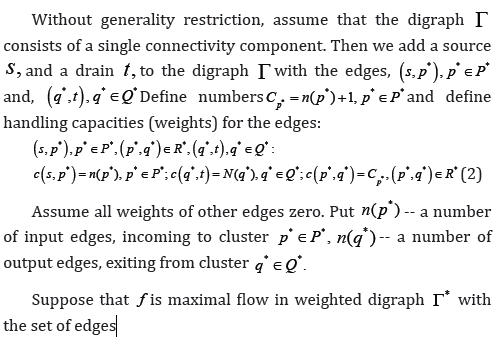
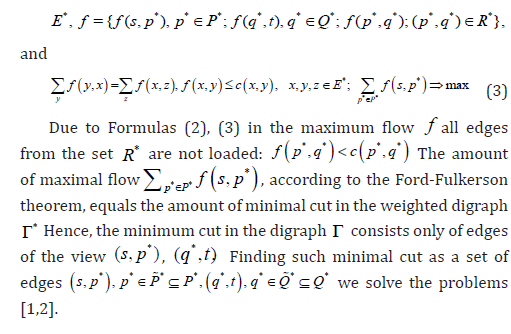
This paper provides a complete solution to the problem of minimizing the number of edges in the protein network, the removal of which blocks all paths that pass through a set of undesirable nodes. The minimization problem is reduced to the problem of minimum cut and maximum flow in a specially constructed weighted digraph with a source and a drain.

Keywords: Digraph;Ford-Fulkerson Theorem;Sub-graph; Optimal Blocking.

Problem Statement

Consider a digraphG, representing a protein network with finite sets V and E of nodes and edges respectively. In the setV there is a subset W ⊂V of undesired nodes. Contrast to the set W the subset Q ⊆W of output nodes from which edges exit to the subset U =V \W and the subset P ⊆W of input nodes to which edges enter from U.

Denoten( p) a number of edges, entering to p∈P from U, and N(q) a number of edges, exiting from q∈Q to U. Our problem is to find subsets irispublishers-openaccess-biostatistics-biometric-applicationsso that their removing from the setsirispublishers-openaccess-biostatistics-biometric-applications breaks all paths, which transit to W from the set U , pass through W and exit back. And the number of edges to delete is minimal:

irispublishers-openaccess-biostatistics-biometric-applications

In [1] the digraphG*with the nodes set W and edges, connecting them in digraph G, is constructed. The set W of the digraph G* nodes is divided into classes of cyclical equavalence (clusters) and a relation of partial order between these clusters is defined a* ≥ b* if in the digraph G* there is a path from clustera*to clusterb*. A bipartite digraphΓ with the set of input clusters P* , the set of output clustersQ* , and the set of edges: R: (p*,q*), if p*≥q*, if p* ≥ q* This design allows for simultaneous input and output clusters, to be included into the sets P* , Q* and an edge between them is to be introduced.

The bipartite digraphΓ is divided into connectivity componenets (after deleting of edges direction) and isolated clusters are removed. In each connectivity component input or output edges are removed, depending on which number is less. But this solution is not optimal.

Search for an Optimal Solution by the Ford- Fulkerson Theorem

irispublishers-openaccess-biostatistics-biometric-applications

The Ford-Fulkerson algorithm [2] with improved additions of Edmonds-Carp [3] and Dinits [4] is used to find the maximum flow f . All algorithms for determining the maximum flow consistently find paths that increase the amount of flow. For the maximum flow found, the minimum cut is determined using well known recurrent algorithm [2].

To read more about this article..... Open access Journal of  Biostatistics & Biometric Applications 
Please follow the URL to access more information about this articlehttps://irispublishers.com/abba/fulltext/optimal-blocking-of-undesired-nodes-in-digraph.ID.000578.php

To know more about our Journals....Iris Publishers

To know about Open Access Publishers

Monday, July 12, 2021

Iris Publishers- Open access Journal of Public Health & Epidemiology | Use of Antibody/Antigen Diagnostic Testing and Face Coverings with Traditional Non-Pharmaceutical Intervention Measures to Mitigate Human-to- Human Coronavirus (COVID-19) Transmission at the Community Level


Authored by Cameron YS Lee*

Abstract

In December 2019, the Health Commission of Hubei province, China reported a cluster of new cases of viral pneumonia later identified as a highly infectious novel human coronavirus that causes the severe acute respiratory syndrome (SARS-CoV-2), renamed Covid-19. In January 2020, the first confirmed case of Covid-19 was reported in the United States. As of this writing, Covid-19 has spread globally, with greater than 700,000 fatalities and infecting over 21 million people around the world in just over 8 months. The United States is now the epicenter with over 5 million reported cases and greater than 170,000 deaths. The Covid-19 pandemic has emerged as an unprecedented global crisis overwhelming healthcare systems around the world. Public health authorities must rely on non-pharmaceutical intervention (NPIs) measures to mitigate the spread of coronavirus transmission as no vaccine or antiviral therapy is available. As the number of infectious disease cases continue to rise with increasing mortality, the authors recommend routine antibody/antigen diagnostic testing of not only symptomatic persons for the coronavirus, but asymptomatic and presymptomatic individuals as well. The universal policy of routine use of face coverings when out in public should also be implemented as it is now recognized that viral shedding can occur several days before the onset of clinical symptoms and last for days. In this article, we describe the public health strategies and the challenges public health authorities may encounter in this 21st century global pandemic to flatten the pandemic curve.

Introduction

Pandemic the word strikes fear because of the severity of the disease in terms of morbidity, mortality, social and economic turmoil. Within 24-36 hours, an infectious disease can arrive on the doorstep of any densely populated city from a remote part of the world due to air travel and globalization [1,2]. Undetected, the virulent pathogen can quickly overwhelm the healthcare system protecting its citizens. Several viruses have caused pandemics in the 20th century (1957 Asian flu; 1968 Hong Kong flu; 1981 AIDS/HIV), but all pandemics are measured against the Spanish influenza pandemic of 1918-1919. It is estimated to have infected over 500 million individuals and killed 50-100 million people around the globe due to sustained community spread [3,4]. It is estimated that 675,000 deaths occurred in the United States. Mortality was highest in young adults, aged 24-40 years.

A common characteristic of pandemics is that they are facilitated by sustained transmission between individuals in a community and can spread rapidly over a short time causing relatively high mortality [5,6]. Compared to the 2003 SARS pandemic, Covid-19 is far more lethal with greater infectivity and mortality as asymptomatic and presymptomatic individuals are capable of spreading the virus in the community 2-3 days before the onset of clinical symptoms [7-9]. Therefore, it is uncertain if traditional NPIs can effectively mitigate transmission of the coronavirus. As the Covid-19 pandemic trajectory continues to rise with increasing mortality, the authors recommend additional non-pharmaceutical intervention measures such as antibody/antigen diagnostic testing for the coronavirus of both asymptomatic and presymptomatic individuals and the routine use of face coverings (masks) out in public to flatten the pandemic curve. In this article, we describe the additional and traditional non-pharmaceutical intervention (NPI) measures to contain the transmission of the coronavirus in the community. We also describe the unique challenges public health authorities will encounter while implementing NPIs in the community.

2003 SARS and COVID-19

The 2003 coronavirus that is the etiology for the severe acute respiratory syndrome (SARS-CoV-1) in China killed 774 people and had 8,096 reported cases was the first pandemic of the 21st century [1,10,11]. With no viral vaccine, the coronavirus outbreak was successfully contained with traditional non-pharmaceutical public health interventions used to eradicate the 1918 influenza pandemic and other influenza pandemics of the 20th century.

In December 2019, multiple cases of a severe pneumonia with unknown origin were reported in Wuhan, the capital city of Hubei province China [12-15]. The pathogen was identified as a novel enveloped RNA beta-coronavirus that was designated severe acute respiratory syndrome coronavirus 2 (SARS-CoV-2), which is similar to SARS-CoV-1 but much more infectious. The virus rapidly spread throughout the world and became known as Covid-19. On March 11, 2020 the World Health Organization (WHO) declared Covid-19 a worldwide pandemic [16]. As of this writing, the infectious disease has spread globally, and greater than 21 million cases have been reported and over 700,000 people have died [17].

Patients infected with Covid-19 that are asymptomatic or mildly symptomatic and not seeking medical treatment are likely spreading the stealth virus throughout the community from respiratory droplets and direct surface contact [8,18,19]. This is why the Covid-19 pandemic has generated such urgency regarding the implementation of public health mitigation strategies. With no controlled scientific studies that document the effective use of NPI measures, public health has had to rely on historical analysis and observations of what proved successful in slowing down the spread and eventual eradication of a pandemic. An example is the use of geographic quarantine measures by a small town in Colorado and a naval station located on an island in San Francisco Bay during the 1918 influenza pandemic that resulted in minimal morbidity and mortality [20,21]. Use of simulation model studies based on contemporary public health data from the 2009 influenza pandemic were also studied to evaluate the effectiveness of NPIs in select cities of the United States [22]. The results of the simulation studies support the implementation of NPIs in controlling the spread of the contagion when an antiviral vaccine is not available.

Epidemiologic Characteristics of the Coronavirus Outbreak

The Covid-19 outbreak from Wuhan, China is similar to the 2003 coronavirus epidemic where zoonotic transmission from bats via the intermediate host palm civets in Guangdong, China is largely responsible for the 2003 global pandemic. As Covid-19 is more contagious than the 2003 SARS, and with a basic reproductive number of 2.2 to 2.5 it rapidly spread from Wuhan to the entire country in 30 days overwhelming China’s healthcare and public health system [14,23]. Such rapid disease transmission was due to shedding of high viral loads that can occur 2-3 days prior to the onset of clinical symptoms and human-to-human transmission in the community [8,18,19,23]. Studies have demonstrated that initial high viral loads are associated with death [24].

Mitigating the transmission of any infectious disease that may progress to a pandemic requires an understanding of the potential disease transmission of the pathogen [23,25,26]. The basic reproductive number (R0) and the case fatality rate (CFR) are two important epidemiological parameters that will allow clinicians and public health authorities to understand the viral dynamics and epidemiological characteristics of a pandemic [27,28]. One measure of viral infectivity is the basic reproductive number which is characteristic to a pathogen. It is the average number of secondary cases produced by a primary infectious case in a susceptible population without intervention [29]. Calculating the R0 can estimate the virulence of the infectious disease from an infected individual and helps to determine the selection of mitigation strategies to contain and slow down disease transmission. An R0 greater than 1 represents a disease that will be difficult to slow down and will spread rapidly in the community. A R0 of less than 1 will not progress to a pandemic and will decay. The median R0 of influenza has been reported to be between 1.5 to 2. Measles has an R0 of 15 and is very contagious. The R0 of SARS-CoV-1 was approximately 1.7 to 1.9, while it is estimated that the R0 of Covid-19 is between 2 and 4, with a median of 2.79 [23,26,30]. Guan et al (2020) estimates that a R0 between 2 and 3 correlates to a high pandemic potential where each infected individual can spread the virus to two or three other individuals [31]. Therefore, compared to SARS-CoV-1, Covid-19 with a much higher reproductive number is more virulent with greater potential for transmission of disease.

The case-fatality rate (CFR) is the number of deaths in persons who tested positive for the disease divided by the number of confirmed cases [32]. Public health interventions rely on the early CFR estimates to determine intensity, timing and duration of intervention strategies of outbreaks [33]. Patients infected with the 2003 SARS virus had a CFR between 7% to 17% (average 9.6%) in the most severely affected areas by the virus (774 deaths in 8, 096 reported cases) involving 26 countries [34]. Early studies regarding Covid-19 case fatality rate in the city of Wuhan varied from 4.3% to 14.6% [13,35]. The average fatality rate of persons reported by the Chinese CDC and Prevention was 2.3% (1,023 deaths among the 44, 672 confirmed cases in Wuhan, China). However, when CFR was stratified by age group, the fatality rate increased due to increasing age, the presence of comorbidities and initial high viral loads [36].

Differences in age structure of the affected population will reveal the true burden of disease. High viral load is considered an independent risk factor with a worse prognosis [37]. Adults in this age group had reported comorbidities such as cardiovascular disease, pulmonary disease, and diabetes mellitus. The CFR for adults older than 60 years was 3.6%, while adults over 70 years had a reported CFR of 8.0%. Adults older than 80 years had a high lethal CFR of 14.8% [31]. High viral loads observed in the older patient population is associated with a higher CFR.

Clinical characteristic of Covid-19

Estimates of the Covid-19 incubation period range between 1-14 days but may be as long as 24 days [38]. Incubation period is defined as the time from exposure of the pathogen to the development of signs and symptoms of disease. Although the estimated median incubation time is approximately 5.1 days for Covid-19, it is now recognized that asymptomatic or mildly symptomatic individuals are capable of spreading the virus in the community 2-3 days before the onset of clinical symptoms [8,18,19,23,39]. In comparison, infectiousness of the 2003 SARS outbreak occurred 7-10 days after onset of symptoms that resulted in patients seeking treatment before they could continue to spread the virus [1].

Patient clinical presentation in both SARS-CoV-1 and Covid-19 are similar to the influenza virus and includes the following: persistent fever, chills, fatigue, myalgia, malaise, dry non-productive cough, headache, dyspnea, sputum production, arthralgia, sore throat, rhinorrhea, diarrhea and nausea/vomiting. Such non-specific clinical findings that mimic influenza make the diagnosis difficult and may be responsible for the early spread of the Covid-19 virus [8,24,31,40]. However, new reported clinical findings that have raised alarming concern are the presence of neurologic manifestations. During the SARS-2003 pandemic, Tsai et al (2004) first reported on neurologic complications that consisted of axonal peripheral neuropathy or myopathy with elevation in creatine kinase levels in four patients three weeks after the first symptoms of SARS [41]. More recently, Mao et al. (2020), reported that 78 (36.4%) of 214 hospitalized patients diagnosed with Covid-19 had various neurologic manifestations that involved the central and peripheral nervous systems and skeletal muscles [42]. Older patients with comorbidities were more prone to present with neurological manifestations including ischemic stroke, seizures, ataxia and depressed levels of consciousness. Oxley et al (2020) reported five cases of large vessel stroke in patients under 50 years of age who were all diagnosed with Covid-19 [43].

Reports of loss of smell and taste have also been reported that occurs early during the course of Covid-19 [42,44,45]. However, anosmia with SARS-2003 was first reported by Hwang (2006) [46]. In this single case report, the loss of smell occurred about 3 weeks after the onset of clinical symptoms. With reports of new onset neurologic symptoms, Covid-19 should be included in the differential diagnosis when patients present with such neurological manifestations.

Non-Pharmaceutical Interventions (NPIs)

The objective of community mitigation in the face of a pandemic are to slow down the peak of the pandemic, decrease the total number of cases to decrease morbidity and mortality, control the surge capacity of the healthcare infrastructure and buy time to develop an effective vaccine or new antiviral therapies (Figure 1) [47,48]. In addition to implementing simultaneous largescale community NPIs to control viral transmission, promoting personal and environmental protective measures should not be underestimated. Household-based public health interventions include hand washing with soap and water (or alcohol-based hand sanitizers), respiratory etiquette (covering your mouth and nose when coughing or sneezing), the use of face coverings, and use of protective eyewear [18,40]. Aerosol and fomite transmission of the coronavirus is possible as the virus can remain viable and infectious in aerosols for hours and on different surface tops for days [18,24,49] Environmental cleaning of surface tops and objects is recommended as it proved effective in controlling the spread of the H1N1 influenza pandemic of 2009 along with good respiratory and hand hygiene [50,51].

Universal wearing of face coverings (Masks) in the community

The controversy and confusion of wearing face coverings by individuals when in the community is sparked by the World Health Organization (WHO) recommending against the wearing of face coverings because of the lack of evidence of protection against the coronavirus [52,53]. There is a paucity of studies that are inconclusive on the efficacy of face covering (mask) use and the ability to prevent transmission of infectious disease from respiratory droplets and aerosols in entire communities. Further, there are no studies that evaluated the effectiveness of face mask use during a pandemic.

In a meta-analysis, Xiao and colleagues (2020) concluded that there is no significant reduction in laboratory influenza transmission [54]. Other studies demonstrated limited evidence that wearing a face mask in households, in the presence of an individual suffering from the influenza virus, or in mass social gatherings will prevent the spread of the influenza virus [55,56]. In a systematic review by Brainard et al (2020) examining whether wearing a face mask with other protective measures would prevent the transmission of respiratory illness such as coronavirus, influenza and tuberculosis, the authors concluded that the evidence is not sufficiently strong to support the widespread use of face masks as a protective measure against Covid-19 [57].

Although there are no studies assessing the effectiveness of face coverings during a pandemic, the lack of protection of viral transmission remains unclear. Use of face coverings is a form of source control that may protect individuals from respiratory droplets or aerosols. The US Centers for Disease Control and Prevention now advises the wearing of cloth face coverings in public [58]. It has recently been discovered that the coronavirus sheds at high concentrations from the nasal cavity 2-3 days before the onset of symptoms and continues for at least one week after symptom onset [7,8,18,19,23]. Therefore, asymptomatic or presymptomatic individuals could be potential super spreaders of the stealth coronavirus as they are indistinguishable from healthy individuals in the community. Moreover, Booth et al (2013), demonstrated that use of surgical face masks resulted in a six-fold reduction in exposure to the influenza virus in aerosols and recommends the use of face masks [59]. Lastly, in a study by Leung et al (2020) use of surgical face masks prevented the transmission of both the coronavirus and influenza from individuals who are symptomatic [60].

To read more about this article....Open access Journal of Public Health & Epidemiology

Please follow the URL to access more information about this article

https://irispublishers.com/aphe/fulltext/use-of-antibody-antigen-diagnostic-testing-and-face-coverings-with-traditional-non-pharmaceutical.ID.000507.php

To know more about our Journals....Iris Publishers

To know about Open Access Publishers


Iris Publishers-Open access Journal of Hydrology & Meteorology | Influence of Community Resilience to Flood Risk and Coping Strategies in Bayelsa State, Southern Nigeria

  Authored by  Nwankwoala HO *, Abstract This study is aimed at assessing the influence of community resilience to flood risk and coping str...