Monday, August 5, 2024

Iris Publishers-Open access Journal of Ecology & Environment Sciences | Defining the Wildland Urban Interface: A Logic Graphical Interpretation of Population Density


Authored by William E Schlosser*,

Abstract

The Wildland-Urban Interface (WUI) represents the intermix of human settlements and Fire-Prone Landscapes (FPL), posing significant risks from extreme wildfires. This article presents a logic-graphical interpretation of the WUI, focusing on population density derived from structure locations. Accurate mapping of the WUI is crucial for effective wildfire management. Additionally, FPL analysis, which identifies areas with high wildfire risks, complements the WUI assessment. Separating these two analyses allows for a comprehensive understanding of wildfire threats.

The proposed methodology utilizes Geographical Information System (GIS) techniques to visualize the interaction between fire-prone landscapes and human settlements, enabling the identification of high-risk areas. The integration of the WUI definition and comprehensive risk assessment guides the development of Wildfire Mitigation Plans, ensuring the safety and continuity of communities. Collaboration between federal agencies, Tribal and County governments, as guided by the Healthy Forests Restoration Act (HFRA), promotes a comprehensive approach to wildfire management in the WUI. This article contributes to the understanding and management of the WUI, emphasizing the importance of accurate delineation, risk assessment, and collaboration in safeguarding lives and minimizing the socioeconomic impact of wildfires.

Keywords:Wildland Urban Interface; GIS mapping; Population density; Wildfire mitigation; Community safety; Critical infrastructure; Integrated approaches; Fire Prone landscapes

Abbreviations:FEMA: Federal Emergency Management Agency; FPL: Fire-Prone Landscapes; GIS: Geographical Information System; HFRA: Healthy Forests Restoration Act; IIC: Interface Interagency Committees; NAIP: National Agriculture Inventory Program; PVC: Percent Volume Content; WUI: Wildland-Urban Interface

Introduction

The Wildland-Urban Interface (WUI) represents the dynamic interface between human settlements and Fire-Prone Landscapes (FPL), where the risk of extreme wildfires threatens lives, structures, economies, and the overall way of life [1]. This article provides a logic-graphical interpretation of the WUI, focusing on population density as a fundamental criterion derived from the location of structures. Accurately defining and mapping the WUI is essential for effective wildfire management and community safety. By under standing the boundaries of the WUI and assessing the risks associated with this interface, communities can develop comprehensive Wildfire Mitigation Plans to ensure the safety and continuity of their lives.

The concept of the WUI gained significant attention with the introduction of the Healthy Forests Restoration Act (HFRA) [2]. This legislation, signed into law by President George W. Bush, aimed to reduce the threat of destructive wildfires while upholding environmental standards and fostering early public input during review and planning processes. This concept was adopted and carried forward by the Federal Emergency Management Agency (FEMA) in Multi-Jurisdictional Hazard Mitigation Plans. The HFRA and FEMA both emphasized the collaboration between federal agencies responsible for managing public lands with Tribal and County governments, including state governments, where these lands are located.

In conjunction with the WUI analysis, it is crucial to study FPL, where wildfire risks are expressed. Fire Prone Landscapes represent areas where the potential for extreme wildfires is pronounced, based on factors such as vegetation types, fuel loads, weather patterns, and historical fire occurrences. These two analyses, the WUI and FPL, provide complementary perspectives and must be approached separately before being overlaid in a geospatial context. This approach gives planners clarity regarding the areas where priorities should be focused and enables the application of appropriate fuel management activities.

This paper proposes an unbiased process for determining the presence of the WUI based on population density derived from the location of structures as seen through a Geographical Information System (GIS) interface. By utilizing GIS mapping techniques, the interactions between FPL and human settlements can be visualized, facilitating an understanding of areas at high human-loss risk from extreme wildfires. This methodology enables the identification of locations where people, structures, the economy, and overall way of life are most vulnerable to wildfire losses.

This article aims to contribute to the understanding and management of the WUI by presenting a logic-graphical interpretation based on population density derived from the location of structures. By accurately defining the boundaries of the WUI and assessing associated risks, communities can develop effective Wildfire Mitigation Plans that ensure the safety and continuity of their lives. The principles outlined in the HFRA provide a foundation for collaboration between federal agencies with Tribal, State, and County governments, promoting a comprehensive and inclusive approach to wildfire management within the WUI.

Healthy Forests Restoration Act

The HFRA was signed into law on December 3, 2003, with the aim of mitigating the threat of destructive wildfires while upholding environmental standards and promoting public involvement in review and planning processes. The legislation, grounded in scientific principles, aligned with President Bush’s Healthy Forests Initiative, which sought to safeguard America’s forests and rangelands, reduce the risk of catastrophic wildfires to communities, protect firefighters and citizens, and preserve threatened and endangered species.

The HFRA brought about significant changes, including:

1. Strengthening public participation in the development of high priority projects.

2. Streamlining environmental analysis processes, enabling federal land agencies to actively manage protected lands using the best available science.

3. Establishing a pre-decisional objections process that encouraged early public involvement in project planning.

4. Providing clear guidance for court actions related to challenges against HFRA projects.

5. To implement wildfire mitigation projects within the WUI, Tribal, state, and county governments developed Wildfire Mitigation Plans consistent with the principles of the HFRA. These plans incorporated recommendations from a wide range of stakeholders, including federal land management agencies such as the US Forest Service, Bureau of Indian Affairs, and Bureau of Land Management, as well as input from fire and emergency services providers.

The HFRA specified that the responsibility for defining the boundaries of the WUI rested with Tribal and County Governments, which established Interface Interagency Committees (IIC) appointed by the Tribal Council or County Commissioners, respectively. In cases where the WUI was undefined, federal agencies were directed to use a fixed buffer distance from defined community centers or structures. The WUI definition created and approved by Tribes or Counties was to be utilized by federal agencies whenever applicable.

Methods and Materials

In this section, the methodology and materials utilized in our study to accurately define and spatially map the WUI are discussed. This approach utilizes GIS and high-resolution aerial imagery to identify structures and assess population density within the study area. The process of creating WUI polygon layers based on the location of structures and the importance of considering population density as a key factor in defining WUI boundaries is accentuated. Additionally, the integration of mitigation planning committees and their role in augmenting population density maps with the identification of critical infrastructure is accentuated. The methods and materials presented lay the foundation for our comprehensive analysis of the WUI and its implications for wildfire management and community safety.

Wildland urban interface; from a wildland fire perspective

This section delves into the significance of accurately defining the WUI and its implications for various aspects of community life. By precisely identifying the areas where wildland vegetation intersects with urban developments or forest fuels intermingle with urban fuels, we gain a comprehensive understanding of the spatial distribution of people, structures, infrastructure, the economy, and the overall way of life. The WUI definition serves as a fundamental tool in assessing the risks posed by wildfires and formulating effective mitigation strategies. It enables stakeholders, including federal agencies, tribal and county governments, and property owners, to focus their efforts on safeguarding structures, minimizing fire hazards, and creating defensible spaces. By emphasizing the importance of defining the WUI and its multifaceted implications, this discussion underscores the integral role it plays in promoting community safety and preserving the continuity of residents’ lives.

People and Structures

The WUI encompasses areas where wildland vegetation meets urban developments or where forest fuels intersect with urban fuels, such as houses. It includes not only the immediate interface adjacent to urban development but also the continuous slopes and fuels that pose a direct risk to urban areas.

Reducing fire hazards in the WUI involves different responsibilities. Federal agencies play a role in wildland firefighting, hazard fuels reduction, cooperative prevention and education, and technical expertise. Structural fire protection during wildfires in the WUI is primarily the responsibility of tribal, state, and local governments. Property owners also share the responsibility of protecting their residences and businesses by creating defensible spaces and taking measures to minimize fire risks.

A properly treated WUI can provide firefighters with a defensible area for suppressing wildland fires and protecting communities. Thinning forestlands within the WUI reduces hazardous fuel loads, ladder fuels, and tree densities, while creating and reinforcing defensible spaces. These measures serve to minimize the potential for high-severity surface or crown fires entering or leaving the area, reduce the impact of firebrands (embers carried by the wind), and improve defensible space for suppression efforts.

To aid in defining the WUI, a set of six categories has been identified, encompassing different scenarios where structures and wildland fuels interact.:

1. Interface Condition,

2. Intermix Condition,

3. Occluded Condition, and

4. Rural Condition.

These categories help delineate different scenarios where structures and wildland fuels interact. Additionally, the High Density Urban and Infrastructure WUI classifications offer further insights, particularly regarding areas with high population density and critical infrastructure locations:

5. High Density Urban, and

6. Infrastructure WUI, which includes critical infrastructure locations.

While the specific densities associated with each category are determined using the geographically defined Percent Volume Content (PVC) approach, which will be elaborated upon in the following section, this early introduction provides a glimpse into the structure density considerations in defining the WUI.

GIS processing plays a crucial role in mapping the WUI. Structures within a county or reservation are mapped using various data sources, including ortho photography, aerial photography, satellite imagery, and rural addressing databases. By analyzing structure density and population density indexes within the GIS framework, WUI areas can be identified and represented on maps. These graphical representations show high-density urban areas, Interface and Intermix WUI areas, Rural WUI areas, as well as Infrastructure WUI areas. The focus is on the spatial density of structures, enabling planners to visualize the highest concentrations of structures in relation to high-risk landscapes, infrastructure limitations, and other relevant factors.

Infrastructure WUI

In addition to population density mapping, the mitigation planning process incorporates the identification and protection of critical infrastructure. Mitigation Planning Committees enhance the population density maps by identifying and mapping corridors (such as power lines and access routes), islands of protection (such as radio repeaters), and management areas (such as municipal watersheds). This integrated approach aims to safeguard critical infrastructure and ensure a comprehensive approach to mitigation.

All areas within the WUI contain significant infrastructure and unique ecosystems within their boundaries. Notably, highway routes, high tension power lines supplying surrounding counties, and railroads are vital considerations in hazard mitigation planning. It is important to protect these infrastructural resources not only for the local municipality but also for the region and state as a whole.

The protection of high-tension power lines is of paramount importance during natural disasters, as they provide electrical power to not only the local communities but also the surrounding areas. Safeguarding these power lines ensures community sustainability, supports the economic viability of each area, and protects the people who rely on the supplied power. While hazard mitigation efforts have often focused on forested ecosystems, where timber thinning and brush management are crucial, it is equally important to manage all ecosystems exposed to various risks from hazards.

By considering and managing infrastructure within the WUI, a holistic approach to mitigation can be achieved, providing comprehensive protection for both human communities and critical infrastructural resources.

Results and Discussion

Tactical WUI definition

Using GIS algorithms, the boundaries of population density within the WUI can be accurately determined. In this study, WUI polygon layers were generated by identifying structures in GIS as a point file saved within a vector layer. These locations were determined from high-resolution aerial imagery in Benewah County, Idaho. The structures were carefully documented using the geographic projection of the National Agriculture Inventory Program (NAIP) Aerial Imagery (NAD 83 UTM 11N), which provided a resolution of 1 meter [3].

To account for neighboring influences on the WUI zone, a buffer was extended beyond the county’s boundaries to document structure locations within 3 miles of Benewah County. This consideration was crucial, as the WUI zone can be influenced by structures in neighboring jurisdictions as much as by those within the county itself.

The WUI boundaries were determined based on the density of structures within the County, without applying a specific distance between or from structures. Instead, the distance of the WUI line from the nearest structure depended on the relative density of structures within the jurisdiction. It is worth noting that while structures were used as a proxy for people, this may not provide a perfect representation of population density. For example, an apartment building may house multiple residents, while a rural home may have fewer occupants. Nevertheless, both structures were represented by a single point in the analysis, allowing for a comprehensive understanding of the spatial distribution of structures within the WUI.

To represent the spatial density of structures, a PVC was generated. It is important to note that a PVC is different from simple contours typically produced in tools like ESRI’s ArcMAP Spatial Analyst [4]. While simple contours only represent the boundary of a specific value of the data without relating to probability, a PVC represents the boundary of the area containing a specific percentage (x%) of the volume of a probability density distribution. In the case of WUI delineation, the PVC was essential, with the 95% volume contour typically encompassing 95% of the points used to generate the kernel density estimate.

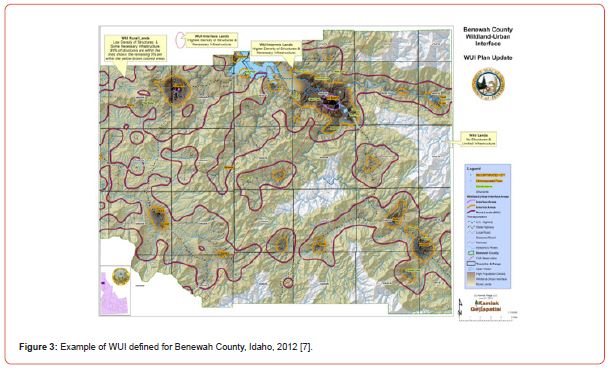
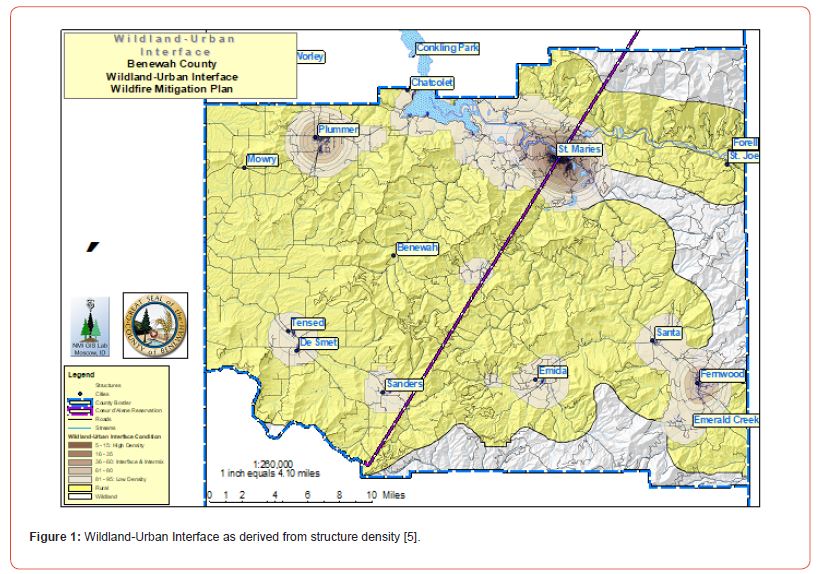
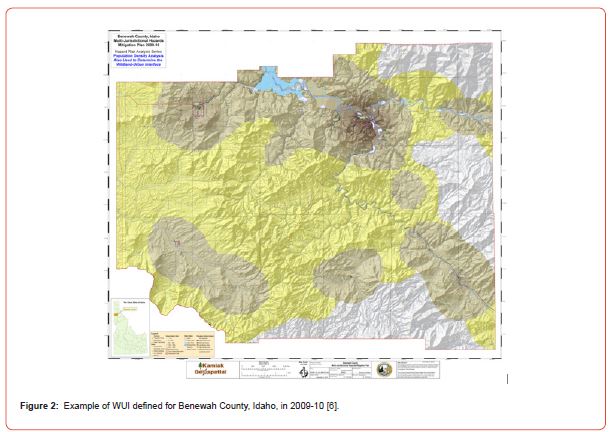
Figures 1-3 display the WUI delineations in Benewah County, Idaho, created in 2003, 2010, and 2012 during the administration of WUI Wildfire Mitigation Plans and their FEMA compliant Multi-Jurisdictional Hazard Mitigation Plans. While the same basic approach was used in each of these WUI definitions, improvements in the identification of structures from NAIP aerial imagery over time resulted in more accurate delineations. Additionally, the growth pattern of building developments in the County led to the expansion of the Interface Lands and the transformation of some low-density Rural Lands into Intermix Lands.

The presented maps and WUI delineations demonstrate the evolving nature of the WUI in Benewah County, providing valuable insights into changes in population density and the spatial distribution of structures over time. This information is critical for informed decision-making in wildfire management and mitigation planning efforts.
irispublishers-openaccess-Anatomy-Physiology

irispublishers-openaccess-Anatomy-Physiology

irispublishers-openaccess-Anatomy-Physiology

In Benewah County and the Coeur d’Alene Indian Reservation, no High Density Urban areas were observed. The highest population densities consistently corresponded to Interface designations, predominantly found in and around the cities of St. Maries, Plummer, and Fernwood. Intermix areas, represented by lighter browns on the maps, were present in communities such as Tensed, DeSmet, Sanders, and Emida. Additionally, scattered unnamed communities exhibited population densities consistent with the Intermix designation. By employing a structure density approach instead of solely relying on named communities, the planning committees successfully identified clusters of structures resulting from subdivision development and other population growth trends. The white-colored areas represent the wildlands of Benewah County where few or no structures are located.

This study allows for a comparative analysis across three different time periods. The initial analysis was conducted in 2003 as part of the HFRA-compliant Benewah County Wildfire Management Plan, which marked the first WUI designation. Using the same analysis procedure, the Population Density Index was generated in 2009-10 as part of the County’s FEMA Multi-Jurisdictional Hazard Mitigation Plan. The most recent update was completed in 2012, reflecting changes in population density resulting from (1) improved NAIP aerial imagery enabling the identification of more structures from above, and (2) new structure placements within the County. By examining these comparisons over a 9year interval, it becomes apparent where development pressures have been concentrated.

Generally, development pressures stem from Intermix and Interface areas expanding into rural regions. Notably, a closer examination of the corridor between DeSmet/Tensed and Sanders reveals an interesting trend. In 2003 this corridor was classified as Rural; by 2009, it demonstrated a population density consistent with Intermix (indicating higher density); and by 2012, the expansion of Rural Lands was considerable. These changes occurred due to the construction of new structures in the area, accompanied by higher-resolution aerial imagery enabling the documentation of these locations.

The comparison of these assessments provides valuable insights into the spatial dynamics of population growth and development patterns, particularly regarding the expansion of Intermix and Interface areas into previously rural regions [5-7].

Conclusion

The analysis presented in this study offers valuable insights into the WUI in Benewah County, Idaho, and portions of the Coeur d’Alene Indian Reservation. By utilizing GIS and population density mapping, we have successfully delineated the WUI boundaries based on the density and location of structures. The WUI polygon layers were created from the identification of structures using high-resolution NAIP aerial imagery, providing a comprehensive understanding of the interface between human settlements and fire-prone landscapes.

The results demonstrate that the highest population densities within the study area are concentrated in Interface areas, particularly around the cities of St. Maries, Plummer, and Fernwood. Intermix areas are also present around communities such as Tensed, DeSmet, Sanders, and Emida. The inclusion of unnamed communities and structure clusters in the analysis allows for a more accurate representation of population distribution and growth trends. Moreover, the identification of wildlands where few or no structures are located provides important information for fire management and conservation efforts although named as wildland areas.

By comparing multiple time periods, we observed changes in population density and expansion patterns within the WUI. The availability of improved aerial imagery enabled the detection of additional structures, enhancing the accuracy of the analysis. Notably, the expansion of Intermix and Interface areas into previously rural regions reflects development pressures and evolving land use patterns.

The findings highlight the importance of integrated approaches to wildfire mitigation and land management. The WUI delineation presented in this study serves as a foundation for future mitigation planning efforts, including the development of Wildfire Mitigation Plans and Multi-Jurisdictional Hazard Mitigation Plans. These plans, in conjunction with the utilization of additional spatial analyses such as Fire Prone Landscapes GIS analysis, provide a powerful framework for understanding the dynamics of fire-prone areas and implementing targeted mitigation measures.

In conclusion, the tactical definition and mapping of the WUI based on a population’s structure density offer valuable insights into the interface between human settlements and fire-prone landscapes. The presented approach provides a basis for informed decision-making, aiding in the protection of communities, infrastructure, and natural resources. The integration of spatial analyses, such as Fire Prone Landscapes, further enhances our understanding of fire risks and facilitates effective mitigation strategies. By implementing comprehensive wildfire management plans and engaging stakeholders at multiple levels, we can work towards a more resilient and sustainable future in fire-prone regions.

[Note: The next article on Fire Prone Landscapes GIS analysis was not referenced directly in this conclusion, as it focuses on the specific methodologies and results of that analysis. However, the reference to the utilization of additional spatial analyses can be included to imply the broader scope of research and potential future directions.

To read more about this article...Open access Journal of Ecology & Environment Sciences

 Please follow the URL to access more information about this article

https://irispublishers.com/ojees/fulltexts/defining-the-wildland-urban-interface-a-logic-graphical-interpretation-of-population-density.ID.000508.php

To know more about our Journals...Iris Publishers 

To know about Open Access Publishers

Friday, August 2, 2024

Iris Publishers-Open access Journal of Ophthalmology & Vision Research | Herpetic Uveitis – The Masquerader


Authored by Saba Kausar*,

Abstract

Although a large proportion of anterior uveitis is noninfectious, viruses are regarded as an important cause of infectious anterior uveitis. Herpes viruses are common infectious causes of hypertensive anterior uveitis. PCR analysis of aqueous sample collected at the slit lamp under aseptic conditions for viral DNA is commonly used technique to confirm the diagnosis during the acute phase. Anterior uveitis may be shortened by the prompt use of therapeutic doses of antiviral therapy and maintenance therapy may be effective in decreasing disease recurrence. In eyes with raised IOP, topical antiglaucoma medications can be given. Eyes with severe elevation of IOP may require oral carbonic anhydrase inhibitors, and filtration surgery may be indicated in medically uncontrolled glaucoma with optic neuropathy.

Keywords: Viral Uveitis Raised Intraocular Pressure, Angle Closure Glaucoma

Abbreviations: HSV: Herpes Simplex Virus; VZV: Varicella- Zoster Virus; CMV: Cytomegalovirus; IOP: Intraocular Pressure; Kps: Keratic Precipitates

Introduction

Human beings are a natural reservoir for a number of viruses. This may explain the fundamental role of these infectious agents in several diseases, including uveitis. Worldwide, a high seroprevalence of viral infections can be observed. The goal of this article is to highlight viral infections that are common and relevant for the ophthalmologist like herpes simplex virus (HSV), varicellazoster virus (VZV), and cytomegalovirus (CMV).

Discussion

Viral anterior uveitis can occur at any age, but HSV usually presents in the fourth decade, VZV in the sixth decade, and CMV from third up to the ninth decade of life. HSV infection is transmitted by direct skin-to-skin contact. It lies latent within the fifth cranial nerve sensory ganglion and reactivates from time to time, causing recurrent disease. HSV infection may manifest initially in the periocular skin and cornea or may present solely as an acute anterior uveitis [1].

Although a large proportion of anterior uveitis is noninfectious and associated with the HLA-B27 haplotype, viruses are regarded as an important cause of infectious anterior uveitis. Herpes viruses are common infectious causes of hypertensive anterior uveitis [2,3]. Herpes virus infection in the anterior chamber has been detected in patients diagnosed with Posner–Schlossman syndrome and Fuchs heterochronic iridocyclitis, which were previously believed to be idiopathic [4]. Considering that herpes virus induces IOP elevation coinciding with the duration of uveitis, it is assumed that the herpes virus infects TM cells, which are the key cells involved in IOP regulation.

HSV1 keratouveitis is typically unilateral but may be bilateral (18%) and presents acutely with an injected eye and raised intraocular pressure (IOP) in 38%–90% of eyes [5,6]. HSV (57%– 61% of eyes) is associated with dendritic ulcer, disciform keratitis, and interstitial keratitis. Careful observation may reveal the presence of corneal scars in 33% of cases and a reduced corneal sensation [7]. Keratic precipitates (KPs) may be granulomatous or nongranulomatous [7], and the anterior chamber activity is generally moderate with flare and cells. There may be dilated iris blood vessels and segmental iridoplegia with flattening of the pupil. Posterior synechiae may develop in 38% of cases [8]. There may be corectopia or sectoral iris transillumination defects from previous episodes causing iris epithelial or stromal defects in up to 50% of cases [8]. Patchy or sectoral peripupillary iris atrophy is quite suggestive and history of recurrent HSV infections on the lips or genitals can be helpful in narrowing the diagnosis, but they are not always present [9-11]. Diffuse iris atrophy is uncommon (10% of eyes) [8]. Rarely, HSV has been reported to cause Posner-Schlossman syndrome, Fuchs uveitis syndrome, or acute iris depigmentation and pigmentary glaucoma [12-14]. The inflammation becomes chronic with persistently raised IOP unless specific antiviral therapy is instituted.

Although both HSV-1 and HSV-2 can cause ocular infections such as acute retinal necrosis, HSV-1 is more commonly detected in association with keratouveitis and anterior uveitis than HSV-2 [15].

Prevalence of vitritis in patients suffering from HSV is lesser (43% eyes) [8] as compared to those with VZV ocular disease. Also, these patients tend to have a greater inflammatory response with posterior synechiae, lower incidence of cataract at presentation and lack of chorio retinal scars compared to those having rubella associated uveitis [16].

The IOP of patients in HSV related keratouveitis is usually normal on initial presentation. Patients presenting with elevated IOP generally have recurrent episodes of uveitis. A retrospective study conducted by Falcon and Williams [17], showed that patients presenting with elevated IOP had associated keratitis. Another study by Sungur et al of patients with HSV and VZV stromal keratitis, the total incidence of ocular hypertension was 47% during the period of active uveitis and there was a 13% incidence of persistently elevated IOP during the remission period [18]. Van der Lelij [19] et al. described anterior uveitis with sectoral iris atrophy in the absence of keratitis. Herpes simplex virus was documented in 83% of these patients and 90% had elevated intra ocular pressure.

Occurrence of glaucoma in patients with HSV uveitis could be due to secondary angle closure due to pupillary block by posterior synechiae or it could be due to increase in aqueous viscocity from elevated proteins, fibrin and inflammatory cells [20, 21]. Damage to the cells within the trabecular meshwork by HSV 1 infection has also been implicated as a possible cause of elevated IOP [22].

Investigations

PCR analysis of aqueous sample collected at the slit lamp under aseptic conditions for viral DNA is the most commonly used technique to confirm the diagnosis during the acute phase. Goldmann-Witmer coefficient, which determines local intraocular antibody production against the virus, taken to be positive when the value exceeds 3, is another useful test that may take up to 2 weeks to become positive in the acute phase, but remains positive in chronic uveitis. In the immunocompromised, PCR is more useful than Goldmann-Witmer coefficient. Combining both tests increases the sensitivity.

Although viral serology may be helpful in excluding a viral etiology when negative, the presence of immunoglobulin G (IgG) is not helpful in confirming the diagnosis as most adults would have had prior exposure to these viruses. A positive IgM indicates concurrent active systemic infection but does not prove ocular infection.

Treatment

Treatment of HSV keratitis has been well studied, and the data suggest that the duration of anterior uveitis may be shortened by the prompt use of therapeutic doses of antiviral therapy and that maintenance therapy may be effective in decreasing disease recurrence [23,24]. Most cases of HSV anterior uveitis are controlled with topical corticosteroids to reduce the anterior segment inflammation, cycloplegics such as cyclopentolate 1% bid to reduce pain and prevent posterior synechiae, and oral Acyclovir 400 mg five times daily for 4 weeks. In severe or recurrent disease, maintenance therapy of Acyclovir 400 mg twice a day is effective in preventing relapse. Alternatively, valacyclovir, which is a prodrug with improved bioavailability, may be used at a dose of 500mg thrice a day for treatment and 500mg twice a day for maintenance. Systemic antiviral therapy should be combined with low-dose corticosteroid drops for years, to prevent relapse. In eyes with raised IOP, topical antiglaucoma medications can be given. Eyes with severe elevation of IOP require oral carbonic anhydrase inhibitors, and filtration surgery may be indicated in medically uncontrolled glaucoma with optic neuropathy.

When preparing the eye for surgery, such as cataract removal or filtration surgery, the eye should be quiescent and prophylactic oral antiviral and topical corticosteroids may be beneficial.

Generally, the prognosis of viral anterior uveitis is good if diagnosed correctly and treated with specific antiviral therapy and topical steroids or NSAIDs. Cataract develops in 28%–35% of HSV and 27%–30% of VZV [5,8]. Glaucoma occurs in 18%–54% of eyes with HSV and 30%–40% of eyes with VZV [5,8]. An awareness of the presentation of viral anterior uveitis and how to investigate and treat is of paramount importance since missing the diagnosis and treating only with steroids may result in intractable glaucoma, cataract, and loss of vision.

Conclusion

HSV and VZV may present with hypertensive anterior uveitis. Hypertensive anterior uveitis usually presents acutely. HSV presents in the fourth decade, VZV in the sixth decade. Most herpetic ocular involvement is unilateral except for HSV, which may be bilateral. Reduced corneal sensation, scars, and neurotrophic ulcers may be associated with HSV. KPs may be granulomatous or nongranulomatous in HSV and VZV diseases.

Anterior chamber activity may vary from mild to moderate. Posterior synechiae and sector iris atrophy may develop in HSV and VZV anterior uveitis. Vitritis is common in VZV, less frequent in HSV. Cataract and glaucoma are complications common to all herpes viruses.


To read more about this article...Open access Journal of Ophthalmology & Vision Research

Please follow the URL to access more information about this article

https://irispublishers.com/wjovr/fulltext/herpetic-uveitis-the-masquerader.ID.000561.php

To know more about our Journals...Iris Publishers

To know about Open Access Publishers

Iris Publishers-Open access Journal of Pharmacy & Pharmacology Research | The Protective Effect of Curcumin Against Cisplatin- Induced Nephrotoxicity Experimentally in Rats


Authored by Abd Alkareem Omar Maghmomeh*,

Abstract

The incidence of acute kidney injury (AKI) has been increasing over time. AKI increase the risk of progression of chronic kidney disease. Acute and chronic renal failures are global public health issues with different features to take into account in different parts of the world. Curcumin has renal protective properties against kidney damage. The exact mechanism of such protection is not clear. Therefore, this study was conducted to examine the molecular levels of the protective effect of curcumin on cisplatin induced nephrotoxicity in rats. We investigated the effects of curcumin in AKI which was induced in male Sprague Dawley rats using cisplatin (4.5 mg/ kg in 2 consecutive days). Curcumin was administered by oral tubes 200mg/kg daily for 21 days. Serum creatinine, creatinine clearance, urea nitrogen, oxidative stress markers [glutathione (GSH), lipid peroxide (Malondialdehyde)] assessments of these parameters were carried out to indicate the effect of curcumin in AKI. Serum analysis revealed an alteration in parameters of kidney. A decrease in the antioxidant activity of kidney was recorded in cisplatin group while curcumin administration restored it. The results clarified the strong protective effect of curcumin on cisplatin induced nephrotoxicity in rats at the molecular levels.

Keywords: Acute kidney injury; Oxidative stress; Curcumin

Introduction

Acute kidney injury might occur with the use of several drugs, such as non-steroidal anti-inflammatory drugs, antibiotics, antineoplastic drugs and angiotensin-converting-enzyme inhibitors [1]. Severe, long, and repeated episodes of acute kidney injury increase the risk of progression of chronic kidney disease. Acute and chronic renal failure are global public health issues with different features to take into account in different parts of the world, renal complications, which involve most organ systems, can be treated and prevented, by using different therapeutic strategies [2]. Cisplatin is one of the most widely used and most effective cytotoxic agents in the treatment of a variety of malignant tumors, including lung, colorectal, ovarian, breast, head/neck, bladder, and testicular cancers in both children and adults [3]. On the other hand, cisplatin drugs have two main limitations: their severe side effects and the ability of cancers to develop drug resistance. Common side effects of cisplatin drugs include nausea, vomiting, and diarrhea, myelosuppression, neuropathy, ototoxicity, hepatotoxicity and nephrotoxicity [4]. Patients develop acute kidney injury [5] which may progress to chronic kidney injury [6]. Renal involvement is common after cisplatin injection (up to 30-50% of the cases), and it most often occurs in the second week of treatment [7]. Renal damage has a wide spectrum of sign symptoms e.g. hematuria, proteinuria, glucosuria, hypomagnesemia and most notably acute kidney injury [8]. Cisplatin-induced nephrotoxicity may range from mild and reversible structural alterations in tubular epithelial cells inducing a variable range of renal dysfunction (acute nephrotoxicity), to potentially irreversible renal failure leading to chronic and progressive renal insufficiency (chronic nephrotoxicity) [9]. Curcumin is a naturally occurring compound derived from the rhizomes of Curcuma longa. It is a member of the ginger family Zingiberaceae, found in the rhizome of the herb Curcuma longa, which is commonly known as turmeric [10]. Turmeric is widely used in therapeutic preparations [11]. Curcumin has been found to possess several properties including antioxidant [12], antimicrobial [13], antiviral [14], anti-inflammatory [15], anti-carcinogenic [16] and anti-diabetic [17]. Curcumin showed hepatoprotective activity against liver damage in animals induced by carbon tetrachloride [18]. In the present study, we tested curcumin in an in vivo model of cisplatin-induced kidney nephrotoxicity to assess its potential renoprotective effects.

Materials and Methods

Chemicals and kits

Curcumin was purchased from Sigma-aldrich (St. Louis, MO, USA). Creatinine, urea, malondialdehyde (MDA), reduced glutathione (GSH) and phosphate buffer saline (PBS) were purchased from Bio-diagnostic Co (Dokki, Giza, Egypt). Thiopental sodium was supplied in the form of (Anapental 500 mg/vial), purchased from Sigma Tec Co., Egypt.

Animals and experimental protocols

This study comprised of 30 male Sprague Dawely rats 3 months old, whiting (225±25 gm), were utilized in the present study. Rats were housed in stainless steel rodent cages at room temperature (25 ± 2ºC) and with 12 hours dark/light cycle and were provided with standard rat food and water. This study was carried out in strict accordance with the guidelines and authorization for the use of laboratory animals. The protocol was approved by the committee on the ethics of animal experiments of Faculty of Pharmacy, Mansoura University, for Animal Use. The rats were divided into 3 groups (n=10) a) control group: rats were maintained on normal pellet diet. b) cisplatin group: rats were treated with was cisplatin (4.5 mg/ kg .day/i.p) for 2 consecutive days [19] c) cisplatin + curcumin: (4.5 mg/ kg .day) in 2 consecutive days [19], after the one day of cisplatin injection [20], rats were orally administered curcumin was suspended in (PBS) (200mg/kg/day/) for 21 days. The dose and duration were selected according to a previous study [21]. At the end of study, the rats were placed in a metabolic cage for 24 hours to collect 24-hour urine, and samples were taken for estimating urine creatinine [22]. After 12 hours of fasting rats were sacrificed after anesthetization using thiopental sodium (40 mg/kg, IP of 2.5 % thiopental). Blood samples were withdrawn from thiopental-anesthetized animals via retro-orbital puncture after a fast of 12 hours [23]. Serum was extracted after blood centrifugation for 10 min at 4000 × g. Kidney tissues were removed was homogenized in 5 ml ice-cold PBS (0.02 M, pH 7.4) (10% w/v), centrifuged at 3000 rpm for 20 min at 4 ˚C and kept at -80˚C until further analysis.

Determination of biochemical parameters

Serum creatinine, urea, kidney malondialdehyde (MDA) and reduced glutathione (GSH) were assayed using calorimetric kits according to manufacturer’s instructions.

Statistical analysis

Data were expressed as a mean ± standard deviation (M ± SD) in each group. Statistical evaluations of the results were carried out by means of one-way analysis of variance (ANOVA), followed by Turkey multiple comparison tests. Statistical tests were performed using the Statistical Package for the Social Sciences (SPSS) version 13 (Chicago, IL, USA). Statistical significance was taken at P < 0.05 and P < 0.01. Graphing was carried out using GraphPad Prism software (Graphpad Software Inc., San Diego, USA).

Results

Effect of curcumin on kidney function

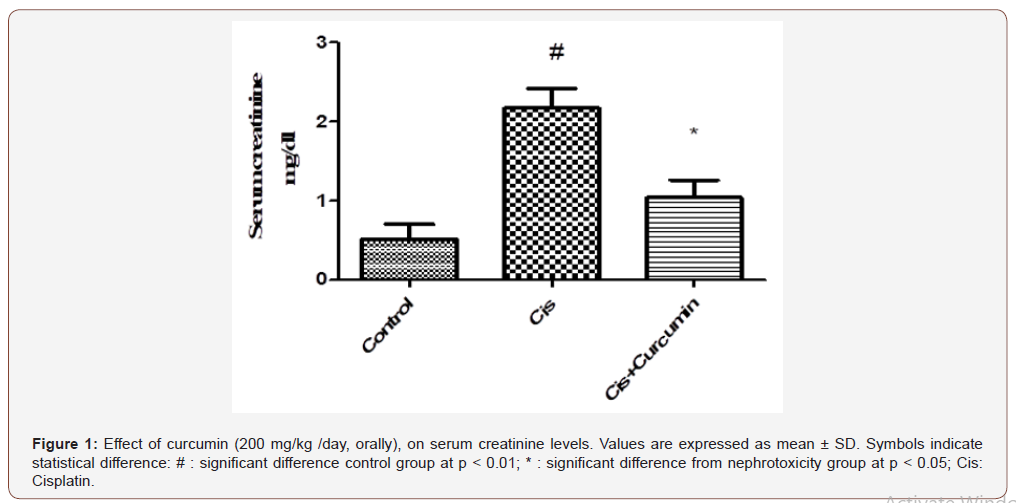
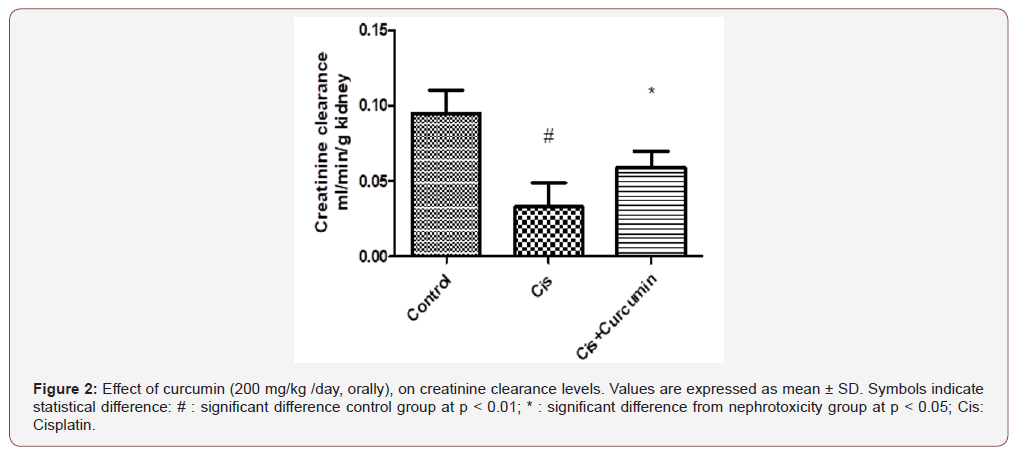
As shown in Figure 1-3, serum creatinine and urea levels were significantly increased, however, creatinine clearance was significantly reduced in Cis group when compared to the control group (p< 0.01). Curcumin treatments were significantly reduced serum creatinine and urea levels and significantly increased creatinine clearance level compared to Cis group (p< 0.05) (Figure 1-3).

irispublishers-openaccess-pharmacy-pharmacology
Effect of curcumin on oxidative stress

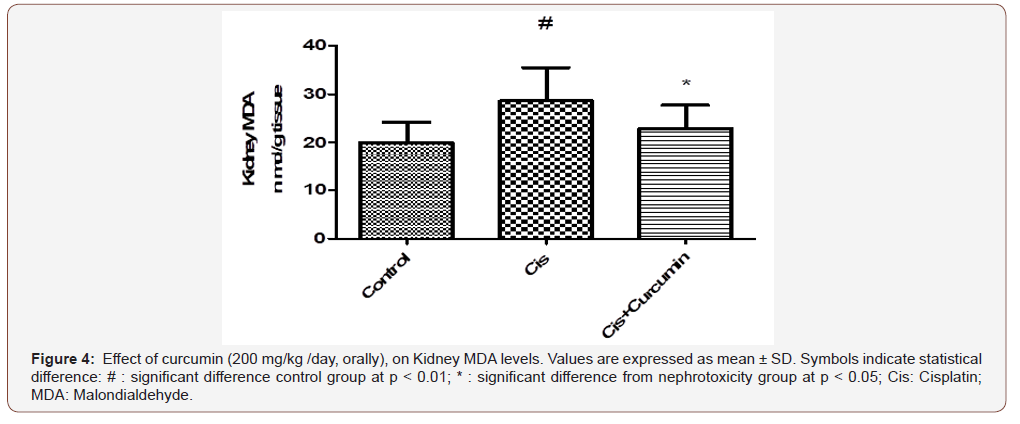
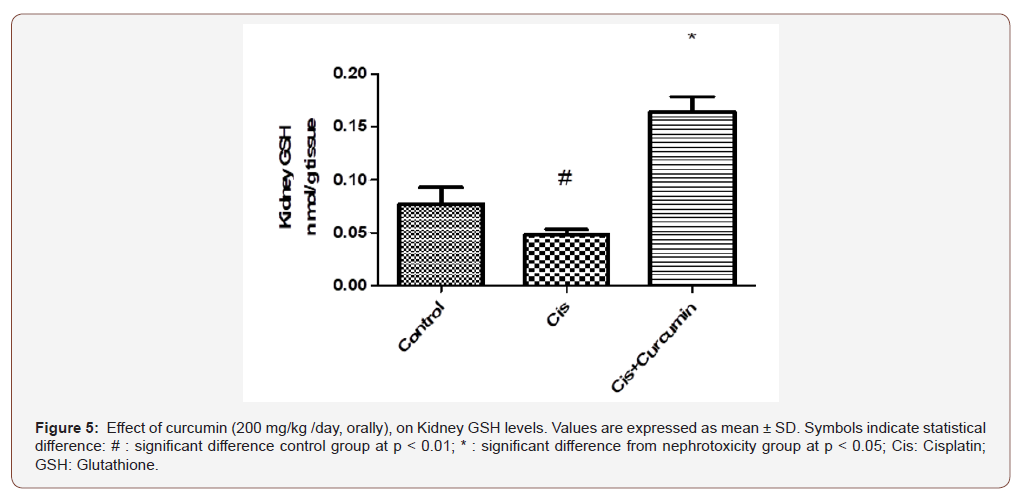
As shown in Figure 4-5, kidney MDA was significantly increased however; GSH was significantly reduced in Cis group when compared to the control group (p< 0.01). Curcumin treatments were significantly reduced MDA and were significantly increased GSH compared to Cis group (p< 0.05) (Figure 4-5).

irispublishers-openaccess-pharmacy-pharmacology

Discussion

Cisplatin is used to manage several human malignancies. However, nephrotoxicity is a serious side effect that limits its use as a chemotherapeutic agent. This may require reducing the dose or resorting to alternative treatment strategies [24]. Cisplatin induces glomerular and tubular dysfunctions [25] and injury of renal vasculature and structures [26]. Cisplatin causes tubular epithelial cell toxicity, vasoconstriction in the renal microvasculatureand inflammatory effects [27]. Cisplatin was also found to decrease glomerular filteration rate possibly due to its nephrotoxic effect on the S3 segment of the proximal tubule [28]. Patients develop acute kidney injury [5] which may progress to chronic kidney injury [6, 29]. In our study, serum and urine levels of creatinine and urea nitrogen were altered after cisplatin treatment indicating kidney injury. The evaluation of renal function and glomerular damage involved the examination of serum creatinine levels and reduction in creatinine clearance in accordance with previous reports [30]. Creatinine is a waste product of metabolism excreted by the kidneys without reabsorption. Hence, it is used as an index of renal function and to monitor renal dysfunction or damage [31]. Our study showed that treatment with cisplatin for (4.5 mg/ kg. day) rats’ group [19] two days was sufficient to induce nephrotoxicity in rats [20] as indicated by elevated serum creatinine and reduced creatinine clearance. Curcumin was found to mitigate cisplatin-induced kidney injury in pretreated rats as evidenced by reduction in serum creatinine and blood urea nitrogen. This is in agreement with previous studies [32]. Curcumin treatment ameliorated the former parameters. Creatinine and urea levels decreased significantly whereas creatinine clearance levels increased significantly during the treatment when compared with the nephrotoxicity groups. Oxidative stress plays a key role in cisplatin-induced renal dysfunction. Cisplatin enhances the production of superoxide, peroxynitrite, hydrogen peroxide and hydroxyl radicals via mobilization of iron from renal cortical mitochondria [22]. The enhanced expression of reactive oxygen species (ROS) by cisplatin is directly related to tubulointerstetial fibrosis [33]. Cisplatin is activated when it enters the cell through binding to the N7 reactive center on purine rings, resulting in DNA damage in cancer cells, blocking cell division and contributing to apoptotic cell death [34]. Cisplatin also induces ROS-mediated cell death [35]. ROS production increases during cisplatin treatment of cultured renal tubular cells, kidney slices, and in vivo in whole animals [36].

Conclusion

As a result of increased ROS production by cisplatin, antioxidant enzymes such as GSH are depleted [37]. Cisplatin also triggers MDA production in renal tissue [30]. MDA is a reactive aldehyde and forms covalent protein adducts which are referred to as advanced lipoxidation end products, very similar to advanced glycation end products [38, 39] It is the product of lipid peroxidation and reflects the degree of oxidation in the body. GSH is a tripeptide abundant in cells and is responsible for modulation of cell proliferation, antioxidant defense and detoxification of drugs and toxins. GSH also prevents damage to important cellular components caused by reactive oxygen species such as free radicals, peroxides, lipid peroxides and heavy metals [40]. Cisplatin can produce ROS through different mechanisms. Cisplatin can rapidly react with thiolcontaining molecules, primarily glutathione [41]. Once glutathione and other antioxidants are consumed, a shift in the cellular redox status occurs. ROS then accumulates within the cell and causing a state of oxidative stress. [42]. ROS may also disrupt the respiratory chain and cause mitochondrial dysfunction. The cytochrome P450 system has also been reported to be responsible for generating ROS as demonstrated in in vitro and in vivo models [43, 44]. In this study, the antioxidant status was assessed by measuring GSH and MDA levels. Kidney MDA was significantly increased in cisplatin group compared to control group. However, GSH was significantly reduced in the cisplatin group when compared to the control group. Curcumin treatment significantly reduced MDA and were significantly increased GSH compared to cisplatin group (p< 0.05).

Curcumin is known for its high oxygen-radical scavenging and quenching power [12]. It is a scavenger of free oxygen radicals and stimulates the activity of additional antioxidant molecules such as superoxide dismutase, catalase, and glutathione peroxidase [45]. It is a bifunctional antioxidant [46] because of its ability to react directly with reactive species and to induce an up regulation of various cytoprotective and antioxidant proteins [47]. Curcumin can react with ROS through its phenolic and methoxy groups and it is thought to be one of the mechanisms through which it can protect the renal epithelial from ROS activity [48]. Curcumin can indirectly induce the expression of cytoprotective proteins such as superoxide dismutase (SOD), catalase (CAT) [49], GSH [50], nicotinamide adenine dinucleotide phosphate (NADPH), quinone oxidoreductase 1 (NQO1) [51]. Furthermore, it has been reported that curcumin can increase the synthesis and concentration of GSH [52]. In summary, this study demonstrated that curcumin can protect against nephrotoxic effects of cisplatin in rats. The protective effect of curcumin occurred through the up regulation of antioxidants and suppression of oxidative stress markers. Curcumin is a promising therapy for management of kidney nephrotoxicity. Further in vitro studies are needed to outline the signaling pathways involved in curcumin actions during nephrotoxicity.

To know about Open Access Publishers

Iris Publishers-Open access Journal of Hydrology & Meteorology | Influence of Community Resilience to Flood Risk and Coping Strategies in Bayelsa State, Southern Nigeria

  Authored by  Nwankwoala HO *, Abstract This study is aimed at assessing the influence of community resilience to flood risk and coping str...