Monday, September 9, 2024

Iris Publishers-Open access Journal of Pharmacy & Pharmacology Research | PBPK Models of Two CNS Stimulants, Amphetamine and Methylphenidate, for Clinical Dosing Regimen Optimizations


Authored by Junmei Wang*,

Abstract

Attention deficit/hyperactivity disorder (ADHD) is a neurodevelopmental disease. Amphetamine (AMP) based and methylphenidate (MPH)- based agents are the first-line medications that are used as the treatment for ADHD. In this study, we successfully constructed and validated Physiologically based Pharmacokinetic (PBPK) models for AMP of oral extended-release formation and MPH of oral immediate-release formulation and predicted the toxic and lethal doses for these two medications using our PBPK models. To create the models, we utilized drug-related parameters and system-related parameters that are obtained from database, ADMET Predictor, Simcyp built-in predictor and literature. Overall, the predicted AMP concentration in plasma was slightly underestimated but is still located within the confidence interval, while our PBPK model for MPH can predict the PK profiles very well according to the clinical data, indicating the credibility of our model. We also stated that with the application of our PBPK models, we can effectively design more rational drug regimen and estimate the toxic risk under different doses. In terms of our simulation results, we also concluded that the toxic dose of sustained-release AMP is approximately 100-400mg, and the dose over 400mg may even cause death. The dosage that is over 300mg is strongly not recommended. As for immediate-release oral MPH, the maximal recommended dose is also 100mg.

Keywords: PBPK model; ADHD; Dosing regimen; PK modeling; Stimulant; Drug abuse; Toxicity; Lethal dose

Keywords: ACAT: Advanced Compartmental Absorption and Transit; ADAM: Advanced Dissolution Absorption and Metabolism; ADHD: Attention Deficit/Hyperactivity Disorder; ADME: Absorption Distribution Metabolism and Elimination; AMP: Amphetamine; AUC: Area Under Curve; B/P: Blood-to- Plasma Partition Ratio; CLpo: In Vivo Clearance Rate; fa: Fraction available from dosage form; fu: Fraction of unbound drug in plasma; MPH: Methylphenidate; MW: Molecular Weight; NE: Norepinephrine; PBPK: Physiologically-Based Pharmacokinetic; Peff: Human Jejunum Effective Permeability; MCS: Maximum Common Substructure-based; Vss: Steady State Volume of Distribution

Introduction

Attention deficit/hyperactivity disorder (ADHD) is a neurodevelopmental disease with a prevalence of 5%-10% in children [1] and is understood to persist in adulthood in around 65% portion of cases [2,3]. Though both stimulants and nonstimulants are approved for ADHD management, stimulants including amphetamine (AMP)-based and methylphenidate (MPH)- based agents are used as the first-line clinical pharmacotherapy due to their greater efficacy [4-9]. By primarily increasing the activity of central dopamine and norepinephrine (NE), AMP and MPH exert their pharmacological effects and thereby affect executive and attentional function [12]. However, the physiological mechanism, of modulating the neurotransmitter system is also responsible for both adverse events and recreational abuse of these two drugs [10,11].

Adverse events of AMP and MPH are largely related to the stimulant-associated peripheral NE activity, whereas the euphoriant properties and abuse liabilities of these two drugs are due to their stimulation of D1 and D2 dopamine receptors, respectively [10,11]. Safety concerns with respect to peripheral NE are raised for cardiovascular outcomes, including the increase of heart rate, blood pressure, and risk of ischemic attacks, myocardial infarction, and stroke [12]. Potential abuse warnings also hasten the development and application of the prodrug, extended release or sustained release formulation of AMP and MPH, which avoids the rapid synaptic release of dopamine that produces subjective effects of a “high” similar to the effect of cocaine when these two drugs are administered intranasally or intravenously [10,11].

It’s worth mentioning that, many ADHD patients have positive therapeutic responses to oral AMP and MPH without abusing the drugs [13]. The drug abuse issue most likely happens within a certain proportion of people with a higher dopamine receptor level [10,11]. Stronger emphasis is needed for clinicians on special patient population at a high risk of abuse. On the other hand, although many adult patients with ADHD respond to dosing of AMP and MPH within the FDA-approved maximums, emerging evident has shown that some patients may tolerate or even benefit from a higher dosing that exceeds the FDA-approved ones [13]. The failure of higher doses approval by FDA is due to the lack of individualized dosing studies which prove significant benefit of such dosing regimens. Therefore, rather than sticking to fixed-dose therapy, it is of great need and importance to develop flexible and personalized dosing regimen for psychostimulants to manage ADHD. The Physiologically based Pharmacokinetic (PBPK) modeling technique has been developed and refined over the past few decades and now receives increasing attention in the process of drug discovery and development and in submissions for regulatory filing and decision making [14]. It utilizes in vitro drug data such as intrinsic clearance and bioavailability through absorption, distribution, metabolism, and elimination (ADME) as well as system data which depicts population properties to explore in vivo pharmacokinetics of drugs. PBPK models have a physiologically pragmatic compartmental structure based on the actual anatomical characteristics of the body and its organs or tissues. As a unique simulation tool, PBPK modeling can estimate the PK profile of a compound. Moreover, based on the validation by PK observations from one dosing regimen, it can predict different dosing regimens [14], providing insightful information on individualized dosing optimization.

In this study, utilizing available clinical data for patients and healthy volunteers treated with psychostimulants, we constructed and validated PBPK models for AMP of oral extended-release formulation (gelatin capsules) [15] and for MPH of oral immediaterelease formulation (tablets) [16]. By changing the value of input dose, a series of predicted PK profiles for both drugs were obtained.

Materials and Methods

Tanimoto score-based drug template selection for AMP and MPH model construction

According to our previous modeling experience, it is practicable to construct a PBPK model for a target drug with reference to a template drug which shares high structural similarity. The Simcyp Simulator (v. 19, release 1; Shefeld, UK) software for PBPK modeling has its built-in drug database where PBPK models for well-studied and commonly used drugs are available. Therefore, we first selected template drugs in Simcyp for AMP and MPH based on Tanimoto scores of these two drugs to each of the Simcyp compound within the built-in library.

Tanimoto scoring is the method of choice that is commonly used to compute the fingerprint-based similarity between different compounds. In this study, we utilized the maximum common substructure based (MCS) Tanimoto algorithm, of which the Tanimoto score is defined by the following function: Tanimoto score= C/(A+B-C), where A and B are the bits set of two compounds in their fragment bit-strings, and C is the number of common substructures shared in these two compounds [17]. The MCS Tanimoto scores between AMP or MPH and each of the template compound in Simcyp were calculated with the application of the Chem Mine similarity workbench developed by Tyler Backman, et al. In this study, a Tanimoto score over 0.5 was considered for two compounds to be largely similar.

Acquisition of PK parameters for AMP and MPH

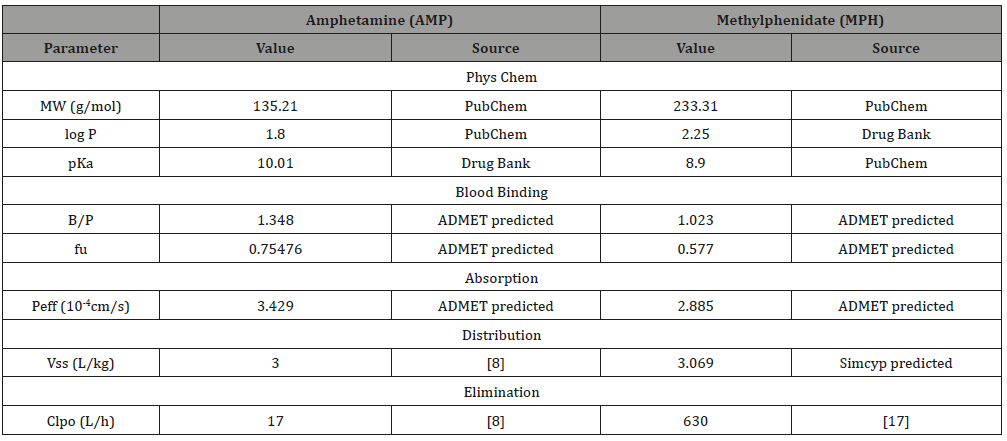
To build the PBPK for AMP and MPH based on template drug models, AMP and MPH-specific parameters were needed. The physiochemical parameters of these two drugs were collected from the Drug bank and PubChem database. Due to the lack of literatureavailable PK parameters, we utilized the ADMET Predictor software 9.5 to predict the blood-to-plasma partition ratio (B/P) and the fraction of unbound drug in plasma (fu) of AMP and MPH, which were needed for the model construction. For system-related parameters such as the parameter of fraction available from dosage form (fa), the steady state volume of distribution (Vss) value and the in vivo clearance rate (CLpo) are based on literature report which have been shown in detail in (Table 1). Specifically, the human jejunum effective permeability (Peff) was also predicted by ADMET Predictor software.

Construction and refinement of PBPK models for AMP and MPH

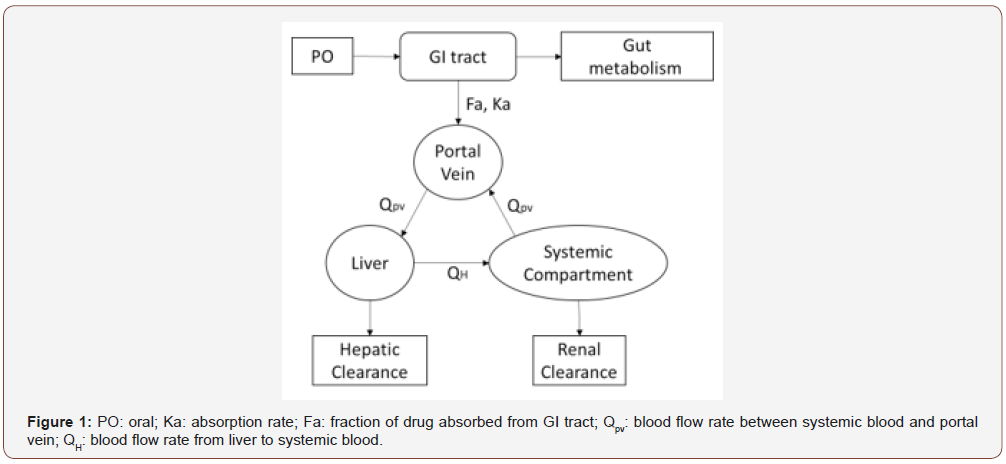
In the absorption process, ADMET Predictor calculates PK parameters based on advanced compartmental absorption and transit (ACAT) model [18], with the consideration of more complicated factors like nonlinear metabolism and transport kinetics apart from multiple compartment transition rate and absorption rate. Accordingly, Simcyp has three categories of absorption model, first-order absorption model, advanced dissolution, absorption and metabolism (ADAM) model and multilayer gut wall within ADAM model. We adopted ADAM model since the it is a mechanistic physiologically based model in Simcyp which is more sophisticated than first-order absorption model. Also, the ADAM model is more like the ACAT model in ADMET Predictor software compared to other two absorption models within Simcyp. For the distribution section, we used the minimal PBPK model and its mechanism as well as model structure has been shown in (Figure 1), which displays the blood circulation among the systemic blood, hypothetical portal vein and liver compartments.
irispublishers-openaccess-pharmacy-pharmacology

Result and Discussion

PBPK model for AMP

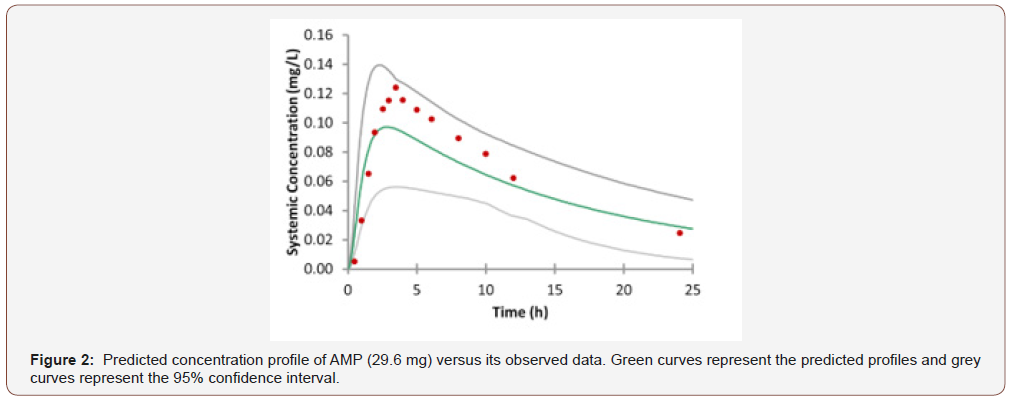
By comparing the drug of interest, AMP, with a series of compounds from the built-in database in Simcyp, bupropion has the highest MCS Tanimoto similarity with a score of 0.625, which is modeled with a sustained-released formulation. The clinical concentration-time profile of AMP in plasma was extracted from the literature [15]. In this report, AMP was administered orally in gelatin capsule formulation which was also one type of the sustained-release formulation, indicating it is highly likely to have similar absorption properties to the template drug, bupropion.

The collected input parameters for AMP are shown in (Table 1) (Figure 2) shows the predicted plasma concentration-time (CT) curve for the AMP model with the superposition of the clinical data [15]. From the predicted model, the Tmax is 2.88 h (Tmax from experimental data is 3.3±0.6 h), the Cmax is 0.0971mg/L (Cmax from experimental data is 0.12±0.012mg/L), and the AUC value is 1.41mg/L.h (AUC value is 1.727±0.200mg/L.h [15]). The predicted AMP concentration in plasma was slightly underestimated but is still located within the confidence interval, indicating the credibility of our PBPK model. The underestimation of our predicted concentration compared the experimental data may be explained by the different subtypes of two released formulation. Although both the AMP and bupropion are in the sustained-release formation, the former drug is reported in the gelatin capsule formation, while the latter one is of another different subtype.

Table 1: Fa: the parameter of fraction available from dosage form; CLpo: in vivo clearance rate; B/P: blood-to-plasma partition ratio; fu: fraction of unbound drug in plasma; Peff: human jejunum effective permeability.
irispublishers-openaccess-pharmacy-pharmacology

Input parameters and data sources of amphetamine and methylphenidate model
irispublishers-openaccess-pharmacy-pharmacology

PBPK model for MPH

Although bupropion is also the most similar drug to MPH with an MCS Tanimoto score of 0.571, its sustained-release formulation is not in accordance with the oral immediate-release tablet formulation of MPH. In hence, we turned to mephenytoin, which has a second highest MCS Tanimoto score of 0.5 to MPH and a similar oral immediate release formulation. The collected input parameters for MPH are shown in (Table 1). Using mephenytoin in Simcyp as a template, a PBPK model for the target drug MPH was built and validated.

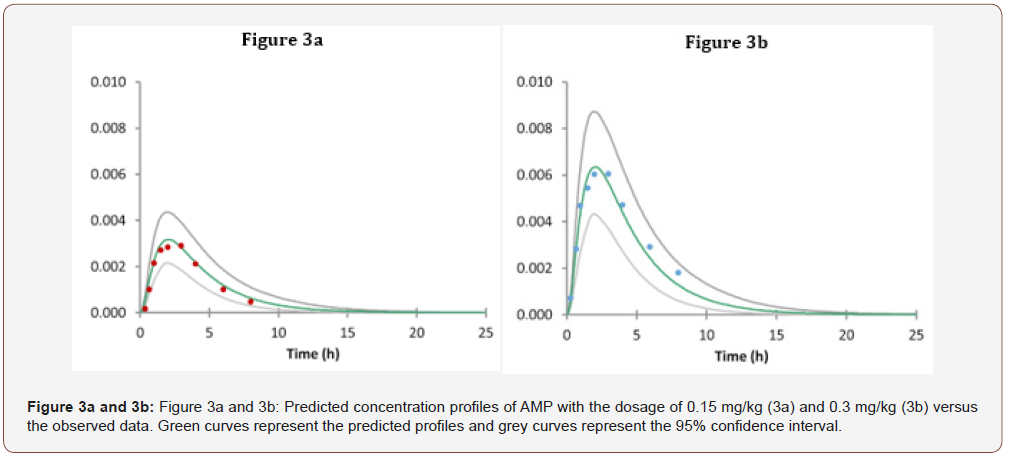
The predicted plasma concentration-time (C-T) profile for the MPH model overlaid by the clinical data is shown in (Figure 3) [16]. Overall, our PBPK model for MPH can predict the PK profiles very well in terms of the comparison between simulation results and clinical data shown in (Figure 3) For the MPH with the oral dose of 0.15mg/kg, the Tmax is 2.00 h (Tmax from experimental data is 2.2±0.4 h), the Cmax is 0.00318mg/L (Cmax from experimental data is 0.0035±0.0004mg/L). For the MPH oral dose 0.3mg/kg, the Tmax is 2.00 h (Tmax from experimental data is 2.1±0.3 h), the Cmax is 0.00635mg/L (Cmax from experimental data is 0.0078±0.0008mg/L [16]).
irispublishers-openaccess-pharmacy-pharmacology

Predicted C-T profiles when adjusting doses

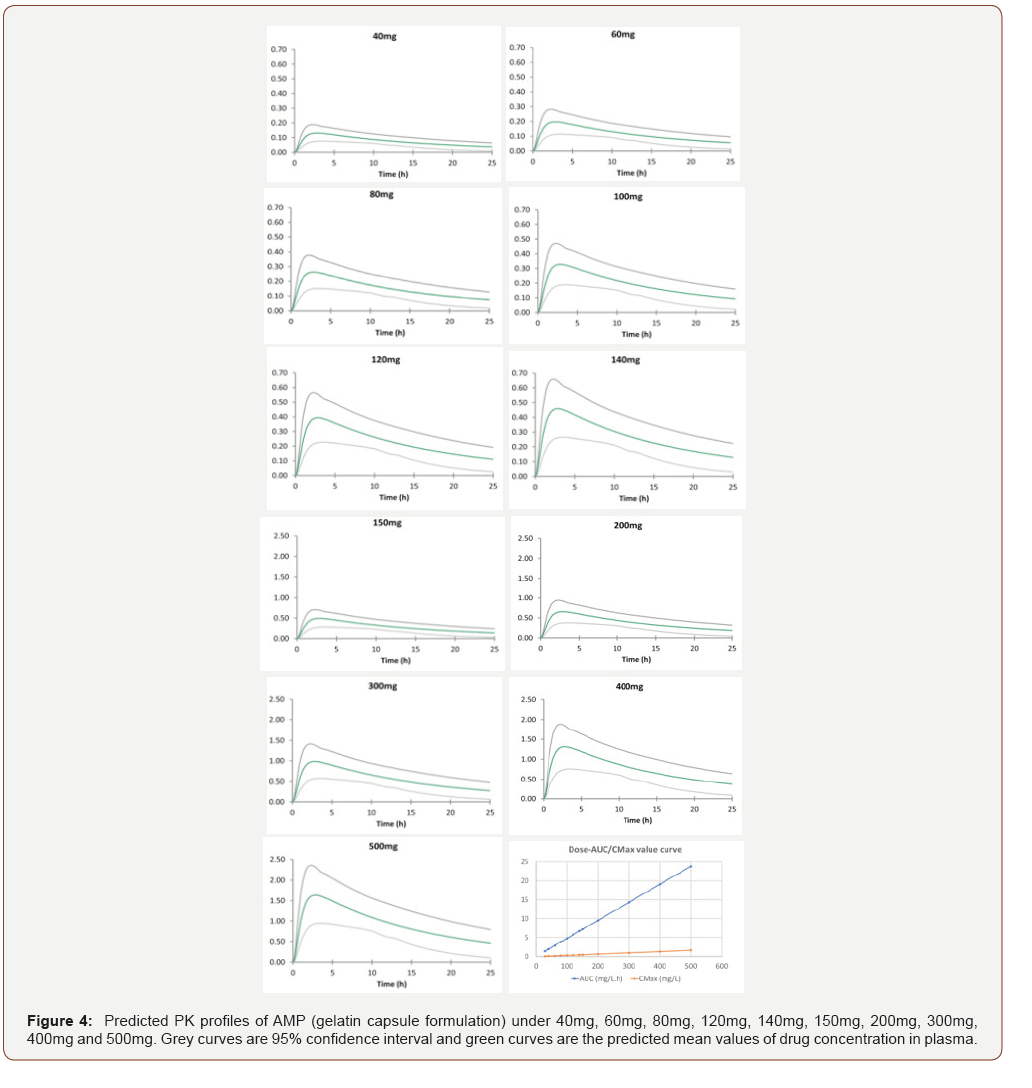
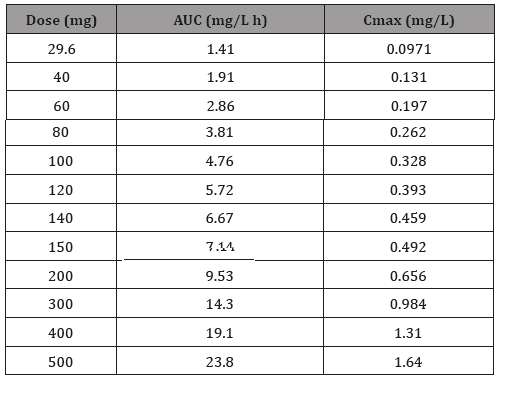
By utilizing the validated models and changing the input dosage of AMP and MPH, we obtained a series of predicted C-T profiles. The predicted C-T profiles of AMP with different oral dosage (40mg -500mg) are shown in Figure 4. The PK profiles of AMP, AUC and Cmax, are shown in (Table 2). As shown in (Figure 4), with the dose of AMP increased, the values of AUC and the Cmax increased accordingly. According to the report, the toxic blood concentration of AMP is 0.5mg/L, while its lethal concentration is 2mg/L. The simulation results illustrated that the upper confidence interval is close to 0.5mg/L when the dose is up to 100mg, where there might be toxic effect. At the dosage of 150mg, the average plasma drug concentration is 0.492mg/L which is very close to the toxic concentration 0.5mg/L. Dose over 300mg is extremely dangerous because its concentration at lower confidence interval has already reached 0.5mg/L. The dose at 400mg should be paid attention for its concentration at higher confidence interval, which is close to the lethal level.

Table 2: Oral dose AMP AUC and Cmax value under different dose.
irispublishers-openaccess-pharmacy-pharmacology

AUC: Area under curve

irispublishers-openaccess-pharmacy-pharmacology

irispublishers-openaccess-pharmacy-pharmacology

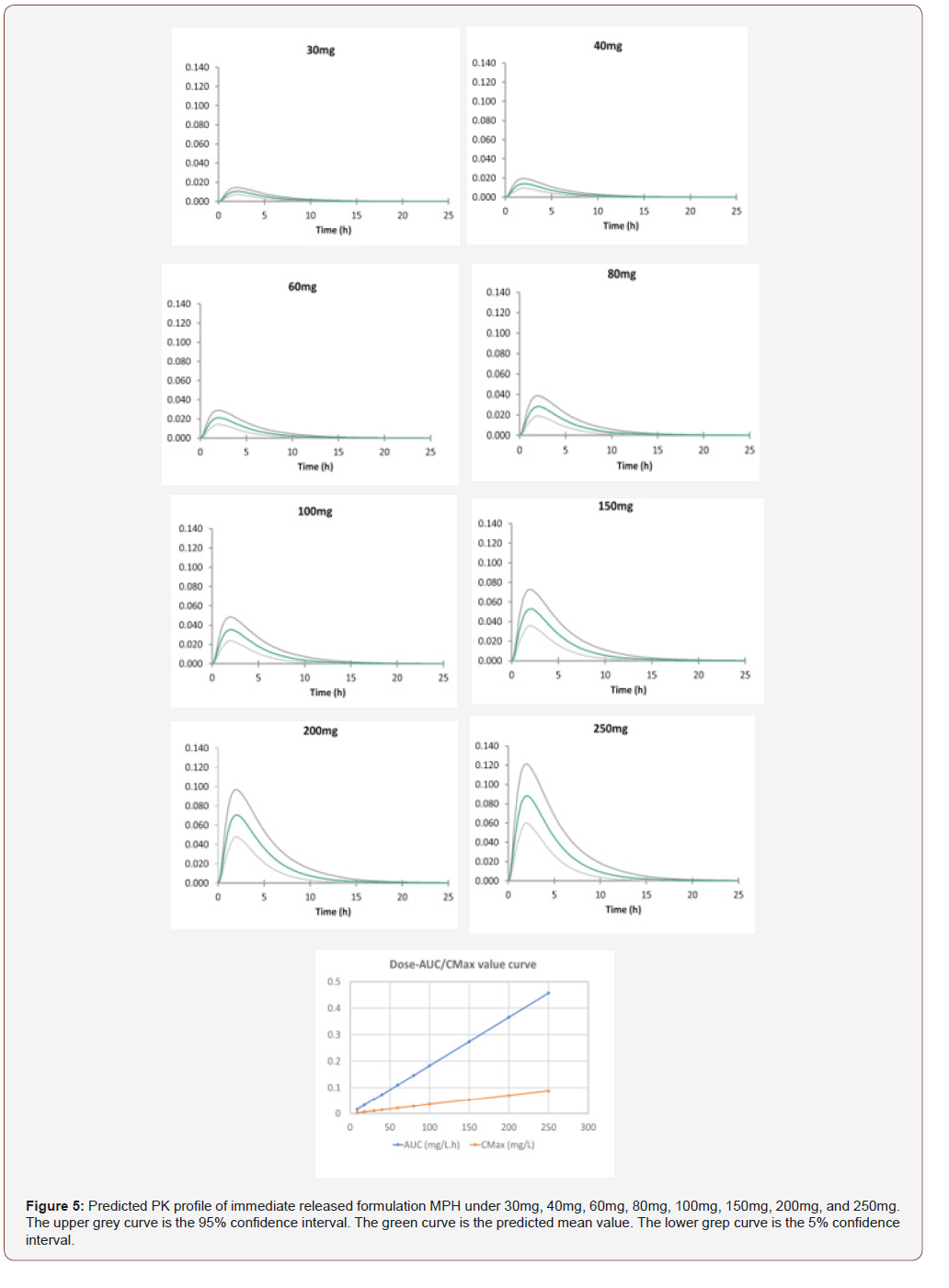
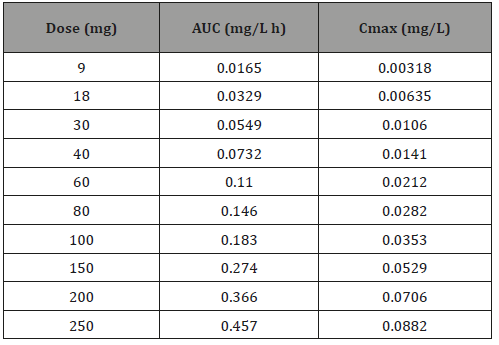
Predicted PK profiles of MPH are shown in (Figure 5) and accordingly, the PK profiles are shown in (Table 3). Other than the C-T profiles for different doses of AMP and MPH, (Figures 4 and 5) also display the relationship of AUC/Cmax versus dosage. Interestingly, the correlation coefficients between AUC/Cmax and dose for these two drugs are all close to 1, indicating the linear relationship between AUC/Cmax and dose. Due to the lack of the clinical data, the toxic drug plasma concentration for MPH is unavailable. As AMP and MPH have similar structure with the Tanimoto score of 0.5882 as well as the same stimulant effect in central nervous system, we assume that these two drugs share similar dosing properties. Because the toxic dose of AMP is 5fold to its therapeutic dose. it was suspected that the toxic dose of MPH is also about 5fold to its therapeutic dose. The normal therapeutic dose of MPH is 20-30mg/day [11], so we suggested the therapeutic dose of MPH will be no more than 100mg, where the mean value of AUC is 0.183mg/L.h. In this study, we successfully created PBPK models for AMP and MPH by utilizing drug-related parameters and system-related parameters that are obtained from database, ADMET Predictor, Simcyp built-in predictor and literature. The simulation results were validated by experiment report data, which can be further used to predict the drug concentration and facilitate the development of dosing strategy for reducing the risk of side effects of toxicity and maximizing the therapeutic effect. In addition, our reliable PBPK models can also be utilized to investigate the plasma concentration of AMP and MPH with different administration routes in different population such as pregnant women and pediatric population, promoting the design of dosing regimen and decreasing the risk of drug administration in special population.

Table 3:Oral dose MPH AUC and Cmax value under different dose.
irispublishers-openaccess-pharmacy-pharmacology

AUC: Area under curve

Conclusion

We successfully constructed PBPK models of AMP in gelatin capsule formulation and MPH in immediate released formulation to help predict their PK profiles based on reported data. Taking advantage of the PBPK model, we can help design more rational drug regimen and estimate the toxic risk under different doses. According our simulation results, the recommended maximal dose for sustained released oral AMP is 100mg. The toxic dose of AMP is approximately 100-400mg, and the dose over 400mg may even cause death. Particularly, dose over 300mg is strongly not recommended. As for immediate released oral MPH, the maximal recommended dose is also100mg.

To know about Open Access Publishers

Friday, September 6, 2024

Iris Publishers-Open access Journal of Anaesthesia & Surgery | When Laparotomy Straightens the Diagnosis Made in Radiology: Iatrogenic Segmental Liver Infarction Is Mistaken for An Abdominal Gossypiboma


Authored by Errabi Mohammed Nizar*,

Introduction

Textiloma or Gossybipoma, is a very rare but well elucidated postoperative complication. Gossypiboma is made up of gossypium which means cotton (in Latin) and boma which means a hiding place (in Swahili). It is used to describe a foreign object made up of surgical pad(s) or sheet(s) left within the surgical site [1,2]. We report a case where surgical exploration came back negative, excluding the diagnosis initially made by CT scan which suggested the presence of a pre-hepatic textiloma.

Patient and Observation

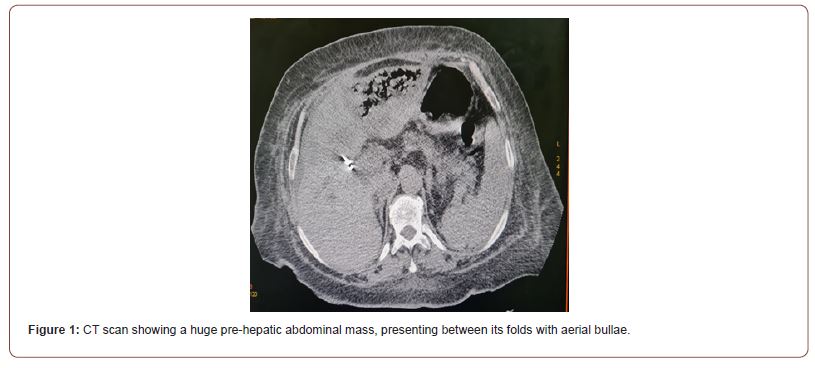
Mrs. Z.S, 71 years old, with no particular pathological history outside of a cholecystectomy, followed for a locally advanced peri hilar tumor (Klatskin) with pulmonary and hepatic metastases. The lesion was classified as Bismuth and Corlette type IIIa on MRI. The patient was referred to our visceral surgery department at the Moulay Ismail Military Hospital in Meknes, after failure of endoscopic biliary drainage by endoprosthesis. On admission, she had frank mucocutaneous jaundice, her GCS was 15/15, hemodynamically and respiratorily stable, apyretic with a normal digestive transit. The clinical examination found a slight tenderness of the right hypochondrium. The biological workup was strictly normal except for the elevation of the alkaline phosphatase level to 2.3 VN, the ALT was 191, the total bilirubin was 281 (predominantly conjugated) and the prothrombin rate was 81%. During the postoperative follow-up, in the short term (on day 4), the patient worsened her biological check-up with the reappearance of epigastric pain, abdominal bloating and sialorrhea, raising the suspicion of biliary peritonitis due to partial or total release of the drainage device. Thus, an abdominopelvic CT scan was performed (Figure 1), which revealed a small to medium-sized effusion, Redon’s drain still within the sectorial biliary convergence of the left liver, and an image of textiloma in the prehepatic area.

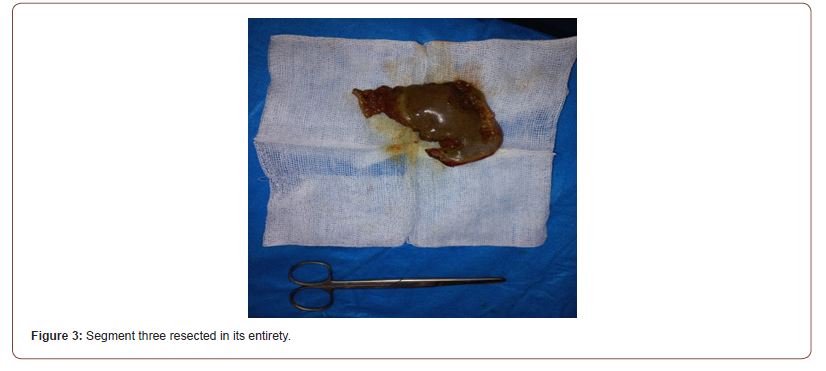
After a careful resuscitation adapted to her critical state, she was admitted to the operating room in emergency, for an exploratory laparotomy (by resumption of the right sub-costal approach) where we detected the true nature of the suspicious image in pre-hepatic, which corresponded to the sphacelic and infarcted segment 3 (Figure 2), suggesting an iatrogenic ligation of her feeder pedicle when digging towards the bile duct of the left paramedian segment along the round ligament. In the end, our procedure consisted of a segmentectomy (Figure 3), and a wide locoregional drainage of the bypass site by Salem Ch16 probe and Delbet blade. The postoperative course was simple and without any particularities with resumption of transit on the fourth postoperative day.

irispublishers-openaccess-anaesthesia-surgery

irispublishers-openaccess-anaesthesia-surgery

Discussion

Discus remains the surgeon’s dread during any procedure and the outcome for the patient can be dramatic, as its consequences are potentially serious (Diop, 2017). The frequency reported in the literature is 1/1000 to 1/10000 [3]. Clinical and radiological manifestations are variable, leading to diagnostic erraticities (Sar, 2018). Computed tomography (CT) is the reference examination (Alis, 2007).The diagnosis of textiloma is based on anatomopathological examination. Indeed, in the literature review by Le Neel et al. [4], the removal of textiloma resulted in cure without complication in 70 patients (59.8%), but complications worsened the evolution of 25 patients (21.3%) and 22 patients died (18.9%). Twenty-one of the 22 deaths were attributable to abdominal textilomas and concerned symptomatic textilomas recognized late, having required more aggressive procedures (intestinal and/ or colonic resection) with a non-negligible percentage of severe complications, in particular septic.

Hence the interest to act as quickly as possible since it considerably reduces the morbidity rate, as was considered in our case. CT scan is the reference imaging examination [5]. However, CT imaging of textiloma is not well known (Sarr, 2018). It may mimic a fecal impaction, abscess, hematoma, or tumor (Obeidat, 2020). Exceptionally in our patient, pure iatrogenic infarction of a liver segment is mistaken for a gossypiboma. Despite the use of imaging modalities, textilomas remain a diagnostic challenge and their discovery is often intraoperative [6]. The counting of pads and fields by the surgeon at the beginning and end of the procedure remains an effective but still insufficient means to overcome this oversight.

Conclusion

Gossypiboma with its diversified Clinico-radiological presentation entails - in spite of current advances - diagnostic difficulties and erraticities, causing significant tissue damage. CT and open surgery are the cornerstones for diagnosis and appropriate treatment. But by far, prevention remains the best option.

To read more about this article...Open access Journal of Anaesthesia & Surgery

Please follow the URL to access more information about this article

https://irispublishers.com/asoaj/fulltext/when-laparotomy-straightens-the-diagnosis.ID.000573.php

To know more about our Journals...Iris Publishers

To know about Open Access Publishers

Iris Publishers-Open access Journal of Cardiology Research & Reports | Complications and Predictors of Postoperative Mortality in Patients Undergoing Valve Replacement Surgery


Authored by Alexander Valdés Martín*,

Abstract

Introduction: Valvulopathies continue to be an important cause of medical consultation and hospitalization. Objective: to identify the main complications and predictors of postoperative mortality in patients undergoing valve replacement surgery.

Methods: An observational, analytical and retrospective study was carried out. The universe consisted of 753 patients.

Results: The main complications reported were the need for electric shocks (29.2%), ventricular fibrillation (28.4%) and endocarditis (9.2%). Patients alive at hospital discharge predominated. The complications most related to mortality were cardiogenic shock (18.0%), low output (28.0%) and sepsis (18.0%). Age greater than or equal to 65 years almost tripled the risk of death. Women were 2.5 times more likely to die before hospital discharge. A glomerular filtration rate below 60 ml/min/1.73m2 is a predictor of mortality.

Conclusion: Extracorporeal circulation remains the technique of choice for valve replacements which together with good myocardial protection and short anoxic arrest, extracorporeal circulation and surgical times decrease perioperative morbidity and mortality. Surgery is a safe and viable option for these patients, although it is not free of complications. The last one includes the appearance of arrhythmias as a result of alterations in the internal environment and acid-base balance. Aging, the presence of comorbidities such as diabetes and impaired renal function in patients with valvular heart disease predispose to the development of complications and death in the postoperative period.

Keywords:Valvulopathies; Surgery; Mortality; Morbidity; Sepsis

Introduction

Valvulopathies continue to be an important cause of medical consultation and hospitalization worldwide [1]. The improvement in the prevention of rheumatic heart disease and the phenomenon of epidemiological transition has allowed mortality from degenerative heart valve disease to be higher in elderly patients [2]. In Cuba, at the end of 2020, the rate of deaths due to non-rheumatic valvulopathies was 2.7 per-100,000 inhabitants [3]. Early detection and grading of the severity of valvular heart disease has improved the criteria for selecting patients who are candidates for surgery. In addition, advances in surgical techniques and perioperative management have resulted in a higher success rate and lower morbidity and mortality [4]. Cardiac valve surgery (CVC) requires a specific operative procedure for its performance. The complexity of these procedures is related to patient and surgical factors such as the number of valves to be operated on, the existence of previous cardiac surgery, the association with revascularization or thoracic aortic surgery and the quality of myocardial protection provided during the surgical procedure, among other factors [5].

Prior identification of all the factors and conditions that favor postoperative complications, together with the availability of resources and access to health care in each region or country, influence the quality and success of the CVC [6]. The purpose of this study conducted at the Institute of Cardiology and Cardiovascular Surgery (ICCCV) was to identify the main complications and predictors of postoperative mortality in patients who underwent valve replacement surgery.

Method

An observational, analytical and retrospective study was carried out at the ICCCV in Havana from January 1, 2016 to December 31, 2019. The universe consisted of 753 patients who met the inclusion criteria of being patients of both sexes, aged over 18 years, diagnosed with any valvulopathy and approved as candidates for CVC. Patients with combined cardiac conditions (valvular heart disease and coronary artery disease), psychiatric patients with difficulties in responding to adequate questioning, patients with a poor acoustic window for echocardiography and patients with consumptive diseases, neoplasms, and acquired immunodeficiency syndrome were excluded.

Variables and their operationalization

The following variables were included in the study: sociodemographic (age and sex) and pre-surgical variables that were grouped into: Clinical variables: arterial hypertension, diabetes mellitus, stroke, chronic kidney disease, chronic obstructive pulmonary disease (COPD), pulmonary hypertension, arrhythmias, bronchial asthma, smoking habit. Laboratory variables: total proteins, creatinine, glomerular filtration rate (GFR). Echocardiographic variables: valvular lesions, left ventricular ejection fraction (LVEF).

Procedural techniques and data collection

The information was obtained from the medical records and echocardiography reports. The data were collected in a model elaborated for this purpose that collected the variables of interest.

Processing and analysis techniques

Frequency distribution tables were prepared and statistical methods were applied using SPSS (Stadistical Pachage for Social Sciences) version 18.0 for Windows. Summary measures were used for descriptive variables, mean, standard deviation and percentage according to the type of variable. Descriptive statistical techniques such as mean and standard deviation were used.

Ethical Aspects

The research was approved by the scientific board and the ethics committee of the participating institution. The integrity of the data obtained was jealously guarded. The ethical principles for medical research in humans established in the Declaration of Helsinki were complied with at all times.

Result

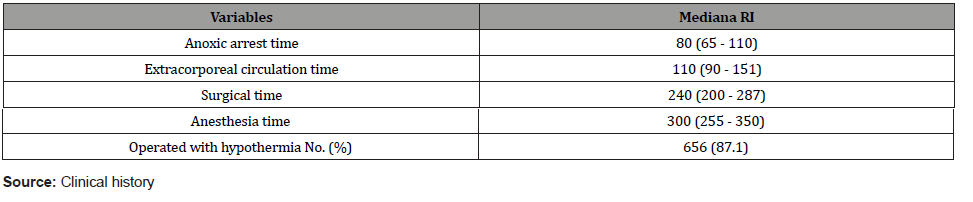
Patients aged 60 years or older accounted for 52.2% of the total sample. The male sex (52.3%) predominated over the female sex (47.7%). Among the main pathologic antecedents of these cases, arterial hypertension (53.5%), pulmonary hypertension (14.1%) and diabetes mellitus (11.9%) stood out. A total of 31.2% were reported to be former smokers. Aortic valve replacement (48.5%) was the most commonly used surgery, followed by mitral valve replacement (36.7%) and double replacement (14.5%). More than 60% of the patients had filtration values included in categories 1 and 2 and more than 90% of the cases had left ventricular ejection fraction values above 50%. (Table 1) shows variables related to the surgical procedure. The median arrest time was 80 minutes and that of extracorporeal circulation almost 2 hours, while the surgical time and anesthesia time were 4 hours and 5 hours, respectively.

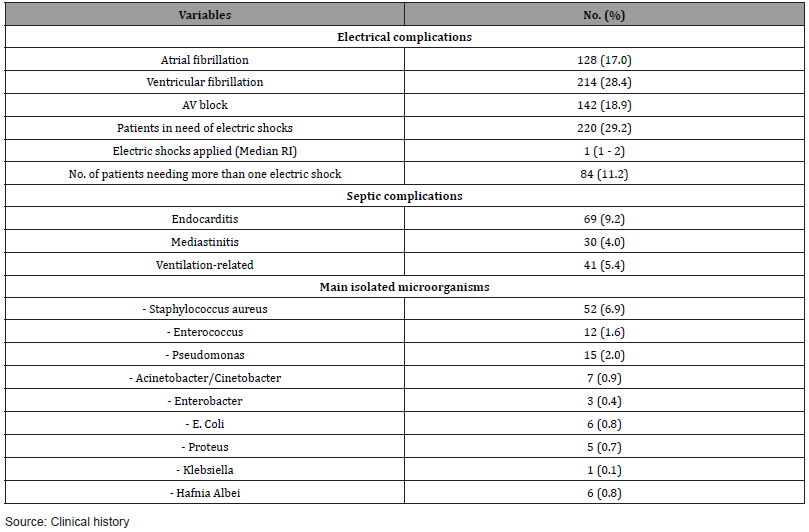
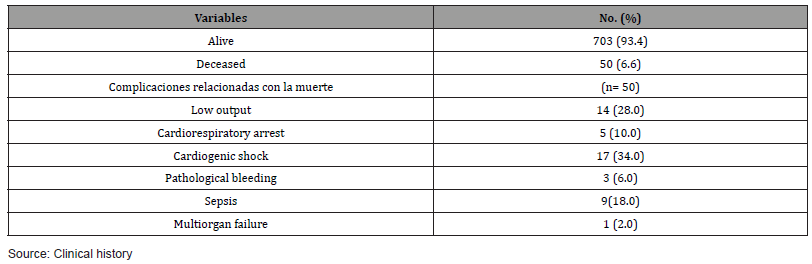
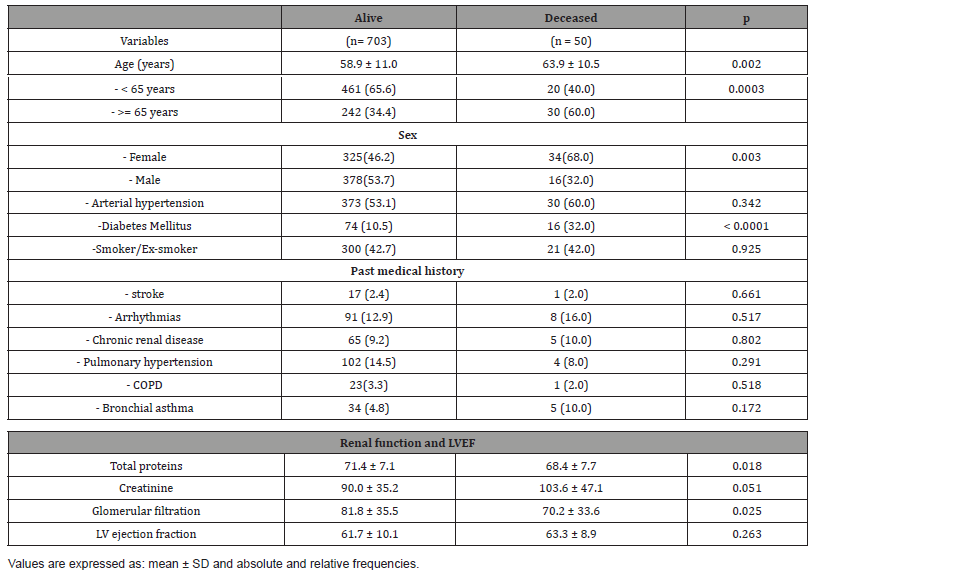
Electrical complications were the most frequent. The use of electric shocks was necessary in 29.2% of the cases. Among the septic complications, endocarditis was the most frequent (9.2%) and the main causal microorganism was staphylococcus aureus (6.9%) (Table 2). 50 patients died in this study which represented 6.6% of the sample. The complications most related to mortality were the cardiogenic shock (34.0%), low output (28.0%) and sepsis (18.0%) (Table 3). It was of interest to know the possible associations between the variables collected and mortality. (Table 4) shows the patient´s distribution according to sociodemographic and clinical variables in relation to the patient’s condition at discharge. Statistically significant differences were observed for age both in mean values (58.9 vs. 63.9, p= 0.002) and in patients aged 65 years and older (34.4% vs. 60.0%, p = 0.0003). Diabetes mellitus was present in 32.0% of deceased patients in contrast to 10.5% of those discharged alive (p < 0.0001). Regarding renal function, although with normal values, creatinine was slightly higher in deceased patients (p=0.051) and glomerular filtration rate was decreased in this group (81.8 vs. 70.2, p= 0.025).

Table 1: Distribution of patients according to variables related to the surgical procedure.

irispublishers-openaccess-cardiovascular-research

Table 2: Distribution of patients according to trans-operative complications.

irispublishers-openaccess-cardiovascular-research

Table 3: Distribution of patients according to operative mortality.

irispublishers-openaccess-cardiovascular-research

Table 4: Distribution of patients according to sociodemographic and clinical variables in relation to the patient’s condition at discharge.

irispublishers-openaccess-cardiovascular-research

Table 5: Distribution of patients according to variables related to the surgical procedure in relation to the patient’s condition at discharge.

irispublishers-openaccess-cardiovascular-research

Table 6: Reasons for Disparity with respect to death.

irispublishers-openaccess-cardiovascular-research

A similar analysis was performed with respect to mortality with the variables related to the surgical procedure. (Table 5) shows the results, highlighting higher median values for anoxic arrest time (80 vs 102.5), extracorporeal circulation (110 vs 127) and surgical time (240 vs 250) all statistically significant.

Variables found to be significant in the above analyses with respect to mortality were included in a logistic regression analysis to obtain the disparity ratios shown in (Table 6). Age greater than or equal to 65 years almost tripled the risk of dying. Women were 2.5 times more likely to die before discharge after valve surgery. A glomerular filtration rate below 60 ml/min/1.73m2 is a predictor of mortality in these patients, almost doubling the risk of occurrence of this adverse event. Diabetes mellitus was a predictor of mortality since patients with this risk factor had a disparity ratio of 4.0, CI = (1.2 - 6.7), the highest in our series.

Discussion

The aging of the population brings with it an increase in the incidence of heart valve disease, particularly aortic valve disease. Therefore, the number of surgical interventions should benefit an increasing number of patients in the future [7-9]. Valve replacement is usually performed by cardiovascular surgeons with experienced Techniques [10]. This explains why, in this study, most of the valves were replaced with stopping times of less than or equal to 120 minutes. The literature consulted showed a correlation between insufficient myocardial protection, the onset of myocardial necrosis and prolonged arrest times in patients who suffered perioperative myocardial infarction and postoperative cardiogenic shock [11,12]. It was found that most of the valves in this study were replaced with an extracorporeal circulation time of 110 minutes. These times are relatively short and are related to the expertise of the surgeons involved. The use of extracorporeal circulation allows the surgeon to work in a still and bloodless field, but can cause varying degrees of myocardial stunning. This is why, when the patient has a pre-existing deterioration in systolic function, he is most likely to present low cardiac output due to a transient worsening in contractility due to the impact of the pump at the level of the cardiac muscle [13,14].

Increased time in circulation is recognized as a “life-threatening” condition that can lead, if unsuccessful, to intraoperative death. Blood contact with non-endothelialized surfaces can lead to thrombocytopenia, platelet dysfunction, consumption of clotting factors and activation of the fibrinolytic system. All these hematological disorders will be more accentuated the longer the pump time. The objective when weaning from extracorporeal circulation is that the cardiovascular apparatus should allow the patient to maintain sufficient oxidative metabolism and tissue perfusion to meet its own demand [15,16]. Electrical complications were the most frequent. The use of electric shocks was necessary in 29.2% of cases for the recovery of sinus rhythm, followed by ventricular fibrillation with 28.4%. The predominance of ventricular arrhythmias during the first moments of reperfusion is frequent and is conditioned by a series of mechanisms such as the duration of the ischemia period, the severity of the metabolic changes produced by ischemia, cytosolic calcium oscillations, the flow of catecholamines produced during ischemia and even the speed of reperfusion itself [17]. Other favorable circumstances could be the hydroelectrolytic alterations, the release of oxygen free radicals (superoxide O2, hydrogen peroxide H2O2 OH and hydroxyl OH), ventricular dysfunction and hemodynamic instability [18]. All these changes arising during the ischemia-reperfusion phenomenon linked to extracorporeal circulation act as facilitators of automaticity and/or modifiers of cell membrane properties.

Valvular prosthesis infective endocarditis (VPIE) occurs in about 1%-6% of patients with valve prostheses. It has an incidence of about 0.3-1.2% per patient per year. VPIE was the most frequent infectious complication in this investigation and occurred with a higher frequency than reported in the literature (9.2%) [19]. Early VPIE can develop as a result of nosocomial or health care-related bacteremia [20,21]. VPIE can be acquired in the operating room during surgery, by surgical wound infection or through intravascular catheters in the post-surgical care unit, so that microorganisms such as coagulase-negative and aureus staphylococci, enterococci, fungi and gram-negative bacilli predominate in its etiopathogenesis [21]. These approaches coincide with the results of this study where the main causal germ reported was staphylococcus aureus (6.9%) and another complication reported was mediastinitis (4%). It should be taken into account that perioperative antibiotic prophylaxis is very beneficial in reducing the incidence of infectious complications in patients undergoing cardiac Surgery [22].

In our study, 50 patients died, representing 6.6% of the population studied. The complications most related to mortality were cardiogenic shock (18.0%), low cardiac output (28.0%) and sepsis (18.0%). These results are partially concordant with the study by De la Peña Riveron and collaborators [23], who found postoperative low cardiac output syndrome, atrioventricular block and neurological complications as predictors of postoperative mortality. In the aforementioned research, cardiogenic and hypovolemic shock were reported in 6.7%, while acute myocardial infarction and pulmonary thromboembolism had one death each (3.3%) [23]. In this study performed at the ICCCV, age greater than or equal to 65 years, female sex, a glomerular filtration rate below 60 ml/min/1.73m2 and diabetes mellitus were predictors of mortality in patients who underwent valve disease surgery, almost tripling the risk of death. This is in correspondence with what has been reviewed in case series with similar characteristics to ours. Many variables have been pointed out as predictors of mortality, among which advanced age, female sex, urgent surgery, associated coronary revascularization, reoperation, depressed left ventricular ejection fraction, renal failure, and even the number of hospital interventions stand out [24, 25].

Morbidity and mortality associated with valve replacement surgery at a global level has decreased in recent years due not only to advances in surgical technique and myocardial preservation, but also to the fact that valve lesions are detected at earlier stages and that the selection of patients who undergo surgery is more appropriate [26, 27].

Conclusion

1. Extracorporeal circulation continues to be the technique of choice for valve replacements, which, together with good myocardial protection and short anoxic arrest, CPB and surgical times, reduces perioperative morbidity and mortality.

2. Complications in patients operated on for valvular disorders are low, with a predominance of arrhythmias that generally occur due to alterations in the internal environment and acid-base balance.

3. Aging, the presence of comorbidities such as diabetes and impaired renal function predispose to the development of complications that lead to death in these patients in the postoperative period.

4. Surgery is a safe and viable therapeutic option for patients with valvular apparatus diseases, although it is not free of complications, so adequate preparation and multidisciplinary discussion is necessary in each case.

To read more about this article...Open access Journal of Cardiology Research & Reports

Please follow the URL to access more information about this article


To know more about our Journals...Iris Publishers

To know about Open Access Publishers

Iris Publishers-Open access Journal of Hydrology & Meteorology | Influence of Community Resilience to Flood Risk and Coping Strategies in Bayelsa State, Southern Nigeria

  Authored by  Nwankwoala HO *, Abstract This study is aimed at assessing the influence of community resilience to flood risk and coping str...